

Society
The refinery in Pancevo is about to stop production
The suspension of the work of the Refinery in Pancevo is considered inevitable, and the only unknown for now is the date when production will be completely stopped.

Poor households are unjustifiably cited as the main cause of air pollution. In Serbia, the biggest source of PM 2,5 emissions are coal-fired thermal power plants
The New Year's holidays in Serbia were marked by the worst period of air pollution this season so far, they write for Climate 101 prim. Dr. Elizabet Paunović, Dr. Suzana Blesić and Vladimir Đurđević.
Excessive pollution, especially PM 2,5 particles, which are the most dangerous for our health, was recorded at almost all measuring stations in the country. In certain cities, particulate pollution was up to 10 times higher than legal limits, and the unhealthy air could be seen and smelled.
Why do these episodes of extreme particle pollution occur? Because it was not colder around the holidays, nor was there any special source of pollution that stopped emitting in the meantime.
The answer lies in the weather conditions that prevailed around the New Year: not only low temperatures, but also a combination of increased air pressure, lack of wind, and increased relative humidity.
In such conditions, not only does the polluted air remain "trapped" in the lower parts of the atmosphere, but new PM 2,5 particles are suddenly formed in the atmosphere.
These particles, which are not created in our outdated home fireplaces but originate from gases such as sulfur dioxide, are crucial for understanding the nature of air pollution in Serbia, as well as for dispelling a common myth about the sources of pollution.
If on an extremely polluted day, for example during the recent holidays, you wonder where so much PM 2,5 pollution is coming from, the data provided by SEPA is not the right answer.
In its latest report for 2023, the Environmental Protection Agency (SEPA) writes about the sources of particulate pollution:
"The most significant source for suspended particles PM 10 and PM 2,5 are heating plants of less than 50 MW and individual combustion plants... 61 percent of all national emissions of suspended particles PM 10 and 77 percent of suspended particles PM 2,5 originate from this sector."
According to SEPA, for PM 2,5 particles, after individual combustion plants, the biggest emitters are road traffic (10 percent) and industry (6 percent), and "the smallest contribution to the total emissions of suspended particles (PM 10 and 2,5)... is from the sector Production of electricity and thermal energy, from 3-5 percent.”
In other words, SEPA states that households are the absolute dominant source of PM 2,5 pollution in Serbia, and that the share of coal-fired thermal power plants is almost negligible.
But this picture does not show the reality of the situation in Serbia. If on an extremely polluted day, for example during the recent holidays, you wonder where so much PM 2,5 pollution is coming from, the data provided by SEPA is not the right answer.
As independent scientific research from Serbia and abroad has shown for years, the primary source of PM 2,5 particles in Serbia are coal-fired thermal power plants, especially large thermal power plants such as TENT A and B.
Depending on the estimates and the methods and models used, the numbers may vary somewhat from study to study. For example, the research of the Joint Research Center gives somewhat different estimates of the share of energy and households, but the basic message is the same: the data offered by SEPA, which have become generally accepted by the public in Serbia, do not reflect the real picture.
The reports on air quality issued by SEPA are actually the only published source of data that comes to the conclusion that the dominant source of particulate pollution (PM2,5) in Serbia is individual combustion plants, and not coal-fired thermal power plants.
As a result of such a presentation, responsibility for the state of pollution, especially extreme air pollution during the winter months, is excessively individualized.
It is time for this information, which has long been known and generally accepted in professional circles, to be transferred to the general public, as well as in official state documents and strategies.
It is necessary for decision-makers and the general public to be as well and truthfully informed as possible about the sources of air pollution, especially when it comes to PM 2,5 pollution, which represents one of the biggest health challenges and dangers for our population.
Questions and answers
Does this mean that the information provided by SEPA in its reports is wrong?
The information on air quality monitoring is correct, but its interpretation is not.
When talking about PM 2,5 concentrations, SEPA relies on measuring stations that record concentrations in the air at specific locations that are part of the air quality monitoring network.
In some urban areas, there is certainly a situation where individual combustion plants are the dominant source of pollution in certain localities in a certain period, but through systematic data analysis and modeling, as well as assessment of health effects, on an annual basis for the territory of the entire country, a complete a different picture than the one given by SEPA.
Namely, when talking about sources of pollution, SEPA relies on measurements at the sources of pollution themselves - that is, samples of particles are not taken that are then "tracked" to the source (quite understandable, because it is a demanding and complicated process that cannot be done continuously, but which must still be carried out occasionally, at least for the biggest polluters).
Why is this important? Because when we look at the concentrations of polluting particles in the atmosphere, there is a difference between the so-called primary and secondary particles. Primary are those that are emitted from the source as particles, while secondary are those that are initially emitted in the form of gas, and become particles only through special chemical processes in the atmosphere.
Sulfur and nitrogen gases are particularly potent sources of secondary PM 2,5 particles.
Depending on the circumstances (pollution, conditions in the atmosphere), secondary particles can be more numerous than primary ones. Therefore, as dominant emitters of sulfur oxides, thermal power plants in Serbia are a significant source of PM 2,5 particles, although they do not emit them "directly" from the chimney, where they would be recorded by the monitoring managed by SEPA.
Secondary particles during the New Year holidays
In particular, the recent New Year's holidays are a good example of the conditions that favor the creation of these secondary particles - it was primarily a combination of high pressure, lack of wind and high relative humidity.
In these conditions, there is a sudden increase in PM 2,5 concentrations, sometimes over 100% in just an hour. This phenomenon is extremely typical in Serbia, especially in the winter months.
Of course, such phenomena are not caused by the sudden connection of a huge number of new emitters - but behind them can be hidden the reaching of ideal atmospheric conditions for the sudden creation of a large number of secondary particles in the air.
Moreover, by reviewing the hourly data from the measuring stations, it can be seen that such increases in PM 2,5 pollution are sometimes not accompanied by equivalent increases in other pollutants, but on the contrary, by decreasing concentrations, e.g. sulfur in the air.
Just such episodes were repeated, for example, in Veliki Crljeni, where during the holidays the highest pollution with PM 2,5 particles was recorded - and we remind you that Veliki Crljeni is a village close to Belgrade, where "Kolubara A", the oldest thermal power plant in Serbia, is located.
A large share of secondary particles in air pollution is also shown by specific studies conducted in Serbia, such as study published in 2020 in the journal Environmental Science and Pollution Report, which was led by researchers from several domestic research institutions (Institute of Physics, Nuclear Institute of Vinča, Faculty of Technology and Metallurgy, Faculty of Physical Chemistry).
As shown by this study, during which analyzes were made of the composition and origin of PM 2,5 particles in the vicinity of Belgrade, the culprit for 14,5 percent of PM 2,5 particles was the burning of biomass, and the source of 28,8 percent of the particles was "secondary sulfates". This is twice the share, and we remind you that thermal power plants are by far the largest emitter of sulfur dioxide in the Republic of Serbia, which is confirmed by the reports offered by SEPA, according to which coal-fired thermal power plants are the source of about 92 percent of sulfur dioxide in our air.
In short, the SEPA reports "don't see" the large proportion of PM 2,5 particles that are created in the atmosphere, from the sulfur emitted from our thermal power plants.
Does this mean that individual fireplaces are a negligible cause of PM 2,5 pollution?
Absolutely not.
As can be seen in the attached research, and as mentioned in the previous answer, individual fireplaces in households, where old heating elements and poor energy sources are used, from raw coal to wood and waste, are still a significant source of pollution - up to approx. fifth of the total amount of PM 2,5 comes from households in Serbia.
Solving the problem of pollution must also include solutions for households across the country. That solution must be systemic, in the form of changes largely subsidized by the state.
If fireplaces are not the dominant source, why is PM 2,5 pollution always the highest when the heating season starts in Serbia?
Air pollution depends not only on what we emit, but also on atmospheric conditions. Just as we feel that the air is cleaner when the wind blows, specific atmospheric conditions are partly the "culprit" for episodes of excessive pollution.
In addition, we should not lose sight of the fact that there is a constant emission of PM 2,5 particles from our coal-fired thermal power plants, as well as that which we receive from the surrounding countries from their coal-fired power facilities that are present all year round, in addition to which there is now also additional emissions from individual combustion plants.
We recently published research that showed that periods of extreme air pollution, which are characteristic for Serbia at the end of autumn and during winter, are the result of the combined impact of air pollution and conditions in the lowest layers of the atmosphere due to which this pollution remains at the ground.
In short, periods of higher pollution (due to the heating season) and atmospheric conditions that are common at that time of the year coincide, which reinforces the wrong idea that households are the dominant cause of pollution to that extent.
Also, the measurements show that pollution with PM 2,5 particles in Serbia is excessive even outside these periods of the year. Air pollution is dangerous not only on those days when we can see it (and smell it, and even taste it in our mouths), but throughout the year.
The measurements so far in Serbia show that the annual "normal" concentration of PM 2,5 is higher than the limits recommended by the European Union in every observed city and at every measuring point in the country.
Why does it matter where the pollution comes from? The air is still polluted.
If we want to solve the problem of air pollution, we cannot turn to magic to remove particles from the air, nor can we summon winds.
The only solution for reducing pollution is to reduce emissions at the sources of pollution, both primary particles PM 2,5 and gases that are harmful in themselves, and which also lead to the creation of secondary particles.
Therefore, good, relevant knowledge about the sources of pollution is crucial to solving this problem.
If we only follow the data offered by SEPA and our other official documents, we might think that the only solution to PM 2,5 particle pollution is to replace the old furnaces and energy sources in households.
But as the above-mentioned research reveals to us, without good knowledge, we would not be able to understand why such a measure, even if implemented, would be only partially successful in reducing PM 2,5 concentrations without solving emissions from thermal power plants (but also from traffic and agriculture).
But why does it matter what SEPA says about pollution sources?
The Environmental Protection Agency (SEPA) is an agency mandated to provide relevant, data-based information on the state of the environment. Thus, the data offered by SEPA is one of the sources of established opinion in Serbia. If they are not complete, then a large number of people across the country are somewhat misinformed about this extremely important topic.
But it's not just a matter of misinformation. Coal-fired thermal power plants and individual combustion plants are categorically different things, and solving the problem of their emissions implies completely different measures in the management of sectoral policies.
Based on the available professional and scientific literature and the recommendations of the World Health Organization, we believe that the Serbian public should be aware of the fact that, for example, the closure of thermal power plants, which is already a priority for the whole of Europe in order to reduce the emission of greenhouse gases, would have visible positive consequences for the quality air in Serbia.
Those consequences would be significantly greater than can be assumed from the SEPA report.
We think that insisting exclusively on households as a source of PM 2,5 pollution creates a sense of hopelessness among the population, because the replacement of fuel stoves, due to the large number of poor households, is one of the biggest and most complex problems of domestic energy.
One example of problematic perception can be seen in Air protection program, the basic document of the fight against air pollution adopted by Serbia at the end of 2022, in which, among other things, regarding the projections and scenarios for the next ten years, it specifically states:
"...none of the current measures can deal with the emissions of suspended particles originating from individual fireplaces in households, which prevailed in 2015 and will continue to prevail when it comes to individual heating in households in the period from 2020 to 2035. . Emissions of suspended particles will not be significantly reduced without measures targeting a large number of small emitters."
In order to be able to breathe clean air in Serbia one day, it is, of course, necessary to solve the problem of households with outdated heating elements - but as science shows us, and as SEPA fails to show us, that is not the whole story of the solution.
Due to the fact that thermal power plants are the most significant source of particulate pollution, decarbonization policies and air protection policies should go hand in hand.
In addition to the global benefit, which is reflected in the positive impact on the reduction of greenhouse gas emissions, an immediate, highly visible and measurable local benefit for Serbia would be reflected in significantly better air quality and a consequent reduction in premature deaths caused by polluted air.
Source: Air Conditioning 101
The suspension of the work of the Refinery in Pancevo is considered inevitable, and the only unknown for now is the date when production will be completely stopped.
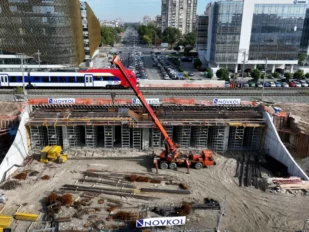
The late joining of Grecia and Surčinska streets, the construction of an underpass between Red Army Boulevard and Art Boulevard, the expansion of Patriarch Pavle Boulevard and many other infrastructure works

Payment of money starts on Friday, November 13, and scheduling is made possible through the website of Poštanska Štedionica

The student movement asks the competent state institutions to examine public procurement, the implementation of contracts, the spending of budget money and the respect of workers' rights in the construction sector.

After the measures imposed by the Regulatory Body for Electronic Media on Prva TV, Aleksandar Timofejev took over as editor-in-chief

At the moment when the institutions of the Republic are destroyed, when Vučić's octopus is still alive, when people are disgusted by the injustice and the stench left behind by the Essenes regime, we have, as Machiavelli said, only civic virtue as the fuel with which we can return to the beginning

The four independent members of REM are an example of perseverance and civic responsibility. Rodoljub Šabić even, upon leaving the premises of REM, after the sentencing of the Informer, experienced that the Essenes insulted him, hit him with their hands and feet. But that too will soon be over

Vučić pardoned the batterers and Dijana Hrkalović. The election winners should abolish the sultan's power that allows one man to run afoul of the entire judicial system

Interview: Branko Stamenković, public prosecutor of the Supreme Public Prosecutor's Office
A black picture and the breakdown of the rule of law subscribeThe archive of the weekly Vreme includes all our digital editions, since the very beginning of our work. All issues can be downloaded in PDF format, by purchasing the digital edition, or you can read all available texts from the selected issue.
See all



