

News
Batut: In Serbia, 220.000 people do not know they have diabetes
On the occasion of World Diabetes Day, Batut warns that a large number of people have this disease and are not even aware of it, because diabetes can go without symptoms for years.

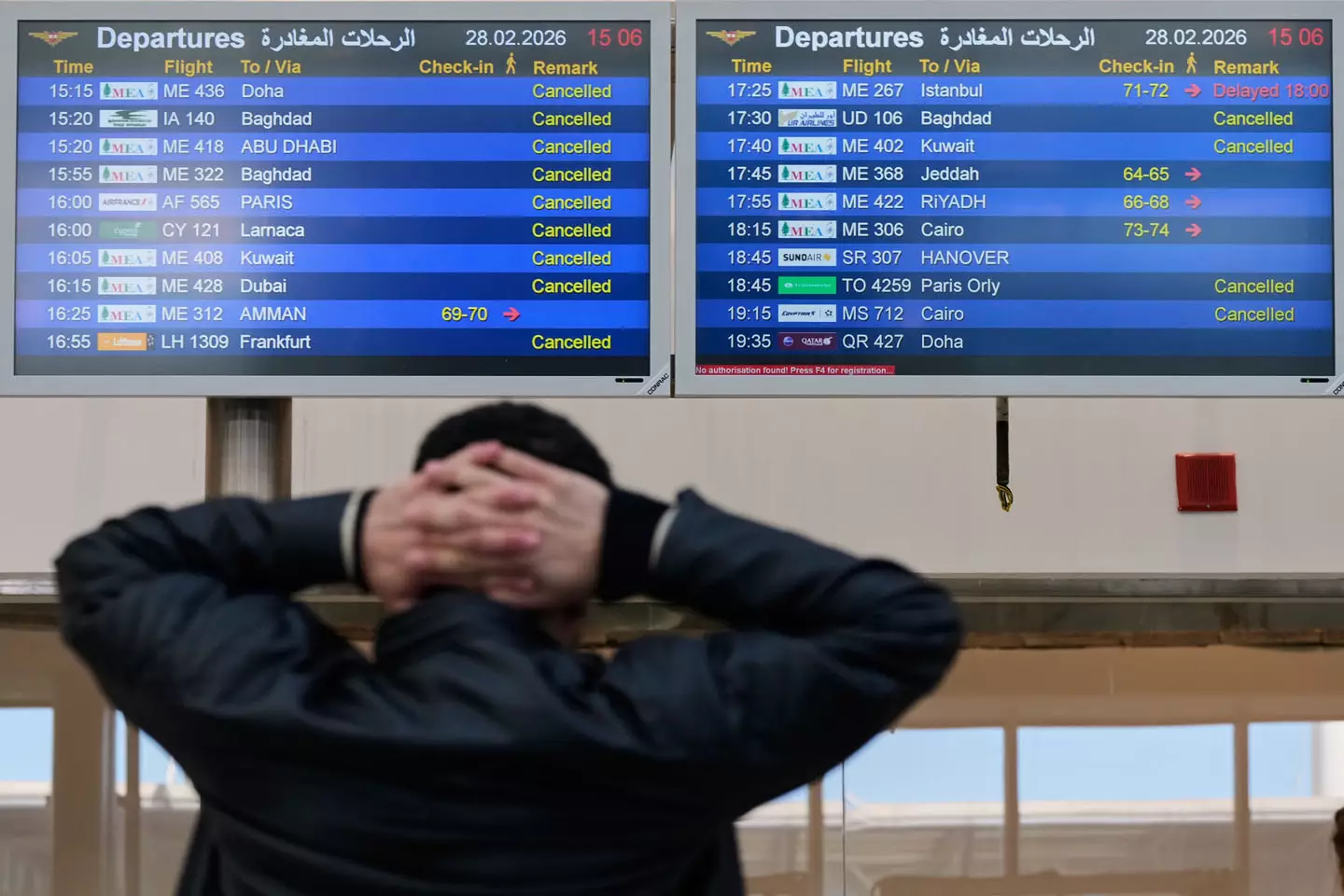
Escalating conflicts in the Middle East have raised a number of questions for travelers - from what happens when flights are canceled to whether travel insurance is valid in wartime circumstances
Instead of civilian aircraft, over Middle East Bombs are flying.
Some countries are closing their airspace, airlines are changing routes or canceling flights, and travelers are stuck in transit or at airports without clear information on when they will be able to resume their journey.
Deo tourist, among them numerous travelers from Serbia, who were already in the war region, faced exactly such a situation - returning home suddenly became uncertain.
In such circumstances, many practical questions arise: what if the journey is extended beyond the plan, who bears the costs of the return trip and whether travel health insurance valid in wartime circumstances.
As a rule, standard travel health insurance policies do not cover damages and expenses incurred as a result of acts of war, terrorist attacks or civil unrest.
"For basic risks, such as a cold, cuts or fractures, the insurance is valid, but damages caused as a result of war or terrorist acts are not covered as a rule," explains Miloš Mamula, director of the site, for "Vreme". Insurer.com.
In other words, if the passenger gets sick or injured during the trip, the policy is activated as in any other situation. However, should the injury or damage be a direct consequence of war actions, such costs are excluded from coverage.
Special policies that include the risks of staying in war zones exist, but they are intended for specific professions, primarily journalists and humanitarian workers.
"For tourists, such policies practically do not exist. If a standard policy covered wartime circumstances, it would be much more expensive and would not be profitable for most travelers. In 99 percent of cases, such a policy is not necessary," says Mamula.
Even when it comes to injuries or health problems that would normally be covered by the policy, in war zones an additional problem can arise - the availability of medical care.
"In standard circumstances, when a traveler activates the insurance, the insurance company connects him with a local assistant who helps to find the nearest health facility. In wartime, the question is whether such a system can work at all," says Mamula.
In addition to travel health insurance, there is also cancellation insurance travels. However, this type of policy is usually not purchased immediately before the trip and usually does not cover wartime circumstances, but rather situations such as illness or other reasons why the traveler is unable to travel.
In that case, the insurance company can cover the cost of the entire trip, Mamula explains.

In crisis situations, the problem of extending the stay abroad often arises, especially when air traffic is disrupted.
"People often ask us if they can extend their insurance when they are already abroad. It is possible, but insurance companies have different conditions. The extension is not automatic, nor can it be completed online, but a request is submitted for a specific case, after which the insurer decides whether to approve it," explains Mamula.
In practice, he adds, insurance companies in such situations generally approve the extension of the policy, but under certain conditions.
"With some insurers, one of the conditions is that there were no significant damages during the duration of the policy. If the insured used the policy due to minor health problems such as a cold, the extension is usually still approved," says Mamula.
The crisis in the Middle East has already affected the tourism sector. The director of the National Association of Tourist Agencies of Serbia (JUTA) Aleksandar Seničić assesses that the situation is uncertain and advises travelers to be extra cautious.
"At this moment, tourists should avoid traveling to the Middle East until the security situation stabilizes," Senicic said, according to Tanjug.
He adds that travelers who travel through travel agencies are in a somewhat more favorable situation, because agencies in crisis situations can help organize a return trip or change arrangements.
In the meantime, the Ministry of Foreign Affairs of Serbia has increased its warnings to citizens who plan to travel. The so-called "traffic light for travel", a system that indicates the level of security risk by country and provides recommendations for travelers, is also available on the ministry's website.
Citizens are advised to avoid traveling to areas affected by armed conflicts and to regularly follow security warnings and notifications from competent institutions. Those who are already in risk regions are recommended to stay in contact with diplomatic and consular missions of Serbia.
Serbia organized special flights for the evacuation or return of citizens from crisis areas.
The Minister of Foreign Affairs of Serbia, Marko Đurić, said that more flights are expected in the coming days for Serbian citizens who want to return from war-torn areas in the Middle East.
On the occasion of World Diabetes Day, Batut warns that a large number of people have this disease and are not even aware of it, because diabetes can go without symptoms for years.

The suspension of the work of the Refinery in Pancevo is considered inevitable, and the only unknown for now is the date when production will be completely stopped.

The late joining of Grecia and Surčinska streets, the construction of an underpass between Red Army Boulevard and Art Boulevard, the expansion of Patriarch Pavle Boulevard and many other infrastructure works

Payment of money starts on Friday, November 13, and scheduling is made possible through the website of Poštanska Štedionica

The student movement asks the competent state institutions to examine public procurement, the implementation of contracts, the spending of budget money and the respect of workers' rights in the construction sector.

At the moment when the institutions of the Republic are destroyed, when Vučić's octopus is still alive, when people are disgusted by the injustice and the stench left behind by the Essenes regime, we have, as Machiavelli said, only civic virtue as the fuel with which we can return to the beginning

The four independent members of REM are an example of perseverance and civic responsibility. Rodoljub Šabić even, upon leaving the premises of REM, after the sentencing of the Informer, experienced that the Essenes insulted him, hit him with their hands and feet. But that too will soon be over

Vučić pardoned the batterers and Dijana Hrkalović. The election winners should abolish the sultan's power that allows one man to run afoul of the entire judicial system

Interview: Branko Stamenković, public prosecutor of the Supreme Public Prosecutor's Office
A black picture and the breakdown of the rule of law subscribeThe archive of the weekly Vreme includes all our digital editions, since the very beginning of our work. All issues can be downloaded in PDF format, by purchasing the digital edition, or you can read all available texts from the selected issue.
See all



