

News
Batut: In Serbia, 220.000 people do not know they have diabetes
On the occasion of World Diabetes Day, Batut warns that a large number of people have this disease and are not even aware of it, because diabetes can go without symptoms for years.

Most people who spend half their lives abroad still want to be buried in Serbia. The doyen of the funeral business, Radiša Mihajlović Drnda, spoke about this for "Vreme".
When asked how work is going, Radiša Mihajlović Drnda (70) has been answering for decades: "Good, thank God!"
The doyen of the funeral business has a sense of humor. He is said to have created the advertising slogan: "All you have to do is die, the rest is our concern."
You can die anywhere in Europe. Even in Ireland or Finland. At any time of the day or night, Drnda goes to pick up a man who died abroad, but wanted to be buried in Serbia or somewhere in the region.
"For people, when it comes to transporting the deceased, the biggest enigma is the paperwork, but for us it's already routine." We finish everything with an email," said Radiša Mihajlović recently for our newsletter Međuvreme.
According to estimates, thirty to forty thousand deceased people are "exported" from Germany alone annually to the whole world. Those from our region are often said to have "gone home with Drnd".
How the business started
Mihajlović, a locksmith by profession "like Tito", was a guest worker himself. In Stuttgart, he did all sorts of things, drove a bus, worked in a sugar factory, worked for the railway, traded in used cars...
"Thirty years ago, a colleague of mine from Kučevo died there. That's where I met the deceased for the first time. And then I started thinking about that job. I started driving for one of our undertakers in Stuttgart," says Mihajlovic.
Today, the firefighting company "Drnda International" has about fifty employees and thirty cars - it is the largest of its kind in the region. A good part of the work is the transportation of the deceased from abroad.
People who have often worked abroad all their lives generally want to be buried where their roots are.
"There is something that psychologically binds all migrants, and that is returning to the country. In the case of burial, it is also literal," once said historian Vladimir Ivanović, who wrote several books and articles about Yugoslav guest workers.
"If you want to go deeper into psychoanalysis, it is a return to the mother," he stated.
Eternal rest of guest workers
Especially in the cemeteries in the Pozarevac area, you can already tell who was a guest worker by the monument or tomb. Entire houses are erected for the deceased, some are furnished, they even have televisions.
"It's nostalgia, they're tied," says Radiša Mihajlović. "The security and the monument and the burial place, their father and mother and grandmother and grandfather are also there." They are being dragged."
"In our area, in the villages, prestige is still valid - both when building a house and for a funeral, so that the village does not talk. "There is no such thing in the cities anymore," he says.
But price can also play a role in deciding where to lay to rest. A grave site and funeral in Germany can cost as much as ten thousand euros.
In Drnda, however, the price has been the same for years - one euro per kilometer of distance. Let's say, around 1.200 euros for transporting the deceased from Munich to Negotin.
By the way, Radiša Mihajlović is retired - he handed over his domestic work to his son, and part of his work in Germany to his daughter and son-in-law. Now he still participates in the organization of Graveyards, annual gatherings of undertakers from the Balkans. They say it's a great funeral.
On the occasion of World Diabetes Day, Batut warns that a large number of people have this disease and are not even aware of it, because diabetes can go without symptoms for years.

The suspension of the work of the Refinery in Pancevo is considered inevitable, and the only unknown for now is the date when production will be completely stopped.
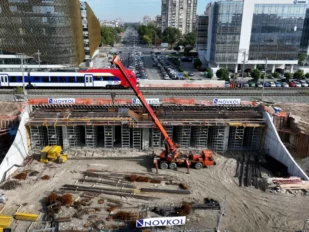
The late joining of Grecia and Surčinska streets, the construction of an underpass between Red Army Boulevard and Art Boulevard, the expansion of Patriarch Pavle Boulevard and many other infrastructure works

Payment of money starts on Friday, November 13, and scheduling is made possible through the website of Poštanska Štedionica

The student movement asks the competent state institutions to examine public procurement, the implementation of contracts, the spending of budget money and the respect of workers' rights in the construction sector.

At the moment when the institutions of the Republic are destroyed, when Vučić's octopus is still alive, when people are disgusted by the injustice and the stench left behind by the Essenes regime, we have, as Machiavelli said, only civic virtue as the fuel with which we can return to the beginning

The four independent members of REM are an example of perseverance and civic responsibility. Rodoljub Šabić even, upon leaving the premises of REM, after the sentencing of the Informer, experienced that the Essenes insulted him, hit him with their hands and feet. But that too will soon be over

Vučić pardoned the batterers and Dijana Hrkalović. The election winners should abolish the sultan's power that allows one man to run afoul of the entire judicial system

Interview: Branko Stamenković, public prosecutor of the Supreme Public Prosecutor's Office
A black picture and the breakdown of the rule of law subscribeThe archive of the weekly Vreme includes all our digital editions, since the very beginning of our work. All issues can be downloaded in PDF format, by purchasing the digital edition, or you can read all available texts from the selected issue.
See all



