

News
Batut: In Serbia, 220.000 people do not know they have diabetes
On the occasion of World Diabetes Day, Batut warns that a large number of people have this disease and are not even aware of it, because diabetes can go without symptoms for years.

Thousands of patients in Serbia have been waiting for diagnostic examinations or operations for years. Recently, there has been a sharp drop in the number of people on waiting lists, and what is life like when you wait years for surgery
He officially marked the end of January and the beginning of February 2026 so far the unexplained disappearance of thousands of patients sa waiting list for diagnostic examinations and operations. Everything followed the criticism of the President of Serbia, Aleksandar Vučić, to the Minister of Health and the Prime Minister of Serbia, due to the fact that his earlier promise that the waiting lists will be completely abolished by the end of 2026 will not be fulfilled.
After criticism, the number of people on the waiting list Republic Fund for Health Insurance (RFZO) was suddenly reduced, and there were no answers to the multiple questions sent by the "Vremena" editorial office to the relevant institutions about how the reduction in patients occurred.
However, the sharp decline was stopped already in the second week of February. Thus, on February 13, according to the latest data from the RFZO, there were 171 more patients on the waiting list compared to the day before, and a total of 29.556 people are waiting for operations and diagnostic examinations.
Most people are waiting for knee surgery - 12.349, and hip - 7.362. It is precisely from these lists that the most people have disappeared. Magnetic resonance imaging of the head and spinal column is followed by the number of those waiting for examinations, with more than 4.500 people.
At the same time, since the beginning of February, according to RFZO data, 2.702 people were removed from the waiting list, 1.016 services were provided to people who were on the waiting list and 4.383 services were provided to those who were not on the list.

Some experts see the beginning of the pre-election campaign in the numbers, while the Banjica Institute states that there has been a change in the instructions on how patients get on the list.
A 66-year-old man from Smederevac was on the waiting list for knee surgery at the Institute of Orthopedics in Banjica until a few months ago.
Problems with the knees started back in 2019 - at first as a mild pain and a warning that there could be complications. The interlocutor of "Vremen", an electrical engineer by profession and a fruit grower, says that he did not care too much about the symptoms at the time. Work in the countryside does not leave much room for rest, and he admits that he continued his physical work despite the pain.
He did the first analyzes in Smederevo, where they did not pay him much attention and where, according to his claims, the situation is catastrophic. Then he goes to the VMA, where the orthopedist recommends expensive injections into his knee. He received therapy twice and, he says, it helped him temporarily. "I was told I wasn't up for surgery yet, but eventually I would have to."
As the months passed, the pain intensified. He started driving with difficulty and doing less and less work. He goes to Smederevo again for an examination, but describes it as "minimalist". That's why he goes to a private orthopedist. There, the ultrasound shows, as he says, a "catastrophic condition of the knee" and a recommendation for surgery, but also injections again as a temporary solution.

When that didn't help anymore, he tried to get a referral to the Institute of Orthopedics in Banjica. He expected a detailed examination and a conversation with the doctor.
"I thought they would give me at least twenty minutes to look at the findings and explain what and how. However, as soon as I walked in, it was clear to me how everything was going to look."
Two orthopedists worked in the clinic at the same time. The examination lasted a short time: the doctor, he says, only felt the knee over his pants, looked at the video and said that it was for surgery, but that it would take a long time. When asked how much, he did not get an answer.
"I started bidding: four years? He shook his head and told me that I would be notified by letter of the date of surgery."
The notification came a few months later: the operation was scheduled for 2029. It was 2023.
"When I read that I had to wait six years, it was both sad and funny at the same time," he says. In the meantime, he reduced his workload and got used to the restrictions, and he says that when he heard earlier that the lists would be abolished by the end of 2026, he was incredulous, because, as he explains, "he doesn't trust the president."
Last September, however, he received a new letter stating that he should report on October 6 with a dozen findings to the anesthesiologist in order to prepare for the operation. He was surprised to get an appointment four years earlier than originally planned.
The short deadline was, however, almost impossible: "It is impossible to collect so many findings, with an appointment with the chosen doctor, in such a short time, especially in smaller communities."
At the same time, his wife suffered a stroke and required constant care, so he had to postpone the operation, since in the situation he found himself in, he said, he could not allow himself to be semi-invalid for several months while he was recovering.
He reported to the hospital at the appointed time, without any findings, in order to explain his situation. At Banjica, the doctor gave him a phone number to call when he was ready, but he was removed from the waiting list. He was told that when he reported back, he would be on the list again, but on priority for surgery.
There is no appointment today. He says that he hasn't even called yet, partly because of his wife's recovery, partly because of the state of health care.
"Looking at what's going on in health care, I wouldn't even dare now. I'll wait for a quieter time."
He does not know how long he will have to wait for a new appointment when he re-registers.
In the meantime, he inquired how much the operation would cost privately and how much he would have to borrow if the situation became untenable.
"If it turns out that I can't walk, I would take out a loan and go privately," concluded the "Vremena" interlocutor.
He also wants to remain anonymous because he fears that speaking publicly on the subject could further delay his surgery once he is back on the list.
While the authorities do not announce the sudden drop in the number of people on the waiting lists, there are different interpretations, and there are those who believe that it is all connected to the election campaign.
"This is, in all likelihood, a classic election campaign," Danijel Raspopović, a specialist in orthopedics and traumatology at the Banjica Institute and a member of the Health Committee of the Freedom and Justice Party, told N1 earlier.
In question, as he explained, are "lies, manipulation and deceiving the patients of this country".
"The waiting list is being reduced artificially, parallel lists are being created in order not to show the public that there are significantly fewer patients on the waiting lists than they actually are," said Raspopović.
The organization "Doctors against corruption" announced in the meantime that it doubts the reliability of the RFZO data related to waiting lists, since within a few days the number of patients waiting for hip and knee surgery has drastically decreased.
According to N1, on January 27, the Banjica Institute received instructions from the Ministry of Health regarding maintaining a waiting list.
The instructions, it is stated, contain criteria on the basis of which patients can be placed on the waiting list, that is, who can be on the list if they were previously placed on it before the day of the start of the application of the delivered instructions.
"The instruction of the Ministry of Health defined new clinical and radiological criteria on the basis of which the patient is entered on the waiting list only after 18 months have passed from the day when the diagnosis, which involves the installation of an artificial joint, was made. Until then, records are kept on the basis of which the entry on the waiting list will be made. Every patient will be registered and referred to the waiting list after fulfilling the formal conditions defined by the instruction of the ministry, and the patient will become visible at some point on the waiting list itself, which is publicly available," reads the answer of the Banjica Institute, which was published by N1.
On the occasion of World Diabetes Day, Batut warns that a large number of people have this disease and are not even aware of it, because diabetes can go without symptoms for years.

The suspension of the work of the Refinery in Pancevo is considered inevitable, and the only unknown for now is the date when production will be completely stopped.
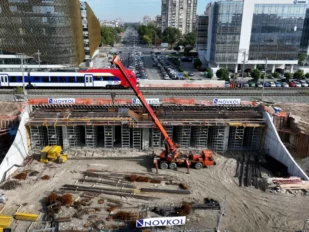
The late joining of Grecia and Surčinska streets, the construction of an underpass between Red Army Boulevard and Art Boulevard, the expansion of Patriarch Pavle Boulevard and many other infrastructure works

Payment of money starts on Friday, November 13, and scheduling is made possible through the website of Poštanska Štedionica

The student movement asks the competent state institutions to examine public procurement, the implementation of contracts, the spending of budget money and the respect of workers' rights in the construction sector.

At the moment when the institutions of the Republic are destroyed, when Vučić's octopus is still alive, when people are disgusted by the injustice and the stench left behind by the Essenes regime, we have, as Machiavelli said, only civic virtue as the fuel with which we can return to the beginning

The four independent members of REM are an example of perseverance and civic responsibility. Rodoljub Šabić even, upon leaving the premises of REM, after the sentencing of the Informer, experienced that the Essenes insulted him, hit him with their hands and feet. But that too will soon be over

Vučić pardoned the batterers and Dijana Hrkalović. The election winners should abolish the sultan's power that allows one man to run afoul of the entire judicial system

Interview: Branko Stamenković, public prosecutor of the Supreme Public Prosecutor's Office
A black picture and the breakdown of the rule of law subscribeThe archive of the weekly Vreme includes all our digital editions, since the very beginning of our work. All issues can be downloaded in PDF format, by purchasing the digital edition, or you can read all available texts from the selected issue.
See all



