The placement of the senior national team in the European Championship after five missed championships, only slightly improved the overall bad year for domestic football, because even that placement was achieved with little effort, in a weak qualification group and with a lot of luck. Everything else that has happened in the past 12 months is more or less forgettable, or rather, of great concern and much-needed in-depth analysis, but knowing who manages the Football Association of Serbia (FSS) and the biggest clubs, it is unlikely that they will soon come to any cut and necessary changes.
STADIUM DESERT
Let's start with the domestic championship, which, unfortunately, is still interesting only to those who take part in it and to rare football fans. Few people come to the stadiums and the attendance is among the lowest in Europe (there are more spectators, for example, at one match of "Cvajta", the Second German League, than at all the matches in one round of the Serbian Superliga, and only Red Star's matches and somewhat Partizan), and there are few who follow the results in the highest ranks through the media, although it is indisputable that football still has a large number of fans in our country, which is clearly seen by the interest in foreign leagues, European club competitions and national team matches.
Quite simply, the Superliga, and even the lower ranks, disgusted local football fans to the greatest extent. There are many reasons: affairs, rigging, crime, hooligans in the stands and in the club administrations, side by side with various controversial characters, bad (party) personnel in the FSS and many other things off the field. As for the field itself, the quality of the players, especially the coaches, is getting weaker and weaker. Admittedly, football talents, good moves can still be seen in our leagues, and there is no doubt that there would be many more spectators in the stands if it weren't for the first one, just listed.
This summer, Red Star won the sixth consecutive title, and it proved its dominance with a record series of victories and unbeaten matches, a large number of goals scored and a small number of goals conceded, a point difference compared to competitors and similar successes on the domestic level. Supported by state and parastatal money and led by general manager Zvezdan Terzić, Zvezda proved its supremacy off the field as well - in the FSS and the Association of Clubs, but also in the public, with the all-round support of the media close to the ruling party. And what turned out to be the most important thing - Terzić and his team from the administration and from the Northern Tribune proved that they wholeheartedly support the President of the country, Aleksandar Vučić, and he reciprocated with numerous favors.
The new championship started late because it was not known who would play in the top tier after UEFA indicated that several matches in the previous season had "damaged the integrity of the competition", which is the European Federation's euphemism for match-fixing. In the end, the guild paid Kolubara from Lazarev, but not drastically, because it was moved to the First League of Serbia instead of - as the rules dictate - to the lowest rank. As Zvezda strengthened during the summer with 30 players and a coach from abroad, and then in the preparatory period, they achieved good results, somehow it was confirmed that the question of the Serbian champion was not raised - the focus was on the scope of Terzic's super team in the Champions League. In the first four rounds, Zvezda scored four victories, but then, as if some invisible force punished the arrogance, arrogance, excessive and reckless spending of the couple, so the project of creating a "Serbian Bayern" - as director Terzić triumphantly announced this summer - fell into a dead end. and he is even deeper there after the desperate results on the European stage, but more on that later.
And on the domestic front, everyone was surprised by the "half-dead" Partizan, which does not shine, but is just so composed and coordinated that it overtook the collapsed Zvezda and ends the half-season as the leader in the standings. In the past decade, the club has been so disorganized, indebted and criminalized that it is a miracle that it competes at all, and this is further damaged by the frequent appearances of coach Igor Duljaj, who speaks publicly about penury and poor organization and who, despite everything, managed to raise the team and lead her to first place.
There are good examples in the Superliga, of private clubs that function well and support themselves, but they also suffer from numerous anomalies that have long dominated local football and in such an environment their reach is limited, which is especially evident when some of those clubs perform in European cups.
DEFEATED AND OUTCLASSED
The quality of the Serbian "Bayern", its main rival and other leading Super League clubs, is best evidenced by the performances in European competitions. And last year they were such that Serbia dropped from 11th to 19th place in the UEFE ranking of coefficients, which means fewer places in European cups.
Thanks to the better coefficient of Serbian clubs from several previous seasons, Crvena zvezda directly qualified for the Champions League as champions, but not only was it last in the group, but it was far inferior and weaker than in the previous two appearances in the strongest European competition. Nothing better, although the expectations were not too high as in Zvezda's case, TSC from Bačka Topola did not pass in the group stage of the Europa League and Čukarički from Belgrade did not pass in the group stage of the Conference League. The team that emerged from the project supported by money from the Government of Hungary won one point in six games, while "Chuka" recorded all six defeats. Before that, TSC entered the Europa League after two defeats against Portuguese Braga, and Čukarički played in the Conference League after being defeated in both games by Greek Olympiakos in the Europa League qualifiers.
The only victory on the European stage this season was recorded by Partizan, in this year's qualifiers for the Conference League, over Azerbaijan's Sabah. The "Black and Whites" were then outclassed in two duels with the Norwegian Nordsjeland and did not make it to the group stage, and Vojvodina from Novi Sad did not progress beyond the first round in the same competition, which suffered two defeats against the Cypriot Apoel.
All in all, five clubs from Serbia experienced 25 defeats in 28 games in UEFA cups, with two draws and only one victory.
REPRESENTATIVE MAXIMUM
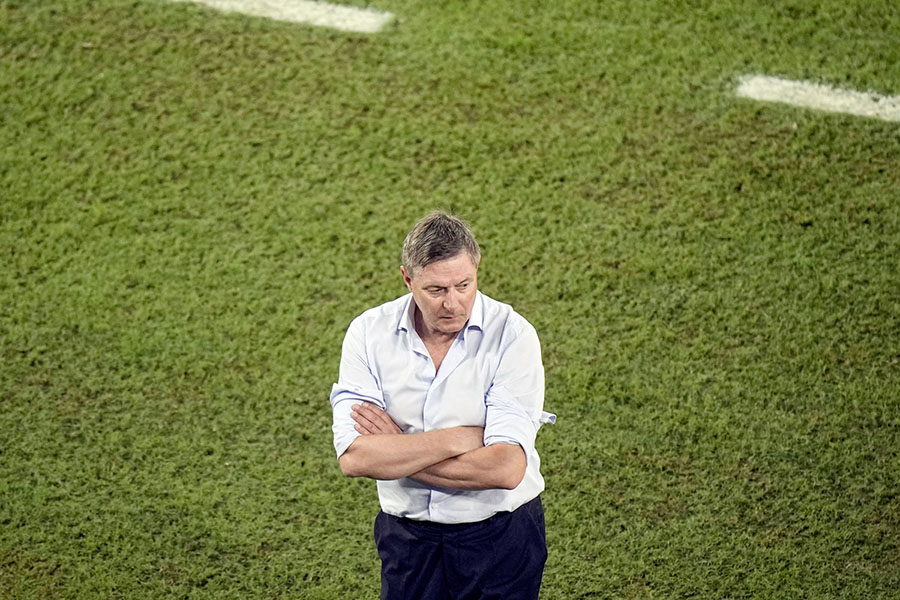
By placing in two major competitions, the World and European Championships, and by placing in the strongest group of the League of Nations, Dragan Stojković Pixi entered the ranks of the most successful national team selectors, certainly the most successful in the last three decades, but it is obvious that his star as a selector is fading: his first " shortened" his powers in the FSS, and then the team he leads started to play again as before his arrival - disjointed, boring and sloppy, and his authority in the public collapsed in many ways from failures in Qatar and simple outbursts on the bench to flattering Vučić and the controversial coach's salary. Some expected him, like the coach of the Czech Republic, Jaroslav Šilhavy, who led the national team to the European Championship, to hand over his duties, but after signing to support Aleksandar Vučić's list in the elections, it is clear that he will remain, even if he has to fight for the favor of the leader to the powerful people in our football, starting with Zvezdan Terzić and the leaders from the Northern Tribune, who made his days when he was doing the best, and it is unlikely that they have changed their minds in the meantime.
In the qualifiers, Serbia slipped through one of the weakest groups in terms of quality, with two defeats against Hungary, two lucky draws with Bulgaria and two victories each, not at all convincing, in duels with Montenegro and Lithuania. That's why few people, even among our always unrealistic football public, hope for any success next summer at the European Championship. And after the draw for the rivals in the group determined England, Denmark and Slovenia, the number of optimists among the fans is measured by the percentages won by Tadić and Radulović in the recent elections. Of course, as the European Championship approaches, optimism will grow, but it will not be close to the euphoria that gripped the nation last year before the World Championship in Qatar. And there are more and more fans who realize that our highest goal is to qualify for a big competition (which has been made easier in recent years due to the increasing number of participants) and that it is not necessary, and it is not even possible, to look for bread and cakes.
The poor results of the younger national teams contributed to the bleak football picture in 2023, and the defeat of the young national team (under 21) against England was particularly painful - 9:1. For the umpteenth time, this opened a discussion about the football profession, which has declined in the last two decades to such a level that there are no coaches from Serbia in strong European leagues and there are no indications that there will be any in the near future.
ANOTHER LOST YEAR
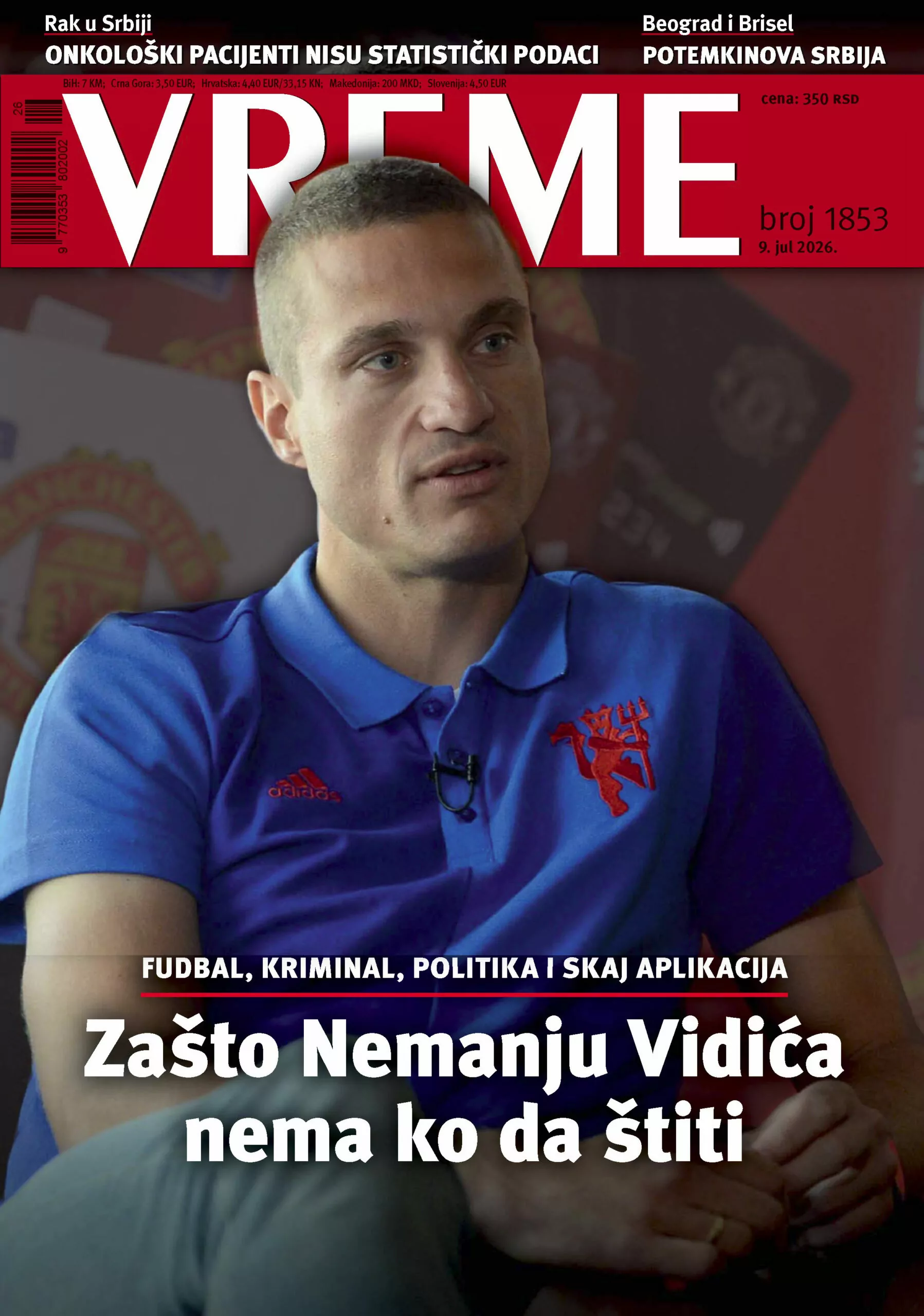
Weak league, weak clubs in Europe, shaken representative selections, bad coaching staff and all other anomalies are the result above all of the work and inaction of the Football Association of Serbia. Although the Association got a new president and new leadership last year, little is better than when the progressive Slaviš Kokez was in charge. A change was made for the sake of change, and the new president Dragan Džajić was promoted only to throw out the famous football player Nemanja Vidić, whose arrival at the head of the FSS would certainly bring positive changes. But the progressive government embodied in Aleksandar Vučić did not want to take any chances with Vidić, but occupied the FSS even more and installed its own cadres, from Branislav Nedimović in the position of vice-president (practically president in addition to the disinterested and temporary Džajić), to the president of the regional associations. And Vidić not only stumbled in his attempt to run for FSS president, but in accordance with current progressive standards, he was belittled and insulted, and not everyone from the football world who supported him in the campaign was spared.
Thanks to the successes of the national team, the budget of the FSS is well filled, but mostly they spent that money in the Federation on themselves, and this was recently pointed out by Nemanja Vidić, and Mirko Poledica, the president of the Independent Union of Professionals, has been talking about the disputed financial reports of the FSS for years. football player and as such a member of the FSS Assembly.
And that progressive influence is perhaps the basic explanation why football in our country is languishing and decaying, while at the same time it is developing all over the world and bringing in big money, especially in Europe. Even before Vučić and the progressives came to power, Serbian football was not exemplary, but from today's point of view, the reign of Tomislav Karadžić and his team looks exemplary.
It's not like the nineties, when, in addition to everything else, football also collapsed, or rather, turned to the dark side and was left to criminals and the half-world, but today's football scene in many ways reminds of that time of evil and ruin. Megalomaniacal and overpriced new stadiums do not help here, nor do million dollar investments in arrogant projects by Zvezda and Partizan administrations, and least of all bribing hooligan groups, but systemic changes, from municipal associations to FSS, from the lowest to the highest league, from the smallest to the two largest club. Occasional successes of a national team or a club happen for the simple reason that thousands of young people still play football, and many play it well and despite everything that surrounds them, they find a way to success.
All in all, the year that is coming to an end is another one lost for radical changes, and as things stand, there won't be any big improvements for the better in the new one either. Moreover, we can only expect new affairs, cases, disagreements and everything else bad that has predominantly characterized our football so far.