The Serbian people, historically steadfast and state-building, gave birth to several dynasties: Vlastimirović, Nemanjić, Kotromanić, Hrebeljanović-Lazarević, Branković, Crnojević, Balšić, Petrović-Njegoš, Karađorđević, Obrenović. The last two ruled the modern Serbian state for 141 years (1804–1945), changing power four times. The Karađorđevićs ruled for 68 years, and the Obrenovićs for 72 years (1814 is not included), giving the Serbian family five rulers each. With the exception of Milan Obrenović (son of Knez Miloš), who died young - he ruled for only 26 days, and Petar I Karađorđević, who came to the throne as a widower, the other rulers from both dynasties were married during their reign.
Out of a total of ten new-century rulers of Serbia, only four came to the throne married: Karađorđe Petrović, his son Aleksandar and grandson Petar, and the only Obrenović - the progenitor of the dynasty, Miloš.
The youngest married Milan Obrenović, grandson of Miloš's brother Jevrem, prince 1868–1882. and king 1882–1889, who was just over 21 years old on the day of his wedding. Milan's wife Natalija was only 16 years old on the day of the wedding, so she was the youngest Serbian princess. The eldest married Petar I Karađorđević, at the age of 39.

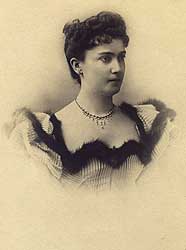
Draga Obrenovic
Modern rulers of Serbia usually married younger girls - on average nine years younger, but two of them also married older ones: King Aleksandar Obrenović married a widow Draga Mašin (née Lunjevica) who was ten years older, and King Petar II Karađorđević married two years older Alexandra. after the death of the Greek king Alexander I. The biggest age difference (20) was between the then (1883) pretender to the Serbian throne, Petar I Karađorđević and Princess Ljubica (called Zorka), daughter of Montenegrin Prince Nikola Petrović. Unfortunately, Zorka died after only seven years of marriage, at the age of 26.
Of the nine rulers, four married foreign women: Mihailo the Hungarian countess Julia Hunyadi, Milan the Romanian aristocrat Natalia Keško, Alexander Karađorđević the Romanian princess Maria Hohenzollern and Petar II Karađorđević the Greek princess Alexandra. By the way, Milan and Natalija were very close relatives, i.e. their parents (Natalia's father Jovan Keško and Milan's mother Marija Katardzi) were children of two sisters, i.e. they had the same grandfather. As Milan and Natalija were sixth generation, or second cousins, their marriage had to be previously approved by the church, i.e. Metropolitan Mihailo, which was not done. According to paragraph 51 of the Marriage Rules of the Serbian Orthodox Church, a marriage of the sixth degree-knee must be "dissolved" by the competent archbishop, taking into account "so that the dissolution does not cause scandal in the family, society or people". From such a marriage, in 1876, Aleksandar was born, who ruled Serbia from 1889, after the abdication of his father Milan.
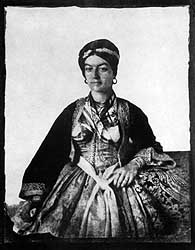
Persida Karađorđević
The most children (nine) were given to her husband by Princess Persida, b. Nenadović (married to Aleksandar Karađorđević who ruled from 1842 to 1858), while Princess Julia (Mihailova) and Queen Drago (Aleksandrova) did not give birth. Nevertheless, Prince Mihailo had a son Velimir with the Slovenian Maria Berghaus, and Milan had an illegitimate son Đorđe with Artemisa Hristić.
The marriage of Karađorđe and Jelena lasted the longest (31 years), and the marriage of King Aleksandar Obrenović and Queen Draga lasted the shortest (2 years and 10 months), which was ingloriously terminated by the heinous act of murdering the royal couple. Ljubica Obrenović was with her husband the longest, while he was the ruler, (24 years with Miloš), and Draga Obrenović was with Aleksandra the shortest.
Two rulers from the Obrenović dynasty divorced: Prince Mihailo from Julia (1868) and King Milan from Natalija (1888). Eleven years after Mihail's murder, Julia remarried. She lived 88 years, a full 51 years after Mihailo's death. Natalia also lived to a very old age. After her divorce from Milan, she mostly lived in Biarritz, a small town on the French Atlantic coast, in a villa she named "Sashino" after her only son. Alexander's (Sasha's) wedding to her former lady-in-waiting Draga Mašin brought her severe disappointment. After her son's murder ("May Uprising" in 1903), she found comfort in the company of a Spanish Catholic family, so she converted to the Catholic faith and became a monk. The first modern Serbian queen died on May 5, 1941 at the age of 82, 40 years after the death of her ex-husband Milan. He rests in the Lardi cemetery near Paris.
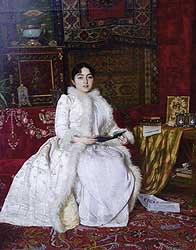
Natalija Obrenović
After the murder of her son Aleksandar, Natalija inherited all the property of the Obrenović dynasty. In her will, she left part of that property to the University of Belgrade and monasteries and churches in Serbia, the Obrenović endowments. That part of the will has been implemented. Knowing that descendants of the Obrenović dynasty live in the village of Brusnica near Gornji Milanovac, the former queen dedicated the second part of her will to them. In 1961, an official of the French embassy came to Brusnica and inquired whether there were any living relatives of the late rulers, in order to fully implement Natalia's will. However, the circumstances were such that no Obrenović living at the time was allowed to acknowledge blood kinship with the dynasty. Even to this day, the testament has not been fully realized (nor is its content known), and occasionally people appear who try to prove that they are descendants of famous Serbian rulers. Natalia left behind her memoirs, which are rightfully assumed to be in the Vatican.
Two wives of former rulers were expelled from Serbia: Princess Ljubica in 1842 and Queen Natalija in 1891, both due to the fear of the current authorities that they could, through their sons, influence state politics.
Three wives of Serbian rulers were widows: Jelena (Đorđa Petrovića Karađorđa), Maria (Aleksandrova) and Aleksandra (Peter II), all three from the Karađorđević dynasty. None remarried.