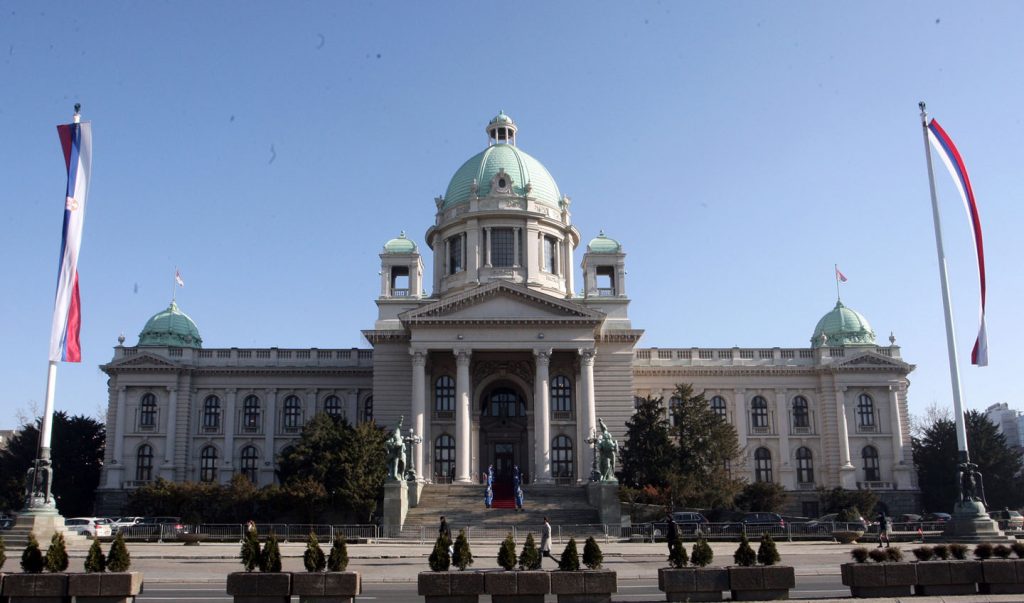
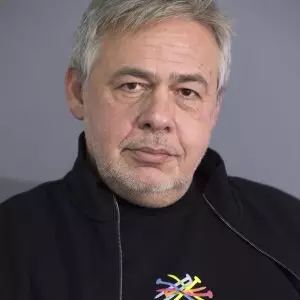
Government of SerbiaBelgrade, December 25, 2002. Regular Annual Press Conference of the Government of Serbia, DR. Zoran Djindjic photo by Aleksandar Andjic
What were the expectations of citizens in 2001 and what might they be in 2026? What unites the political reality of that time with today's? Why are organized crime and systemic corruption still among the biggest problems in Serbia? What is the most important political legacy of the first democratically elected prime minister? How much can the government that comes after the progressives learn from his example
Vlada Zoran Djindjic it was formed a quarter of a century ago. Although many things are different today than then, there is every opportunity to be the first post-Vučićevski cabinet to face similar problems as the first post-Milosevic one.
GREAT EXPECTATIONS
photo: Aleksandar Anđić...
No matter how much Đinđić was aware of the disastrous situation in the country - and he was and how - he could only see the depth of the abyss in which it was after coming to power. Serbia, exhausted and ruined in the lost wars of the nineties and long-term sanctions. Nevertheless, the citizens demanded from Đinđić an almost immediate improvement in living standards and economic recovery. After the euphoria after the crash Milošević regime, patience hardly existed. Although the Prime Minister and his ministers achieved a lot on the economic front, it was never enough for the general public.
Certainly not to the extent of the beginning of 2001, the government that comes after Vučić's regime may have a somewhat similar situation. In other words, it may face a drop in standards to a lower level than it was before the change of government. Belgrade on the water, free transportation in Belgrade, Exhibition and various capital projects with capital construction will come due. Just as Đinđić did not have a magic wand to solve the problems inherited from Milošević's time, some future prime minister will also be left reeling from the consequences of Vučić's public and secret dealings.
PLANS AND REALITY
At first glance, Djindjic had an extremely comfortable majority in the National Assembly. How could it not - the Democratic Opposition of Serbia (DOS) won 176 parliamentary seats in the elections of December 23, 2000. However, the Government was a coalition, made up of as many as eighteen parties. Except for the Democratic Party of Serbia Vojislav Koštunica which left DOS, the other members remained with the Prime Minister. The reason was not real support, but the justified fear of those small parties dying out of power. But if they did not have the strength to create political processes, they could also obstruct them. That's why Đinđić had to "pacify" them from time to time in order to maintain the authority of the Government.
In all likelihood, the cabinet that comes after the progressive one will not have a two-thirds majority in the Assembly. It is also possible that it will be formed only if the Student List as the dominant partner enters into a coalition with the opposition. Although not in the same way as Đinđić's, such a government will not be characterized by longer homogeneity. And also due to the fact that the Student List - after all, like the students themselves - is politically heterogeneous.
Will the first post-progressive government last four years, as it is announced here and there? Perhaps, since political plans are like war plans - they fall apart in the face of reality. That cabinet will have the strength to start the process of freeing the hijacked institutions, demonstrate transparency in work, enable media freedom, organize fair and honest elections and do some of the most urgent tasks. This is not small, on the contrary. It's just that, after the honeymoon with the voters, within the Student List - conditionally speaking - the division into left, right and center follows. And then it will become almost impossible to preserve the unity for the functional work of the government.
Đinđić faced a similar challenge. There were two reasons why he did not fire up his own cabinet already after a year. First - new elections would stop the reforms he was in charge of. And others - as long as his Democratic Party becomes the strongest party in the Parliament, he will have to enter a coalition again. And not with political subjects of similar commitment, but with those with whom he is bound by a minimum of political interests.
When it comes to this, the post-progressive government will be in an incomparably better position. The public does not perceive it as a party whose main reason for existence is the conquest of power, but as a bridge to political and social normality. If ironing out internal differences becomes a ballast for the functioning of that government and the parliamentary majority, the announcement of fair and honest elections will not be considered a defeat, but the achievement of one of the most important proclaimed goals.
Although the expert part of the Đinđić Government was the best, experts do not solve everything. They can only be successful as long as they have political support. In this context, Đinđić did not stand as a lightning rod in front of his experts for nothing. In the case of the Student List, it can only play a similar role collectively and with great internal homogeneity. And that - as already stated - cannot last long.
MAFIA AND THE STATE
When Đinđić became prime minister, citizens expected the opening of a front against crime and corruption. What could he have done at the very beginning? The answer is - very little. On the eve of October 5th, in order to avoid bloodshed during the overthrow of Milosevic, the leaders of the opposition made agreements on "neutrality" with the heads of the army, police and services. The deep criminalization and corruption of those "factors" during the nineties greatly paralyzed the Đinđić Government. Or - so that the people understand - the prime minister had no one or nothing to stand in the way of organized crime, whose tentacles were enveloping the entire country. And when he managed to form the basic instruments for dealing with the mafia, he was killed in an assassination by members of the drug clan and the special unit of the Service.
A similar job awaits the government after the progressives. The promotion of Vučić's super-loyalists in the police and services and their joint efforts to destroy the judiciary mean that the future prime minister and ministers will have their hands full. It will not be easy for them, especially when you take into account the expectations of the people. Nevertheless, there are now judicial instruments - admittedly quite neglected - that Đinđić did not have. Their activation is not only a question of the credibility of the future government, but also of the survival of the constitutional and legal order. Impatience, haste and rashness will not help. Even at the cost of slipping individuals through the mouseholes of the law, the creation of an efficient and independent judicial system is the only way to curb systemic corruption and the accompanying organized crime.
And something else. The fight against progressive kleptocracy and masters of other people's pain must not become a witch hunt. Đinđić managed to avoid it in a much more difficult situation than this one today. Writing it as a sin is no different from Vučić and the progressives, who protect their power with revanchism and fear.
WHERE DID IT STOP?, YOU EXTEND
Finally, why is the formation of the Djindjic Government important after twenty-five years? If for no other reason, then at least to look at her problems, mistakes and successes. Much of what Đinđić dealt with is still open today, only under different circumstances.
But the most important is his legacy. It reads: change is possible, justice, democracy and truth can win, and Serbia can become a normal and modern European country.
What is happening in the country and the world, what is in the newspapers and how to pass the time?
Every Wednesday at noon In between arrives by email. It's a pretty solid newsletter, so sign up!
How were the cases kept out of control, the investigations directed towards the citizens who sought protection, and the prosecutors were left without answers from the police? Branko Stamenković talks about the findings of the commission of the Supreme Public Prosecutor's Office, the responsibility of his colleagues and what is needed for the institutions to work according to the law again
Who now decides on the Government and the program, the plenum or the deputy? There are different views on this in the Student Movement and among the people on the list, but a middle solution is being sought, "Vreme" learns. Be that as it may, the program of over a thousand pages already exists
The outgoing government treats the state like an apartment from which it moves out after losing a dispute. And all the time she shouts loudly that her neighbors are demolishing the building
"The main priority of the new government should be the preservation of employment and the growth of the standard of the population. And this will not be easy to achieve at all, because we will have a decline in employment in clientelistic companies that cooperated with the former regime. Some will close, but the important thing is that many people will lose their jobs. In the case of large private companies that are experiencing difficulties, the government should commit to better owners taking over these companies in order to save thousands of jobs. We will already have this case with Davora Macure's companies, among which is "Idea"
How much money from the Growth Plan has been irretrievably lost for us, how much has been frozen and how much is still waiting for us? What should Serbia do in order to receive these European funds and what will the citizens get from it? Is a new chapter in Brussels-Belgrade relations beginning?
Aleksandar Vučić does not constitute reality with his language, but an illusion, the only thing is that now he will no longer be able to impose the illusion on police batons and paid beaters. He showed this at the constitutive session of the National Assembly
On Tuesday, November 17, the constitution of the National Assembly begins, in which the Student List has an absolute majority. Why is this day historic for Serbia?
Aleksandar Vučić would like Serbia to be grateful to him for not turning the election defeat into violence. Before that, he would have to explain what the preparations for election night were for, first of all in Pionirski Park
The archive of the weekly Vreme includes all our digital editions, since the very beginning of our work. All issues can be downloaded in PDF format, by purchasing the digital edition, or you can read all available texts from the selected issue.
Djindjic alone could not transform Serbia. The sentence that says "it would have been different with him, and now everything is over" is simply defeatist. If you respect Zoran's work so much, do what he would have done - fight now, believe in yourself and don't stumble and give up