The thesis that is mentioned in the public that EPS, if only there was enough coal, could have earned a billion euros from exporting electricity is wrong. With the existing production capacity of EPS, this was simply not possible; on the contrary, due to very poor hydrology and despite the full production of electricity from coal, Serbia would still have to import smaller amounts of electricity. That is why the priority is the construction of new capacities, the only question is - which ones
In the exposé of the representative Ana Brnabić, energy is listed as an absolute priority of the new government. However, apart from the principled positions on alignment with the EU's energy policy and the "green agenda", the exposition mentions few concrete measures that the government intends to undertake. Of the new projects for electricity production, she stated that the government is "planning negotiations on the construction of two new reversible hydropower plants (RHE) - 'Bistrica' and 'Đerdapa 3'". According to the report, as much as 12 billion euros should be invested in the "new energy policy" as part of the (progressive) program "Serbia 2025"; it should be said right away, it is an extremely large amount of money - this was roughly the amount of budget revenues for 2021.
It is no coincidence that the mandate holder used the term "new energy policy" in her exposé, even though the new government of Serbia is a coalition of the same parties as the previous one, with the dominant role of the president of the republic, Aleksandar Vučić.
That term indicates a certain deviation from the course led by Minister Zorana Mihajlović in the last mandate of the government; her departure from the government was not caused by a conflict with progressive fighters such as Vladimir Đukanović, but primarily by Aleksandar Vučić's dissatisfaction with a series of her wrong moves. That "breakup" will have its proper culmination, especially if the former minister's public criticism of the party in which she was vice-president continues, and is still (at least at the time of writing) a member of its presidency.
WITHOUT INVESTMENT THERE IS NO ELECTRICITY
EPS can no longer ensure an orderly supply of electricity from domestic sources without major investments in new production capacities. This became clear to the state leadership after the dramatic interruption of electricity production in thermal power plants in Obrenovac due to low-quality coal. This happened due to the constant postponement of investments in new coal mines, which should have started five or six years ago.
But even when the new mines in the Kolubara basin become operational, EPS's problems will not disappear. Due to the gross negligence of all authorities after 2000, EPS did not build any new power plants. The "youngest" thermal power plant, "Kostolac B2", was completed back in 1991; since then, EPS has only modernized individual boilers and aggregates in hydropower plants. This slightly increased the production capacity of EPS, but it is not enough to cover the growing electricity needs. If the population had not decreased by almost 2001 percent from 10 to today, from 7,5 to around 6,8 million, the import of five to 10 percent of electricity would have been inevitable even if there had been no problems with coal mining in Kolubara.
Currently, EPS is completing the construction of block B3 in the thermal power plant "Kostolac", whose power is 350MW. In cooperation with Republika Srpska, preparations have begun for the construction of the "Buk Bijela" hydropower plant with a capacity of up to 115 MW, but the question is whether anything will come of it, bearing in mind the constant obstruction of Bosniak politicians, all the more strange that according to the Dayton Agreement, energy is under the complete competence of the entity , not Bosnia and Herzegovina.
Electricity consumption will increase in the coming years despite the further decline in the number of inhabitants. More and more electric cars will be in use, the population will switch to using heat pumps as the most efficient way of heating instead of gas, coal and wood. The industry will also reorient to the greatest possible use of electricity as an energy source instead of fossil fuels. It is estimated that for complete "decarbonization" in 2050, Serbia will need about 50 percent more electricity than we currently produce.
NEW CAPACITIES ARE IMMINENT
photo: m. jankovicCLEAN AND DIRTY SOURCES OF ELECTRICITY: Thermal,...
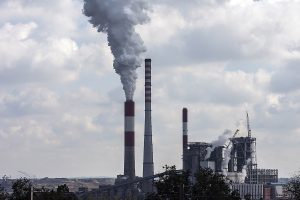
A big problem of EPS is the outdated boilers in some thermal power plants, which are energy inefficient and excessively pollute the environment. The closure of TE "Morava" in Svilajnec and TE "Kolubara" in Vreoci has been planned for a long time (those resources are more than 60 years old). The situation is not much better in the two oldest blocks in TE "Nikola Tesla" A, as well as in TE "Kostolac" A. How many harmful gases these power plants emit can be seen by anyone who, for example, passes the Ibar highway past the TE "Kolubara" in Vreoci. It is a particular problem that 50 percent more coal is consumed in those boilers for electricity production than in new, modern boilers.
About 6000 gigawatt-hours per year are produced in these outdated plants, which represents about 16 percent of electricity consumption in Serbia. When connected to the grid, the thermal power plant "Kostolac" B3 will be able to provide about 2500 gigawatt-hours, but the problem remains how to provide another 3500 gigawatt-hours that would be missing if all those plants were closed.
EPS planned to continue the construction of the thermal power plant "Kolubara" B (started in the eighties of the last century), which should enable the replacement of all those capacities. However, this was blocked by Minister Zorana Mihajlović, whose development policy relied exclusively on renewable energy sources (ROI), at the expense of EPS. Aleksandar Vučić also got involved in the conflict over the construction of "Kolubara" B, who in the end sided with the ministry, so the construction was abandoned. Only when there was a collapse in Obrenovac last December, Vučić realized how wrong he was. He admitted this at the meeting of the "crisis headquarters", which was broadcast directly through the media. With its operation, "Kolubara" B would enable not only all obsolete capacities to be turned off, but also surplus electricity for export (EPS would collect, at current prices, one billion euros per year from that export alone).
The thesis that is mentioned in the public that EPS, if only there was enough coal, could have earned a billion euros from exporting electricity is wrong. With the existing production capacity of EPS, this was simply not possible; on the contrary, due to very poor hydrology and despite the full production of electricity from coal, Serbia would still have to import smaller amounts of electricity.
That is why the priority is to build new capacities, the only question is - which ones?
TAILORING CONSULTANTS (WRONG?) CAP
photo: wikipedia.org…hydro,…
During socialism, EPS was a technologically powerful system that did not lag behind other European power companies (there were problems with distribution to end consumers, but that is a separate topic). The system was extremely well designed, so it's no wonder that without major investments it managed to provide a relatively reliable electricity supply for thirty years, despite sanctions and bombing, and at the same time with extremely low electricity prices. It is not out of place to mention that the construction of the "Đerdap" hydroelectric power plant more than 50 years ago represented an engineering undertaking of world scale; complex construction and mechanical works were carried out by domestic companies, only the turbines were purchased in the USSR.
It is sad to note that today foreign consultants are hired for strategic issues of energy development. The work of the Greek consultants LDK Consultants SA, which together with the Center for Renewable Energy Sources and Savings (CRES) is working on the preparation of key documents in the energy sector, is financed from the EU IPA funds. It is primarily the "Integrated National Energy and Climate Plan" (INEKP), which should be harmonized with EU plans in that area. In addition to INEKP, the "Energy Development Strategy" is also being prepared; those documents should define which energy facilities are needed in the coming decades. In addition to energy, LDK Consultants also deals with project management, environmental protection, tourism, traffic infrastructure, as well as various other areas.
In accordance with the EU's plans to abandon the use of fossil fuels (decarbonization) by 2050, the consultants considered several scenarios. Judging by the materials published on the ministry's website, the consultants concluded that nuclear energy is not necessary for the complete decarbonization of Serbia in the future, but that sufficient electricity can be provided only from OI. They also "calculated" that if we were to build nuclear power plants, electricity would be more expensive than if we relied exclusively on OI.
The assumptions on which the consultants relied when developing different models of decarbonization in the future are interesting. For example, it is predicted that RHE "Bistrica" will start operating in 2018, although planning documents for its construction are still being prepared. The consultants came to such a conclusion because, as they succinctly stated, "it is considered that the investment decision has been adopted". That deadline would be unrealistic even under ideal circumstances, let alone at a time of energy and financial crisis with high inflation and low possibilities of financing the state on the capital markets. The consultants expect the activation of the first phase of RHE "Đerdap 3" (planning documentation for it has not even started to be prepared) as early as 2030. All these are completely unrealistic projections: in the best case, the construction of these facilities takes 10 to 15 years. It should not be overlooked that strict ecological criteria must be met ("Đerdap 3" is located in the area of the national park). At "Đerdap 3" it is also necessary to ensure cooperation with Romania regarding the use of a huge amount of water from the Danube (it is a big question whether a large hydropower plant like "Đerdap 1" could even be built today due to ecology).
If we take all that into account, it is easy to conclude that based on such projections, it is difficult to make correct decisions about the strategy and directions of Serbian energy development. The consultants' position that energy security can be ensured without nuclear energy is also disputed. If it relied only on renewable sources, Serbia would have enormous problems with electricity during the winter on cold days, when there is almost no benefit from solar energy, and water flows are generally low. It is enough to continuously have several cold days with fog and no wind, so that big problems occur (RHE storages cannot cover several days of electricity consumption in winter if there is no wind).
It is mentioned how this can be overcome by keeping around 2000 MW in reserve in thermal power plants. It is an expensive job because the workers of those power plants would have to be paid throughout the year to be ready to "undertake" the boilers in the critical months. Even more problematic is the expectation that 2000 MW in reserves will be enough to cover all electricity needs, given that the peak load in winter can be even more than 6000 MW (due to decarbonisation, electricity consumption will only increase in the future). A special problem for the stability of the power system is the fact that the existing and planned wind generators are located in the Košava area: when the wind suddenly stops, they all stop producing electricity at the same time.
The activation of two new RHEs would make it possible to "accept" large amounts of electricity from unstable sources, i.e. wind and sun, without major problems in the network. That is why the accelerated (but, unfortunately, unrealistic) dynamics of RHE activation was the basis for consultants for (unfounded) projections of connecting new renewable sources to the grid.
NORWEGIANS "GAUZE" GREEK CONSULTANTS
There is no doubt that Aleksandar Vučić himself decided that the Government of Serbia should hire the renowned Norwegian consulting company "Rystad Energy" for 1,5 million euros as a matter of urgency, bypassing the relevant Ministry of Energy. Formally, the proposal to hire Norwegian consultants came from the Ministry of Finance, but (as far as is known) they report directly to the cabinet of the head of state, not to the ministry.
According to what has been published in the media, the Norwegians are tasked with analyzing the business and proposing a strategy for the development of EPS, including the use of nuclear energy. In essence, they need to review the entire work of the Greek consultants and the Ministry of Energy.
It is also interesting that this decision of the government, although marked as "strictly confidential", was leaked to the public; it is not excluded that it was Zorana Mihajlović who "let her go", frustrated by the obvious distrust of the head of state. With that act, Aleksandar Vučić showed that he does not at all trust the work of the Greek consultants, nor Zoran Mihajlović, who relied on their work (and probably gave them certain guidelines). That is why her elimination from the new government does not represent any surprise.
HUGE PRESSURE FROM INVESTORS TO BUILD RENEWABLE SOURCES
Energy is an area where electricity producers with fixed costs (as with OI) can become enormously rich in a short time, due to high electricity prices in the past year. With the electricity price of 350 euros per megawatt-hour, it is estimated that investments in wind generators and solar power plants can pay off in less than a year! But someone has to pay: it's the consumers, of course.
That is why investors are exerting enormous pressure to approve new connections to the OI network in Serbia as soon as possible. With the high price, they no longer need state subsidies, as was the case until a year and a half ago.
Such profits are not the product of someone's business talent or creative ideas: they are a consequence of overpriced electricity due to the shortcomings of the European mechanism for setting the price of electricity, which was already discussed in "Vremen". Powerless to change that mechanism in the near future, the European Commission proposes the introduction of a kind of extra profit tax; Aleksandar Vučić put forward a similar idea.
WHO FIRST GIRLS...
Which of the potential producers of electricity from OI manages to secure access to the grid while electricity prices are this high, with the obligation of EPS to balance that energy, has obviously "finished the job". The conditions in the Law on the Use of Energy from OI, adopted last year, foresee not only the exclusive balancing responsibility of EPS, but also the priority of electricity production from OI on the grid. This means that if there is an excess of energy from the wind or the sun, EPS will be forced to "choke" its production at great expense instead of erratic producers causing system instability.
It's no wonder that with such tempting conditions, investors rushed in with requests for connection to the grid (as many as ten GW from OI), of which the most requests are for new wind generators, which are particularly inconvenient for balancing.
photo: marija janković…the wind…
At this moment, the connection of so many wind generators under the current legal conditions would cause both technical problems and large costs, which would be incurred by EPS and the Electric Grid of Serbia (EMS). That's why at the end of last year, EPS, Elektromreža Srbije and the Energy Agency submitted a request to the Ministry of Energy for an urgent amendment to the provisions of the Law on OI. The Ministry rejected them with the phrase that it can be interpreted as a request to give up "green energy", which would be "giving up the health of the population and belonging to the modern countries of the world".
For now, requests for connecting new wind generators have been put in a "drawer" (which was apparently approved by the top of the state), but such a situation is not sustainable in the long term. The state should come up with an energy development strategy as soon as possible so that everyone knows where they stand: both the state-owned enterprises EPS and EMS, as well as private investors.
The influx of foreign capital into the energy industry requires great caution: investors invest money in OI because favorable conditions guarantee a safe and quick return on investment. This is where Serbia, as a country with a large balance of payments deficit, must be very careful. The owners of OI will withdraw their profits from Serbia, which would significantly increase the already hard-to-sustain deficit of the balance of payments. It should also be borne in mind that investments in wind generators and solar power plants practically do not require workers, which means that practically the entire income from the sold electricity would go outside the country, with minimal added value remaining in the country.
That is why the more than justifiable question arises as to why Serbia would allow foreign investors to use domestic resources (mainly electricity network and balancing capacities) to make enormous profits on electricity trade from OI, without the obligation to ensure the energy security of the country in which they operate. And not only that: why doesn't the state allow EPS to invest in OI capacities, but the profit is left only to foreigners who will take it out of the country?
HOW TO FIGHT THE ENERGY LOBBY
The lobby of potential investors in OI is very strong, and not only in Serbia, so it is not surprising that models are being pushed that can provide electricity needs only from OI. If Serbia were to build a nuclear power plant with a capacity of 2000 MW, Serbia's needs for OI would not be 20 GW but only 10 GW of power, and thus many would be left without a piece of the lucrative pie; with a 3 GW nuclear plant, Serbia would need about 5 GW in OI, and a good part of that could be installed by citizens and businesses on roofs, which is much more favorable for the network than a large number of wind generators. To repeat, with the existing conditions, the ownership of OI guarantees a safe and fast return of money; that is why it is in the interest of investors that Serbia depends as much as possible on OI.
Our neighbors, the Hungarians, are building a large new nuclear power plant, and Bulgaria and Romania are also planning it. Aleksandar Vučić's attempts to "buy" part of the production of nuclear power plants from those countries have not succeeded (so far) because no one is stupid enough to sell a valuable source of electricity that does not depend on the weather during the energy crisis.
There is no doubt that Serbia will have to invest the most money in the next few decades in the development of energy, and even that there is no need for harmonization with the EU due to the "green agenda". In the presentation of the INEKP draft, which was published on the website of the Ministry of Energy, it is mentioned that urgent investments in energy of as much as 35 billion euros are necessary by 2030.
That's a huge amount of money and such an expense will weigh heavily on future generations. That is why it is very important to adopt a valid energy development strategy, which would have to take into account not only the accelerated joining of the "green agenda" (and the large profits of private investors), but also to show how it could be optimal for all the inhabitants of Serbia. . Otherwise, poverty awaits us very soon: we will neither have enough electricity, nor will we be able to pay for electricity when it is available.
What is happening in the country and the world, what is in the newspapers and how to pass the time?
Every Wednesday at noon In between arrives by email. It's a pretty solid newsletter, so sign up!
Why is there nothing else between the overcome regime and the changes? What does the regime mean when it says it is defending Serbia? Why is the Student Movement indomitable? Who has the knowledge and real experience, and who leads without a day of work experience outside of politics? And why students win
Elections 2026: From student revolt to decision at the polls
After almost two years of protests, hundreds of kilometers walked, arrests, persecution and unprecedented social mobilization, Serbia is holding elections that could mark the end of a political era. Sociologist Marija Babović tells "Vreme" that the hope for change has not been so great since October 5, 2000, but she also warns of the danger that, if changes are not made, the country will face an even tougher authoritarian regime.
Interview: Tihomir Stanić, actor on the Student list
Their only weapon now is the media they control: like, we don't have an agenda, which is not true; as, we will betray the national interest, which is not true. One of their arguments is that we are afraid to go to the debate with Vučić. They do not understand that it is their punishment. This is a punishment for Aleksandar Vučić, who for 14 years conducted exclusively a monologue. For fourteen years he did not allow anyone any kind of dialogue, and now he would like to be rewarded or pardoned with the opportunity to talk to us. Well, he won't be able to. What he sowed is now reaping
These elections are not elections about Serbia's membership in the European Union, Kosovo and Metohija, gay marriage, tax policy or any other single political issue. Although parties on the fringes of political power try to impose these themes, at the heart of the upcoming political election is a much simpler dilemma: change or preserve the existing order. For more than a year now, surveys have shown that this is the primary dilemma on the ballot
In the RS, 19.800 people registered for the elections in Serbia, who will be able to vote at 28 polling stations. It remains unknown how many of them will cross the Drina on October 25 and vote in Serbia. In any case, I do not believe that the voters from Republika Srpska are the ones who will decide the winner of the elections in Serbia. Realistically, the voters from Republika Srpska can influence a little, but it seems that they are symbolically very important to both Vučić and the opposition.
There is, literally, no difference between the one who claims it is day in the middle of the night, or the one who claims to be a giraffe, from the claims we read on billboards: that Vučić is working to unify Serbs and that Serbia is doing better and better day by day.
The pre-election arrests due to the alleged "overthrow of the state" testify to the regime's panic. The bad news for them is - they can't arrest the whole people who decided to defend themselves from progressive beatings and election theft
The ring that tightens around Ćaciland Student list is getting narrower. Because there are more and more spoiled people who see the false prophet for what he is: a street obscener who is fighting Serbia
The archive of the weekly Vreme includes all our digital editions, since the very beginning of our work. All issues can be downloaded in PDF format, by purchasing the digital edition, or you can read all available texts from the selected issue.