When Ivan Ribar was born in January 1881, in the town of Vukmanić near Karlovac, in what was then Austria-Hungary, one of the most quoted, disputed and commented sentences in world literature was very young, as young as a little girl, almost still a baby. Namely, not even four years had passed since Tolstoy published it Anna Karenina, not even four years have passed since the story that begins with the sentence: "All happy families resemble each other, every unhappy family is unhappy in its own way." in the form of an attitude according to which it is impossible to talk about the happiness and unhappiness of individuals and families, and even entire nations, in absolute categories, just as we talk about eye color. After all, the color of someone's eyes is not always the same, as readers of Flaubert's novel about Emma Bovary (let's stay with the classics of realism and reading titles for the third grade of high school) know that well, whose eyes are sometimes brown, sometimes black, and sometimes even blue, without being but never green, as in Hanke Paldum's song, who started singing as a high school student and a member of the cultural and artistic society "Ivo Lola Ribar". That's how families are sometimes happy, sometimes unhappy, sometimes semi-happy or semi-unhappy, until the line is drawn. But who has the right to draw the line while there are still those who remember?
POPULAR FRONT: The biography of Ivan Ribar for the first thirty years of his life is somewhat typical for that time and that geographical latitude. He finished elementary school in his native village, and high school in nearby Karlovac. His student days take him first to Zagreb, then to Prague and Vienna. The second part of that student odyssey, that mytho-European itinerary of metropolises with monosyllabic names which almost a century later will serve as a rhyming backdrop for the travels of a pathological gambler from Vojvodina to Đorđe Balašević, while around the same time it will be useful to dissidents from socialist countries in Paris and elsewhere as a theoretical concept behind nostalgia for his youth, he was not overly excited. After returning to his homeland, he began to work as a lawyer and engage in politics. He is active as a member of the Croatian-Serbian coalition. From the beginning of the First World War, we find him in Galicia as a mobilized reserve officer. Nevertheless, towards the end of the war, he again practiced law in Đakovo. As a well-known fighter for Yugoslav unity, he welcomed the end of the First World War as a member of the National Council of Serbs, Croats and Slovenes. Immediately after the unification, he was one of the founders of the Democratic Party. After the seduction of the Sixth January dictatorship, he often defended the communists in court. In the 1939s, he ran for office as a member of the United Opposition. In XNUMX, he became the president of the Society of Friends of the USSR, and soon became associated with the People's Front. At the beginning of World War II, he joined the partisans. He was elected president of AVNOJ already at the first meeting in Bihać. He became a member of the Communist Party of Yugoslavia only the following year. Both his sons are partisans.
BROTHERS: While working in Đakovo as a lawyer, Ivan Ribar met Antonija Šimat, the widow of the local pharmacist Luja. The deceased pharmacist is survived by three children, son Žarko and daughters Bož and Mir. After marrying Ribar, Antonija gave birth to two sons: Iva (1916) and Jurica (1918). It was Iva's mother who gave her the nickname Lolo in childhood, which among his company, probably according to the usual declensions of Belgrade speech, eventually turned into Lola. As in the ancient archetypal stories, Ivo Lola was "older, wiser, stronger, closer to the world and real life and everything that binds and moves most people, a man who manages everything, who knows what is right and what is wrong at every moment to do, what can and cannot be asked of others and of oneself." Lola is a lawyer, philosopher, polyglot, politician. Jurica is a painter, an artist. Following in her father's footsteps, Lola studies law, first in Paris, then in Geneva, and finally in Belgrade. Right there, in Belgrade, he becomes prorok, in the sense in which Ortega y Gasset writes about prophets, becomes one whom other people follow. At the age of twenty-one, Ivo Lola Ribar is the secretary of the Central Committee of the Union of Communist Youth of Yugoslavia. He became a member of SKOJ two years earlier. During that time, Jurica was taught painting by Jovan Bijelić. In 1938, Jurica Ribar was one of the founders of the painting group "Desetorica". Ivo Lola already cooperates a lot with Josip Broz Tito as general secretary of the KPJ. Soon, however, we hear beats as a backdrop to the story of the Ribar family Women from Bileća. Together with Moša Pijada, Ivan Milutinović and some other comrades, Ivo Lola Ribar was imprisoned in the camp in Bileća. Until he is released, family and friends visit him regularly. When the war starts, the whole family joins the partisans. Jurica was killed on October 3, 1943 near Kolašin. Father Ivan doesn't know that, old brother Ivo does. Ivo is on his way to Cairo, where he is going as the head of the military mission of the new Yugoslavia to the Headquarters of the Allied Command for the Middle East. Ivo Lola Ribar writes a letter to his father with news of his brother's death and gives it to Tito to deliver to him. Just before taking off from Glamočki polje, Ivo Lola was killed by a bomb thrown from a German plane. It was November 27, 1943. On the same afternoon, a little further east, a scene occurs that is not found in either Shakespeare or ancient tragedies. Hearing that Ivo Lola Ribar had died, Tito opened the letter that he had left for his father. The letter, right at the beginning, says: "Words are superfluous, my dear father, words cannot express the full weight of the blow that has befallen us. I would like a hundred times, for the sake of him who was better than me, and for the sake of all of us, that I I fell in his place. But, well, it happened differently. This wound will never heal. I lost my brothers just a year after my Freedom – two beings I loved so much, and who were just on the threshold of life. But I know how is only for you, dear father, who has lost your son, our darling. Don't cry, don't give up, father! Our Jurica did not fall alone - he is forever part of that galaxy of sons of this land who, having given their lives for it, created its pure glory, its immortality. His blood seeks revenge. His sacrifice obliges us to complete the work! It's no longer about personal happiness - it's about an obligation to our dead, an obligation to the living. To fulfill that obligation, to live and do our duty, that is ours." When Ivan Ribar entered Tito's barracks in the afternoon of November 27, Tito offered him coffee and cigarettes. First he told him about Lola's death. Old Fisherman bowed his head, without saying a word, and asked that a dispatch be sent to the Fourth Montenegrin Brigade in which Jurica is, that Jurica immediately head to Jajce, to be near her father. Tito then tells him that Jurica also died. Two days later, here in Jajce, the second session of AVNOJ is chaired by Ivan Ribar, a man who lost both of his sons. In July next year, in the village of Kupinovo in Srem, the Germans will also shoot Antonia Ribar, mother Lolina and Juričina. Old Fisherman will be left alone.
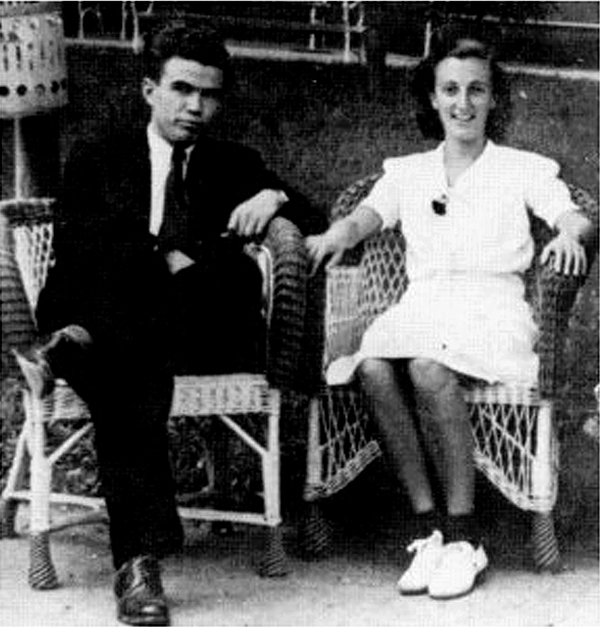
LOVE: The quoted letter of Ivo Lola Ribar to his father is the second most famous letter he wrote during his lifetime. The addressee of the most famous one was the one she talks about in her letter to her father, Sloboda Trajković, Lolina's girlfriend and fiancee, who "as small and gentle as she was, went to her death as if on a walk, with a smile that was always hers". That story is both literary and painfully true. On April 1941, 1942, the Ribar and Trajković families were supposed to agree the details of the wedding of Iva Lola and Sloboda at a joint lunch in Belgrade. That morning, however, Belgrade was bombed, that morning the war began. Thirteen months later, three years before Victory Day, on May XNUMX, XNUMX, the Nazis killed the entire Trajković family, Sloboda, her parents Svetolik and Milena, her brother Miroslav and sister Vera in the gas chamber at Banjica. They were detained in Banjica after the Germans found a letter that Ivo Lola wrote to his girlfriend from the free territory. The Nazis wanted Sloboda to answer the letter, to schedule a meeting with the fiance at a certain place, at a certain time, so that they could catch him in a cell, to capture him. Neither under torture, nor under the threat of death, she didn't want it. She was killed with her entire family. As far as I know, there is only one joint photo of Iva Lola Ribar and Sloboda Trajković. I'm looking at that picture from Vrnjačka Banja, taken shortly before the war, where Lola and Sloboda are sitting in straw chairs and posing for the photographer. He is in a dark suit, with a white shirt and tie, she is in a white dress. There are such girls in our high schools, approximately one or none per generation. Small, with wrists that you can easily wrap between your thumb and forefinger, with ankles that are not much wider, with chaste and straight facial features that a smile can soften. Smart, righteous and courageous, not everyone falls in love with them, but everyone respects them. These are the girls in front of whom even the biggest jerks don't tell vulgar jokes. They are as brave as that weak child from whom Marko Kraljević learned heroism. Whom such a girl loved, he did not live in vain.
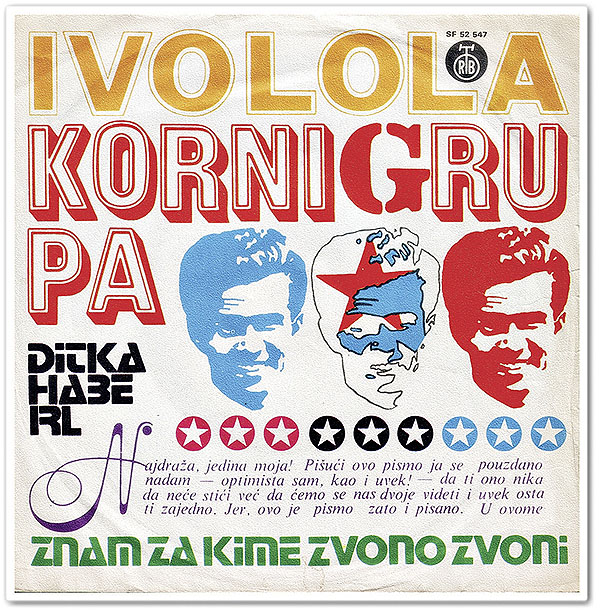
IMAGE FROM A DREAM: It's in that song. No smoking, which begins with unforgettable images in the form of wordplay (He was received by the Party for four and a half years, He entered Trieste with the army.; now he enters the door of the commissariat, and is received by the Red Cross), a song that already in the title recalls AVNOJ, a song that is, ultimately, a continuation of the song And the republic, a song that talks about the disappointment in Yugoslavia by those who loved it the most, one terrible verse. A middle-aged son whose life was cut short by the breakup of Yugoslavia at an age when life has yet to actually begin to be put together, tells his father, an old partisan, who warned him only a few years ago that even the kids no longer play partisan because now everyone knows that he is the head just one, like this: starry, now you can see, now he is coming back, with whom you wanted to be brothers, Tito and the whole Party screwed you; Sloboda obviously couldn't sing. At first glance, this "Sloboda obviously couldn't sing" is just a variation on Branko Miljković's most famous line. This is what Nele Karajlić meant and he should not be charged with a conscious intention to say anything else with that verse. Then again, we all know what the verb "sing" means in slang. It means: snitching, betraying someone, handing him over, as they say, to the law enforcement authorities. And the disappointed son is right. Whatever Yugoslavia was, whether or not it was a delusion, Tito and the Party would have been in vain for her, if (Trajković) Sloboda could sing, if she was ready for betrayal, if they and all the mighty and mighty like her, they didn't believe in something. If it had been like that, Yugoslavia would not have existed. And since she is no longer in reality, she is only in dreams and songs. This is how the song ends: Sometimes he dreams of death sneaking up and taking away his best friends, and sometimes the lips of an unborn grandson reciting Mayakovsky's verses, I can hear it on the radio. "No pasaran" o, How strange was that dream?, there is a company of proletarians, red flag, there is a picture of Ivo Lola Ribar. There are too many symbols in these verses, with everything Mayakovsky and that loud romantic inversion, with No pasaran and barricades, with proletarians and a red flag. What saves the poem, from falling into the abyss of kitsch, what gives it strength, to walk safely and fearlessly, like a sleepwalker, is the image of Ivo Lola Ribar, an image from a dream.
IRREVERSIBLE: In 1988, shortly before his death, as an eighty-three-year-old, Vicko Krstulović wrote the introduction to his memoirs. Yugoslavia is in deep crisis. Where is the mistake, Krstulović seems to ask, where did the wrong turn take place, and it seems to him that everything would have been different if Tito had retired on time, if he had had a real successor. This is how Krstulović writes: "1968. Tito had an extraordinary opportunity to remain a revolutionary and to preserve his reputation and authority. In our country, as well as in a number of other countries, students and youth rebelled. Tito gave the students their right. With a reason. Not only that, he was obliged to leave the government. He would have acted responsibly if Koči had ceded the position of President of the Republic. Koča Popović would be appreciated and accepted with respect by people in our country and abroad. I can say all this calmly because I said back in 1962 that the old me, led by Tito, should leave power. Our priceless, irreparable loss is the death of Lola Ribara. Only he was on a level footing, the best in everything, and with Tito who was at full strength. Lola died at the age of 27, and in 1968 he would have been 52 years old. In 1968, Koča was 60 years old and Tito was 76 years old..." This is where Vicko Krstulović stops. He does not say that in the same year 1968, ten days after his eighty-seventh birthday, doctor Ivan Ribar died in Zagreb, outliving both his sons by a quarter of a century. When he came to Belgrade in October 1944, immediately after the liberation, Ivan Ribar met Mira, his daughter, Antonijina's daughter from his first marriage with pharmacist Lujo Šimat from Đakovo, in Majestic. They both hugged and cried, and then the old Fisherman said: "It's not worth crying... If we want to repay them, we must continue on their path." They went on that path, the path of freedom, for some time. The signs along that road were streets, schools, cultural and artistic societies, monuments to members of the Ribar family. Those signs are almost gone, and even where there are, they are more of a memento than a symbol of hope. Times are different; when, shortly before his death, Ivo Lola wrote to his father: "It's no longer about personal happiness - it's about the obligation to our dead, the obligation to the living." To fulfill that obligation, to live and do our duty, that is ours", and then everyone knew that there was only one head, but their head, but their life, was not necessarily the most important, not at all costs. Times change, obligations and duties change, but that is not the worst thing, the worst thing is not knowing what is your obligation and what is your duty. When you know, then you have to live, that's all that remains our.
"My dearest and only one!
Writing this letter, I am confident - I am an optimist, as always! - that it will never reach you, but that the two of us will see each other and always stay together. Because this letter was written for that reason.
At this moment, when we are entering the last, decisive stage of the color on which, among other things, our personal future and happiness depends - I want to tell you a few simple and simple things.
There are only two things in my life: my service to our holy cause and my love for you, my dearest. We, like millions of others, could not achieve our happiness and the life we wanted in isolation, but only through our struggle and our victory. And that's why those two things are essentially one in me.
Know baby, that you are the only one I loved and that I love. I dreamed and still dream about our common happiness - the kind we wanted, about the happiness worthy of free people. It is the only true happiness, the only one that should be desired.
If you receive this letter - if I do not live to see that great hour, do not grieve too much, dearest! In the world you will then live in, you will find, always alive, the best part of myself and all my love for you.
For you, I am sure that your path will be right and the way it should be. On it, on the road of life, you will find revenge and happiness.
I love you very, very much, my only one! And I want you to never receive this letter, but to wait together with you for the great hour of victory. I want to make you as happy as you deserve with my love.
Always yours. "
"My dear dad!
Although - they say - it is not known for sure yet, I know and feel at the moment when I am writing this to you, that our dear, good Jurica is no longer there. He fell, like so many others, in the fight for the freedom of the homeland, somewhere around Kolašin in the dark Montenegrin karsts.
Words are superfluous, my dear father, words cannot express the full weight of the blow that has befallen us. I would have liked a hundred times, for the sake of him who was better than me, and for the sake of all of us, that I had fallen in his place. But, well, it happened differently. This wound will never heal. I lost my brothers just a year after my Freedom – two beings I loved so much, and who were just on the threshold of life. But I know how it is for you, dear father, who lost your son, our darling.
Don't cry, don't give up, dad! Our Jurica did not fall alone – he is forever part of that galaxy of sons of this country who, by giving their lives for it, created its pure glory, its immortality. His blood demands revenge. His sacrifice obliges us to complete the work! It is no longer about personal happiness – it is about an obligation to our dead, an obligation to the living. To fulfill that obligation, to live and do our duty, is ours.
Sorry, for writing all this, I know that you know it all: we all know that you have shown and proven that you know it. I know that you will be able to withstand this terrible blow. Don't give up! Stay calm, capable of fulfilling our duty to the end, dad! Our dear Jurica asks this of you. Think of how sad he would be if he found out that with our behavior we were not worthy of him. To be weak – that would mean betraying him and his sacrifice!
All of us, and I, especially today, our country, for which our Jurica died, need you, we need your thoughts, your work, your health, your life, dear dad.
My Freedom, so small and gentle, went to her death as if for a walk, with a smile that was always hers. Our Jurica went through a hundred battles, he fell like a warrior. Consciously, calmly, cheerfully, as he lived. Dad, we must never forget that, not even for a moment, the homeland will not!
Jurica is not dead. He lives in the hearts of our people, he lives on in us. He lives in our struggles, victories, the dawn of which is already visible. It is hard for me, dad, that I am not with you at this hour. But you are not alone, you are not just my father, but thousands and thousands of young people, as our Jurica was, with the comrades he lived with and loved. Love them even more than today! And know that they all share our pain, that we are one with the comrades who are with us. It is wonderful to have such a family!
That is our path - the path of our duty and will, the path of our Jurica.
Be strong, dear dad! Don't be lonely, don't give up, let's grit our teeth, clench our fists with work and struggle, only then will we be worthy of him. I know, I am sure, that you will be strong.
Dear father, you know how proud we, your sons, have always been, and especially in recent years, of you and your mother, you know how much I love you. Know that I will do everything to at least partially compensate you and our dear mother for this great pain with my life, work and love, now that I remain your only son.
We have always gotten along well, and it will be even better in the future, in our joint work, life and struggle. Let's be worthy of our darling, dear papa.
Your son Lola loves you very much."
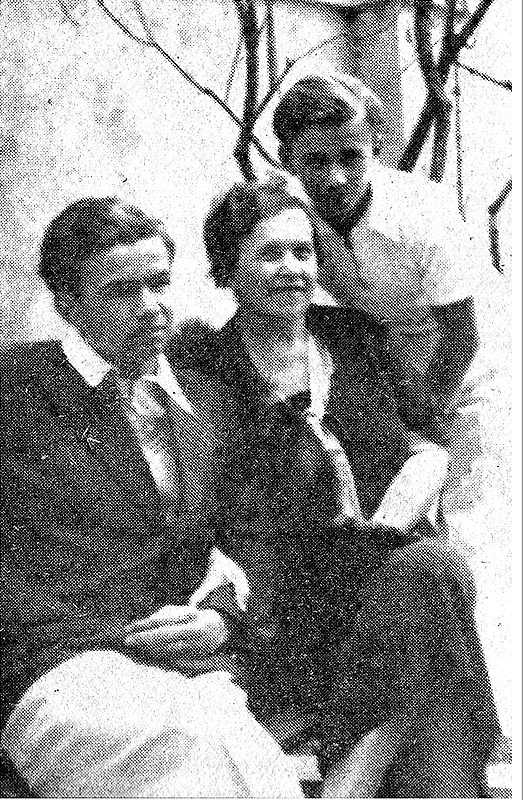
 Ivo Lola and Jurica with their mother Antonija
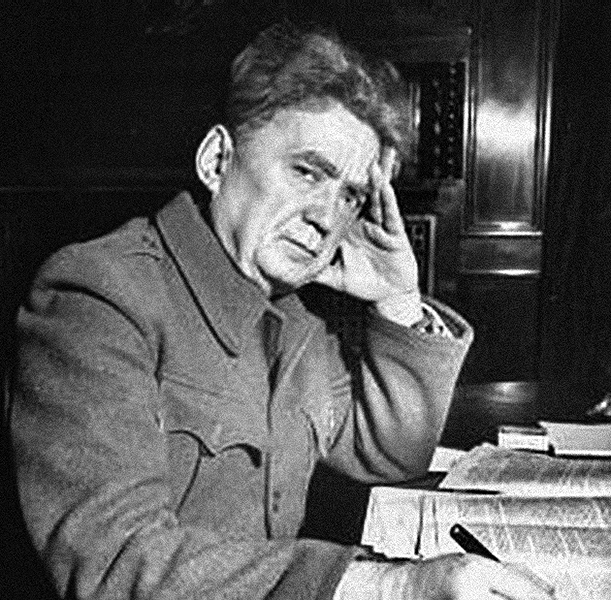
Dr. Ivan Ribar
Dr. Ivan Ribar
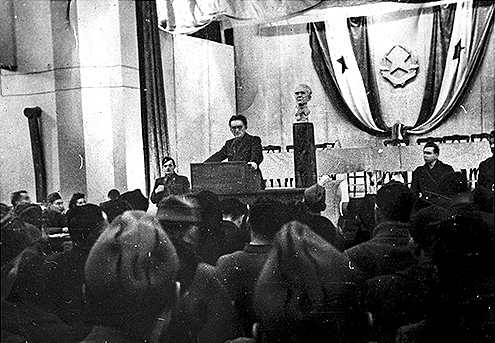
Dr. Ivan Ribar, chairman of the Second Session of AVNOJ photo: Museum of the History of Yugoslavia
Dr. Ivan Ribar, chairman of the Second Session of AVNOJ photo: Museum of the History of Yugoslavia
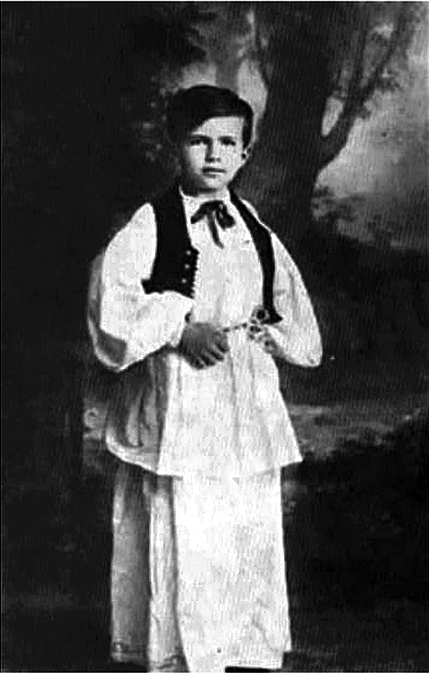
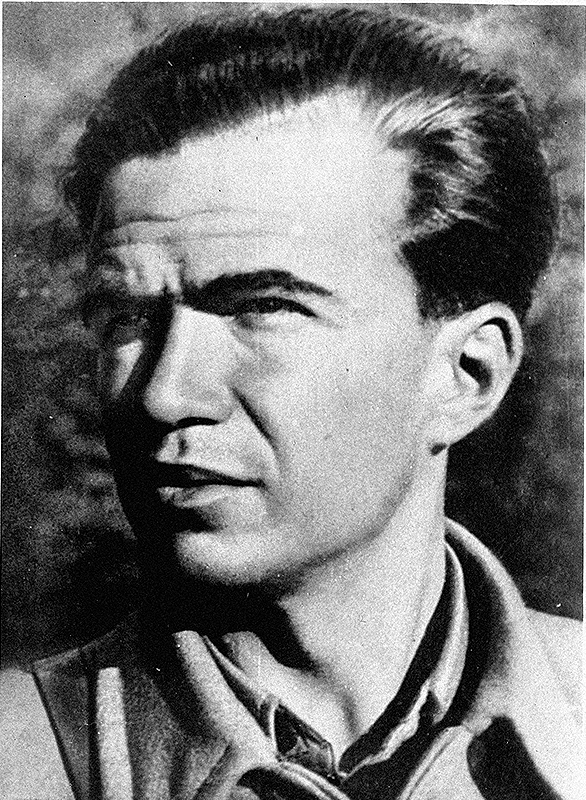
Ivo Lola Fisherman, a boy…
Ivo Lola Fisherman, a boy...
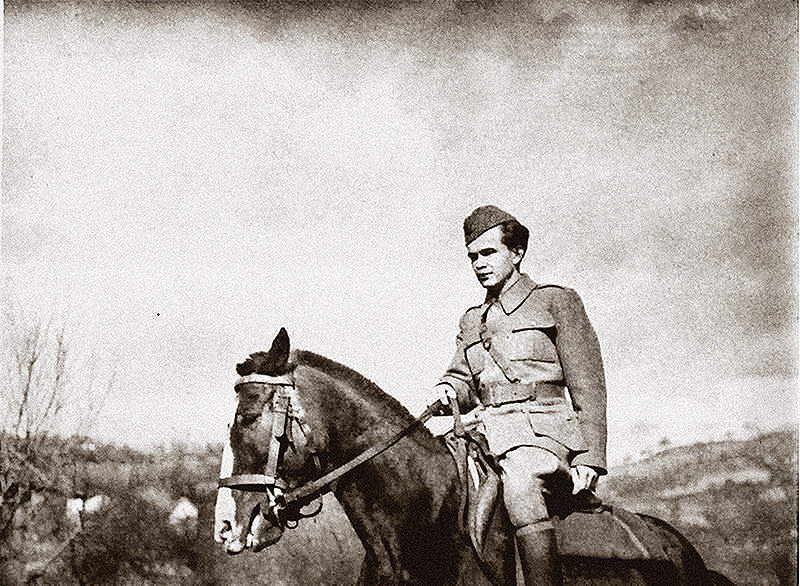
...and a partisan photo: mij
...and partisan photo: mij
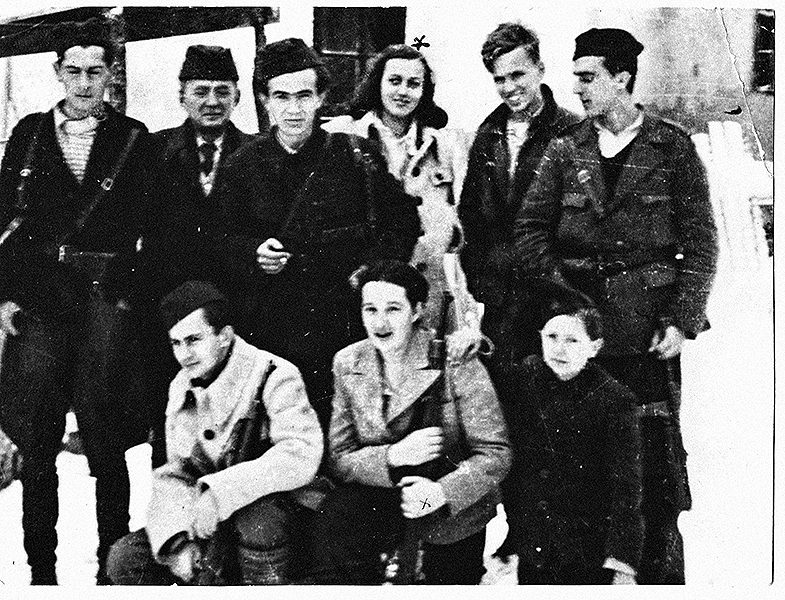
Rato Dugonjić, PhD Ivan Ribar, Ivo Lola Ribar, Dara Puškarić, Jurica Ribar, Slavko Komar in Bihać in 1942. photo: mij
Rato Dugonjić, PhD Ivan Ribar, Ivo Lola Ribar, Dara Puškarić, Jurica Ribar, Slavko Komar in Bihać in 1942. photo: mij
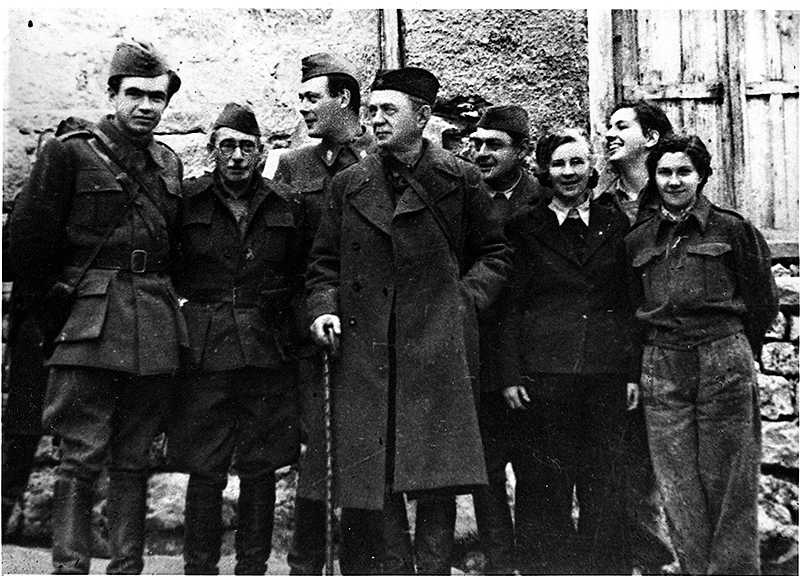
NOVEMBER 1943, EGGS: Ivo Lola Ribar, Moša Pijade, Vladimir Velebit, Ivan Ribar, Vlado Ribnikar, Lepa Pijade, Olga Humo, Jara Ribnikar photo: mij
NOVEMBER 1943, EGGS: Ivo Lola Ribar, Moša Pijade, Vladimir Velebit, Ivan Ribar, Vlado Ribnikar, Lepa Pijade, Olga Humo, Jara Ribnikar photo: mij
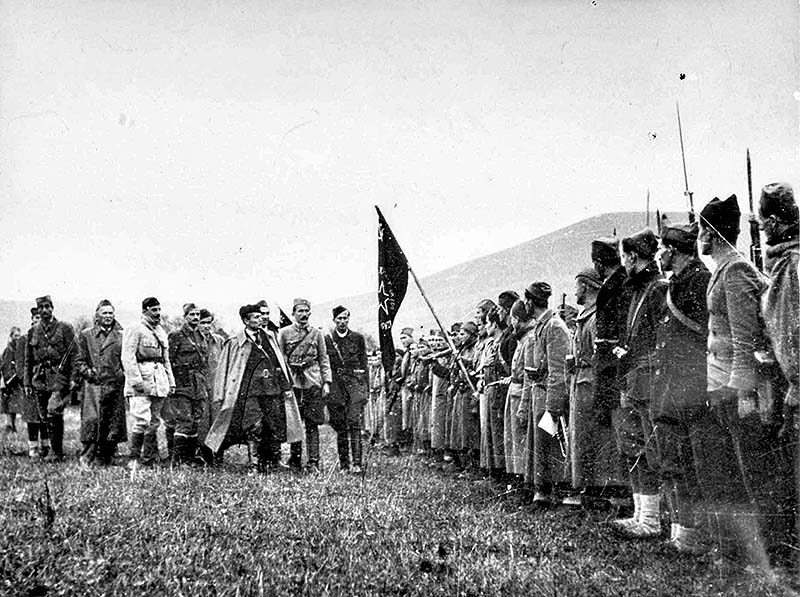
REVIEW OF THE FIRST PROLETER BRIGADE IN PETROVAC, BOSNIA 1942: Ivan Ribar, Koča Popović, Filip Kljajić, Ivo Lola Ribar, Tito, Danilo Lekić, Mijalko Todorović
REVIEW OF THE FIRST PROLETER BRIGADE IN PETROVAC, BOSNIA 1942: Ivan Ribar, Koča Popović, Filip Kljajić, Ivo Lola Ribar, Tito, Danilo Lekić, Mijalko Todorović
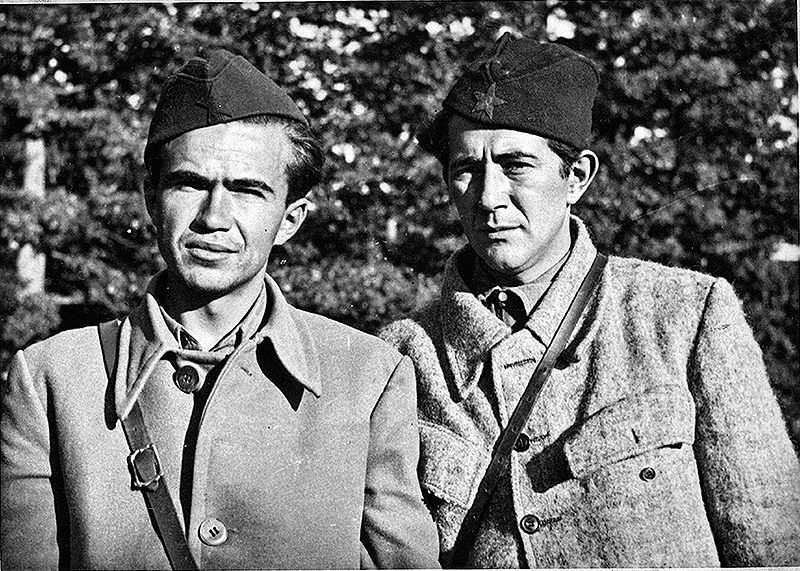
WAR COMRADES: Ivo Lola Ribar and Milovan Đilas
WAR COMRADES: Ivo Lola Ribar and Milovan Đilas
BEFORE THE WAR: Ivo Lola Ribar and Sloboda Trajković in Vrnjačka Banja in 1939.
BEFORE THE WAR: Ivo Lola Ribar and Sloboda Trajković in Vrnjačka Banja in 1939.
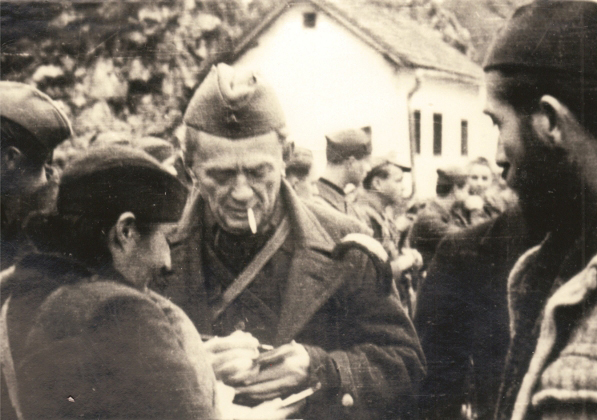
Doctor Ivan Ribar and priest Vlado Zečević in liberated Jajce
Doctor Ivan Ribar and priest Vlado Zečević in liberated Jajce
Ivo Lola and Jurica with their mother Antonija
Ivo Lola and Jurica with their mother Antonija
Dr. Ivan Ribar
Dr. Ivan Ribar
Dr. Ivan Ribar, chairman of the Second Session of AVNOJ photo: Museum of the History of Yugoslavia
Dr. Ivan Ribar, chairman of the Second Session of AVNOJ photo: Museum of the History of Yugoslavia
Ivo Lola Fisherman, a boy…
Ivo Lola Fisherman, a boy...
...and a partisan photo: mij
...and partisan photo: mij
Rato Dugonjić, PhD Ivan Ribar, Ivo Lola Ribar, Dara Puškarić, Jurica Ribar, Slavko Komar in Bihać in 1942. photo: mij
Rato Dugonjić, PhD Ivan Ribar, Ivo Lola Ribar, Dara Puškarić, Jurica Ribar, Slavko Komar in Bihać in 1942. photo: mij
NOVEMBER 1943, EGGS: Ivo Lola Ribar, Moša Pijade, Vladimir Velebit, Ivan Ribar, Vlado Ribnikar, Lepa Pijade, Olga Humo, Jara Ribnikar photo: mij
NOVEMBER 1943, EGGS: Ivo Lola Ribar, Moša Pijade, Vladimir Velebit, Ivan Ribar, Vlado Ribnikar, Lepa Pijade, Olga Humo, Jara Ribnikar photo: mij
REVIEW OF THE FIRST PROLETER BRIGADE IN PETROVAC, BOSNIA 1942: Ivan Ribar, Koča Popović, Filip Kljajić, Ivo Lola Ribar, Tito, Danilo Lekić, Mijalko Todorović
REVIEW OF THE FIRST PROLETER BRIGADE IN PETROVAC, BOSNIA 1942: Ivan Ribar, Koča Popović, Filip Kljajić, Ivo Lola Ribar, Tito, Danilo Lekić, Mijalko Todorović
WAR COMRADES: Ivo Lola Ribar and Milovan Đilas
WAR COMRADES: Ivo Lola Ribar and Milovan Đilas
BEFORE THE WAR: Ivo Lola Ribar and Sloboda Trajković in Vrnjačka Banja in 1939.
BEFORE THE WAR: Ivo Lola Ribar and Sloboda Trajković in Vrnjačka Banja in 1939.
Doctor Ivan Ribar and priest Vlado Zečević in liberated Jajce
Doctor Ivan Ribar and priest Vlado Zečević in liberated Jajce