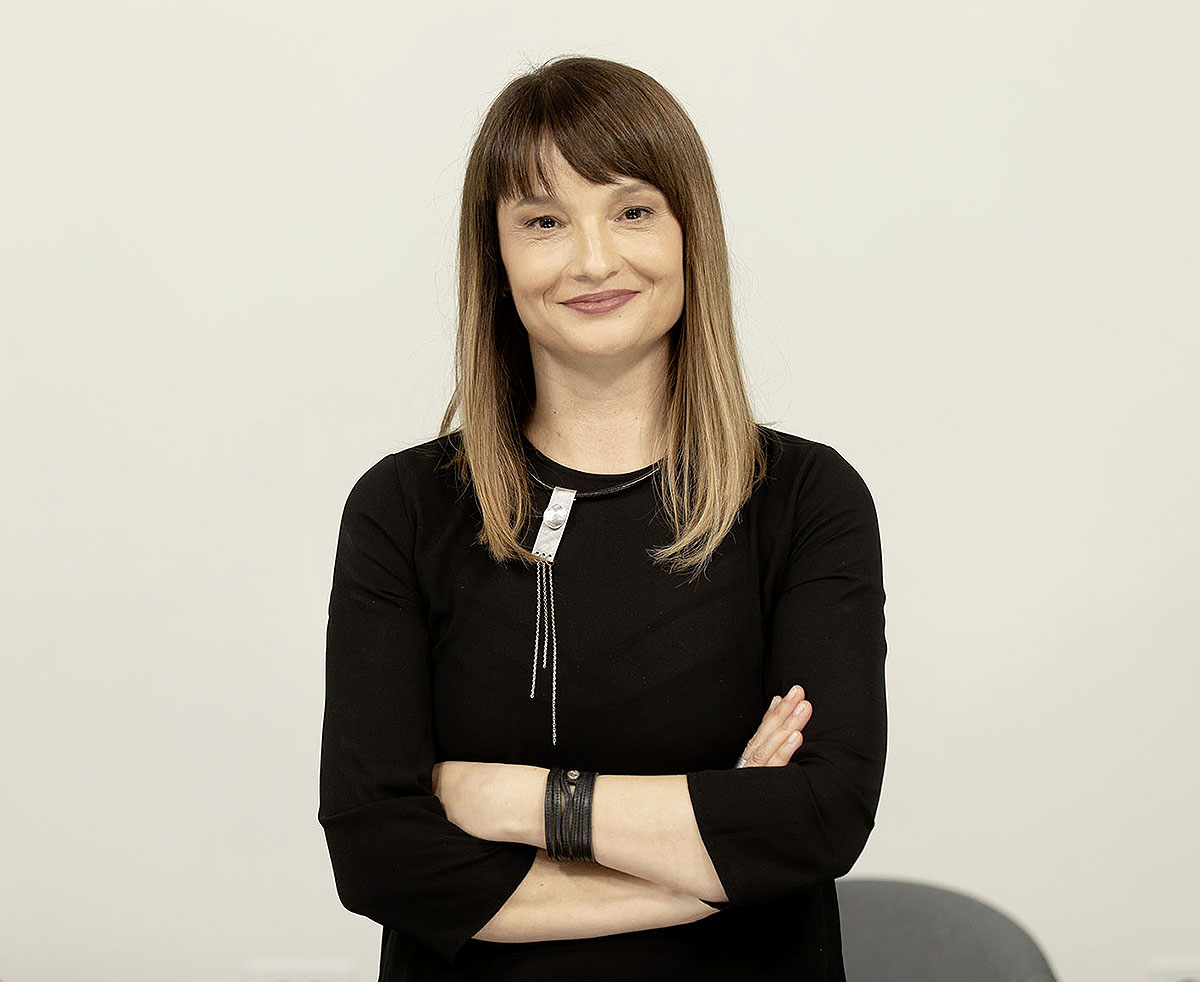
Feelings of inferiority, lack of self-confidence, anxiety and depression are just some of the possible consequences of suffering from digital violence. It happens, not only on social networks, but also while playing games, all over cyberspace. As part of the "Safe Kids" project, psychologist Ana Mirković holds educational workshops in schools across Serbia, where she talks to both parents and children about children's safety in the digital world. Also, Ana Mirković is the chief executive officer and co-founder of the Institute for Digital Communications. By the way, she has been an advisor for digital violence on UNICEF projects for many years and, through various platforms, deals with the challenges that the digital age imposes, and the answers to them.
"WEATHER" How to recognize digital violence?
ANA MIRKOVIC: We recognize it based on several indicators, but the first and basic one is that someone always suffers and has a feeling of inferiority. There is a lot of digital violence and you cannot fail to recognize it. However, it is a question of a culture's tolerance for violence. Ours is extremely tolerant of violence, which is otherwise characteristic of cultures that have had war in recent history, where we all suffer psychological or emotional violence every day, where we are called "traitors", "hyenas", "jackals" and then somehow we don't like it. we know how to recognize. For example, I asked the children if they recognize hate speech and 80 percent of our children do not recognize it, and the smaller part that recognizes it, thinks that it serves to prepare us for life. This tells you how confused children really are, because they believe that when someone insults them, it is preparation for life.
Why digital violence happens, what is a trigger?
Frustration, the desire to harm someone, revenge, complexes, lack of tolerance, empathy, self-control and awareness of the lack of adequate punishment. No one happy, satisfied, fulfilled and in balance insults other people. It is always about an unhappy person who gets rid of his own frustrations in this way.
How digital violence affects children's development? What all the consequences can have?
The consequences are unfathomable. It strongly affects children, especially children who are in the adolescence phase. It leads to a complete loss of self-esteem, children think that they are socially unacceptable and constantly question the purpose of their existence. For example, boys as young as 9 years old say: "I posted something on Tiktok and then I got dozens of comments 'shut down', 'die'." He does not understand it as you should disconnect from Tiktok, but like disconnect from life, society. Children are small, naive, do not have sufficiently developed logical thinking, and cyber space can be very frustrating. More and more often we hear from psychologists in the world that anxiety and depression are incorporated into their personality, which means that they constantly have a feeling of burden, a feeling that something terrible is going to happen. For example, a large number of children report a phenomenon we call "no-like phobia" (not officially a phobia). Children are afraid to post anything on social media for fear that other people will not like it, which is very stressful. A girl recently told me: "If no one likes what I post in the first five minutes, I delete it immediately." That's a huge lack of confidence. And besides, these are common, regular situations. Now imagine what it's like when someone writes horrible things about them, belittles them, discriminates against them or puts them in some kind of stereotypical frame. The large number of suicides that are the result of suffering some form of digital violence is being discussed more and more often. Unlike violence that happens in a context, a space from which the victim can escape and where there are only a few witnesses, digital violence happens always and everywhere, because the bully is in the mobile phone, which means in the pocket, in the backpack, under the pillow ... It is seen by a large number of people.
Digital violence is a very complex phenomenon and there is no child who is not afraid of it, and my experience from Serbia shows that there is practically no child who has not suffered some form of violence.
What prevention measures are necessary to prevent the occurrence of digital violence?
Prevention is based on an open conversation where parents must first get rid of their vanity, to understand that they do not have advice for everyone. There is so much information, so much that we cannot find out, but we should listen to the children, not be restrictive, not judge them and let them know that we are there when they need some kind of conversation and support. The percentage of children who turn to their parents when they have a problem is in the single digits.
Why?
Everyone, from Vranje to Subotica, states in an unmistakably identical order. The first is: "Parents don't care, so I don't want to burden them." Another reason is: "Parents don't know anything about Tiktok, Snapchat, what can they do to help me?" I regret that parents do not show a little more interest in finding out what their children are doing. Not by spying, not by confiscating the phone, but to really ask "what are you doing?", "what's going on there?", "do you want to recommend who I should follow?". That doesn't exist now. The third most important reason is that children are afraid of punishment and condemnation. Because parents, due to the inability to give adequate advice, start with bans. One of the initiatives of the state at the beginning of May was to abolish Tiktok. It's the same as if you stopped traffic because of a car accident.
If the child refuses to talk to the parents, what parents can do?
If we have an insight that the digital world is a unique world for the child, we ask him "how are you?", if he doesn't want to talk, we wait for the next moment to see when he will. Sometimes the child clearly shows his intention, comes and looks in the eyes, then sits in the living room a little longer than usual, and then we ask "how was school?", "does it seem to me or are you a little sadder these days?" , "it's okay if you don't want to talk now, it's just important to me that you know I'm here". Most often, parents have no patience, they are tired, burdened with existential problems. The parents say: "I arrive exhausted to the limit, with the idea that tomorrow I might get fired, and that I certainly won't be adequately paid for my work", and the child says: "Mom, let me just tell you what was on Tiktok today" , and then sometimes the parent really doesn't have the strength and says: "Please, can we talk about it tomorrow?", but tomorrow doesn't happen, because you've practically shown the child that you're not ready to talk about it. Conversation requires constant commitment. If your child is telling you something and he has the impression that you are not listening to him, he will most likely not come back to tell you something that is important to him.

34-01...
Are parents aware of the power of digital media?
No. Children today have so much information that they have a lot of power over their parents, without the parents realizing it. Parents are simply uninformed, they are inert, they act as if they are stuck in their time. As parents, we have not shown the inclination to adapt, and in my opinion, that is the biggest problem. At the lectures I give in schools, both parents and children are present, and whatever I ask the children know, and the parents are surprised by the amount of knowledge of their little Einstein, with whom they now suddenly do not know what to do. Parents should understand that children in the digital space know everything, but they don't know so much about life, and parents have that experience for life. And actually, in that fusion of two powerful worlds, functional families can be created.
What parents think is a harmless phenomenon on the Internet, and it can negatively affect the child's development?
For starters, parents, for example, post 2000 pieces of content about their child on social media by the time their child turns five, building a digital identity that way. This phenomenon is called "shereting". For the parents, it is very harmless and they share the pictures so that the aunts, uncles and uncles from abroad can see them. Those photos can very often be misused because they are in public space. Second, kids make very tricky content about themselves, half-nude, nude selfies. For example, parents very often say, since everyone has the need to defend their own model of parenting, "I explained to my child that he has to set the settings so that only close people can see it." There is no secret communication on the Internet. Any content - sent to even one person - is forever out of our control. At the first argument, at the first disappointment, that content will only be distributed further.
On the Internet, the flow of information is quite free. Is it necessary and how to control it??
Many laws have been passed, but the implementation of those laws is very questionable. On the other hand, everything has gone too far. Hate speech, the fact that you discriminate against someone based on religion, race, gender or appearance, is everywhere. He's not acceptable, but you can't explain that to a young person who says, "Well, that's what everyone says." The whole society is a victim of emotional or psychological violence that is not reacted to. For example, there are protocols in schools that define three levels of violence to be responded to, but no one does it. Laws and systems exist for nothing if they are completely minimized in implementation. For a decade, and probably longer, we have been growing in an atmosphere of unimaginable violence. And the biggest sources of violence are traditional media. Social networks are only a reflection of society, and it is the media that create the atmosphere in society. Every day, through news broadcasts, we are brutally emotionally abused by the leaders of the system. If we agree to be victims, then how can we explain to our children that they should not agree to that? How can they believe us? Children learn mostly by modeling. By acquiescing, we set a model for our children that they should suffer. I really hope that the reset that we all wish for will happen and that this society will wake up. Since we can't go any lower, I hope this is a moment where we can only move forward.
What role could schools play in the prevention of digital violence??
Absolutely huge! I have that project, I visit schools and talk. These are usually ceremonial halls or school atriums with around two hundred parents and children. Education is essential. When I come to school, I can usually talk only with the Friday generation, only with the sixth grade generation and their parents, but I think that education should be systematic and start from kindergarten. Also, I think there is a lot of room for digital media literacy to be taught through civic education or through the subject. I participated with large teams and wrote a media literacy manual for pre-university education. Anna Martinoli from the Faculty of Dramatic Arts and I wrote a manual for media literacy for parents, but it seems to me that all this is invisible and that until it becomes part of the system it will not have the impact it should have.
What is the social awareness when it comes to digital violence?
Much more awareness has to be raised, this is just a crumb... The question is whether the decision-makers in society want to raise awareness. And it seems to me that they don't want to. In that process of joining, one of the important elements is media literacy, because it is the basis of a democratic society. You have to know why a certain medium is sending you a certain message, with what intention, what emotion it wants to provoke or produce in you. We have to be a society of media literate people, and instead we have tabloids, national frequencies given to completely wrong media, expansion of hatred, intolerance towards everything different, explicit verbal aggression that is connected with that psychological violence. So we live in a very hypocritical system of values, and I think that there is someone's interest in keeping it that way, because conscious and educated citizens, who question the messages that have been put to them, become difficult to manipulate. And at this point the system wants people who are easy to manipulate in order to preserve its position.
What is your message, how to become better parents, better society?
We have to get involved much more, to accept and admit that we don't know something. And when it comes to digital violence, we often don't know. I deal with it, so I don't know much more than I do, but I ask, I research, and that's a good starting point. On the other hand, we really can't change the whole world, but we can change our glass bell. To be more there for our children, ready to ask and answer, to educate and listen.
In the schools where I teach, parents come who I see are already following the happenings in the digital world, and those who do not, who are not aware of their own ignorance, do not come. So we have to change. It is ideal when the social context provides the possibility that we can actually change something outside our glass bell, as is the case with these protests across Serbia. The aspiration was awakened, the awareness that we have to change society because we have been silent and suffering for years. We gave our children as a model that they can't change anything and that they just need to be silent, and then we are very surprised that the children are the way they are. And it is our responsibility, and it was and is, what kind of company we leave them.