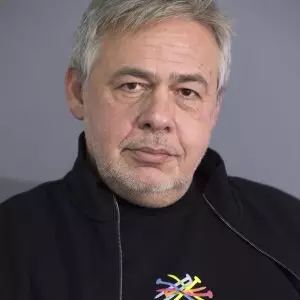
When is 2012 Aleksandar Vučić came to power, Aleksandar Čupić left Belgrade with his wife Ana and moved to a village on the territory of the municipality Sopot. Both are from Prokuplje, they knew life in the countryside and wanted to raise a big family there. Today they have six children.
"People thought we were completely crazy when we left the city life," says Čupić.
Their idea of the village was based on the experience from the south of Serbia. They believed that they would be able to buy healthy food for children there. Soon, however, they realized that rural households are also mostly supplied at the quantum markets. That's why they started producing food for themselves, and when surpluses appeared, the family farm grew into more serious production. They certified it in 2017.
"It's not a fairy tale," warns Čupić. Life on the village, organic production, six children and two demanding jobs are much less romantic than they appear in television reports.
His wife previously left her job at the clinic and started volunteering at the Health Center in Sopot, with assurances that she would be accepted. However, she only received fixed-term contracts. Even the recognition of an honorary citizen of Sopot did not change her status, although the health center lacks doctors.
After the students spent the night at their property, the news spread on social networks that she lost her job because of it. Čupić says that this is not entirely true: even before that event, she was thinking of leaving because she no longer wanted to agree to endless work for a certain period of time. "We didn't want to get into a situation where someone tried to blackmail us."
His approach to the student movement began in December 2024, when students invited him to a forum with three other professors. The invitation surprised and honored him, especially because among the students he was not considered an easy professor.
Until then, he didn't know how plenums really worked. He believed that professors should be with students first of all to protect them. He says he would not be able to sit in the cabinet while those on the street are exposed to danger. He would stand in front of them even when they protested about goals with which he himself did not agree. And then he attended the plenum.
"I was positively amazed. I realized that they have better communication than anyone in our social system. That culture of dialogue seems to be outside of this society and this time. After three hours I had a headache from concentration, but then I realized that this is something different."
Professors told students that the world would not collapse and offered advice from the experience of their generation. Čupić, however, soon changed his perspective: "They are now correcting our crooked Drina, which we did not correct on October 6, 2000."
When the students walked towards Kragujevac, in Sopot for a long time no one was allowed to open a public space for them to spend the night. The Čupićs tried to find a balloon, a hall or other accommodation, but people, probably out of fear, refused to receive them. The family therefore prepared greenhouses on their property.
Originally, between 200 and 300 students were supposed to arrive. As the column approached from the direction of Kumodraž, the estimates grew: five hundred, six hundred, then seven hundred people. Čupić got into the car and went to the back of the column to check how many were really coming. A grueling logistical operation began.
Some close friends of the family brought food. However, they passed the rolls through the car window, not daring to get out.
"You see that something human burns in a person, and on the other side there is fear and pressure. They tell me: 'At least you understand me.' And there is no logic that they expect me to understand such a fear. My wish is that no one ever has that feeling again."
It was this sight, perhaps more than the students' overnight stay, that influenced his later decision to accept the candidacy. For him, the student movement is not only a political rebellion but a process of liberating people who are still afraid to get out of their cars.
Čupić insists that opening the greenhouse was not a heroic act, or even a gesture of political support.
"I would also accept students from the counter-blockade if they needed a place to stay. It was an expression of philanthropy. We made heroism out of small acts and received a disproportionate amount of love for that gesture. We are no heroes. The hero is my fellow tribesman Ljubo Čupić (partisan and national hero - op. op.), who looked at the guns with a smile when he was shot."
If ordinary humanity is proclaimed as heroism, he believes, then people are only looking for justification for their own fear. "You don't have to theoretically talk about being humane. You just do something."
On that day, unknown people in jeeps came to the property, asking where the students would sleep. Čupići showed them the greenhouses. They were not afraid. At the entrance to the street, there were police patrols and firefighters, in order to prevent possible incidents.
But the decision to be on the election list was not made so easily by Čupić.
"At first ball it didn't seem like a good idea at all. I had a stone in my stomach when they called me."
At one of the meetings, he openly said that he had doubts about his candidacy. Because of this, no one removed him or tried to silence him. It was the way the students considered the objections that finally convinced him to accept.
"Students are the only organization I've seen that, when it has to make an important decision, tries to attract those who disagree. Mostly people don't want dissenters at the meeting. Here, the decision is examined from all angles so that it ends up being of better quality." When he accepted the candidacy, he did not know which position he would occupy. He didn't even care. He says that the other candidates he spoke with also did not know where they would be on the list.
In such a way of decision-making, he sees perhaps the most important political innovation brought about by the students: decentralization. Candidates were not decided by small party circles in Belgrade, but by university centers and local communities.
"Imagine that you find 250 people all over Serbia and that everyone knows someone from that list. When they start saying that they are terrorists or traitors, people will know that they are lying because they know at least one of those people."
In Sopot, he says, he had no serious inconvenience because his neighbors know him. When someone asks him: "Where are you, real Serb", he replies: "No, no, I'm a terrorist and Ustasha." The interlocutors then tell him that the authorities may be telling the truth about others, but that they are surely wrong about him.
This is exactly where Čupić sees the weakness of propaganda: when an abstract target turns into a famous person, the label ceases to work.
He is aware that no one can be prepared for what comes next. Targeting can get very dangerous, but someone, he says, has to be among those 250 people.
"You cannot bear witness to the truth without being touched by a lie. A lie is the antithesis of the truth. If you bear witness to what you have seen, you cannot expect everyone to applaud you. And a lie has its purpose and its work." The biggest sacrifice is made by his wife, who now, while he is engaged in the campaign, has to take care of six children alone.
He imagines himself in the parliamentary hall as part of a group that will respond to provocations politely and with arguments. He believes that people cannot remain immune to honesty and normalcy forever.
"Our politicians are not professional but chronic politicians. Let's offer them an educational program in the Parliament. It may sound childish, but if the people on this list show why they are there and take care of what they say, I am not sure that reality TV can win."
And then, almost as the conclusion of his entire story - from going to the countryside, through the greenhouse to candidacy - he utters a sentence that could also be a description of the campaign he expects:
"Truth doesn't inflate. It's the lie that waves the confetti. The truth is reduced."
Real journalism costs money, and we will not be bought by tycoons and corporations. Support us with a one-time or monthly donation. The time for it is now!