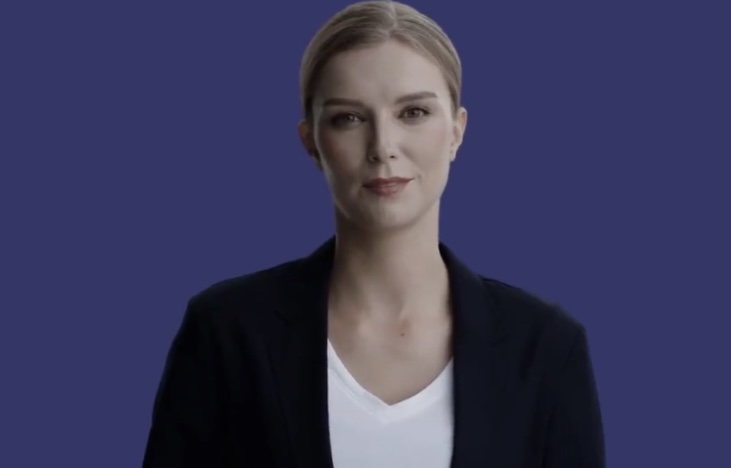
"I am Feda, the first presenter in Kuwait with artificial intelligence . "
A woman with exposed hair in a black jacket and white T-shirt - a news anchor generated by artificial intelligence - addressed the followers of Kuwait News on Twitter with this sentence in Arabic. Then she asked the viewers of the video clip: "What kind of news do you like?" Tell us what you think."
The plan, announced Kuwait News, is for the Fed to read the news published on the website.
Kuwait News is part of Kuwait Times founded in 1961 as the first English-language daily newspaper in the Gulf region.
Feda represents everything
The deputy editor-in-chief of both media outlets, Abdullah Boughten, said it was a test of AI's potential to offer "new and innovative content."
In the future, he says, Feda could adopt a Kuwaiti accent and read news on the site's Twitter account, which has 1,2 million followers.
"Feda is a popular, old Kuwaiti name that refers to silver... We always envision robots in a silver, metallic color, so we combined those two things," Boftain explained.
He said that the presenter's blond hair and bright eyes reflect the diversity of the local population and immigrants to the oil-rich country and added: "Feda represents everything."
The first video clip lasting 13 seconds caused a flood of reactions on social networks and comments from journalists.
The meteoric rise of artificial intelligence globally has fueled hopes that humans will increasingly benefit from it, especially in areas such as healthcare.
On the other hand, there is a fear of massive job losses, there is a growing fear of artificial intelligence as a potential for the spread of misinformation and loss artistic integrity.
BG/RTS/Guardian
Read daily news, analysis, commentary and interviews at www.vreme.com