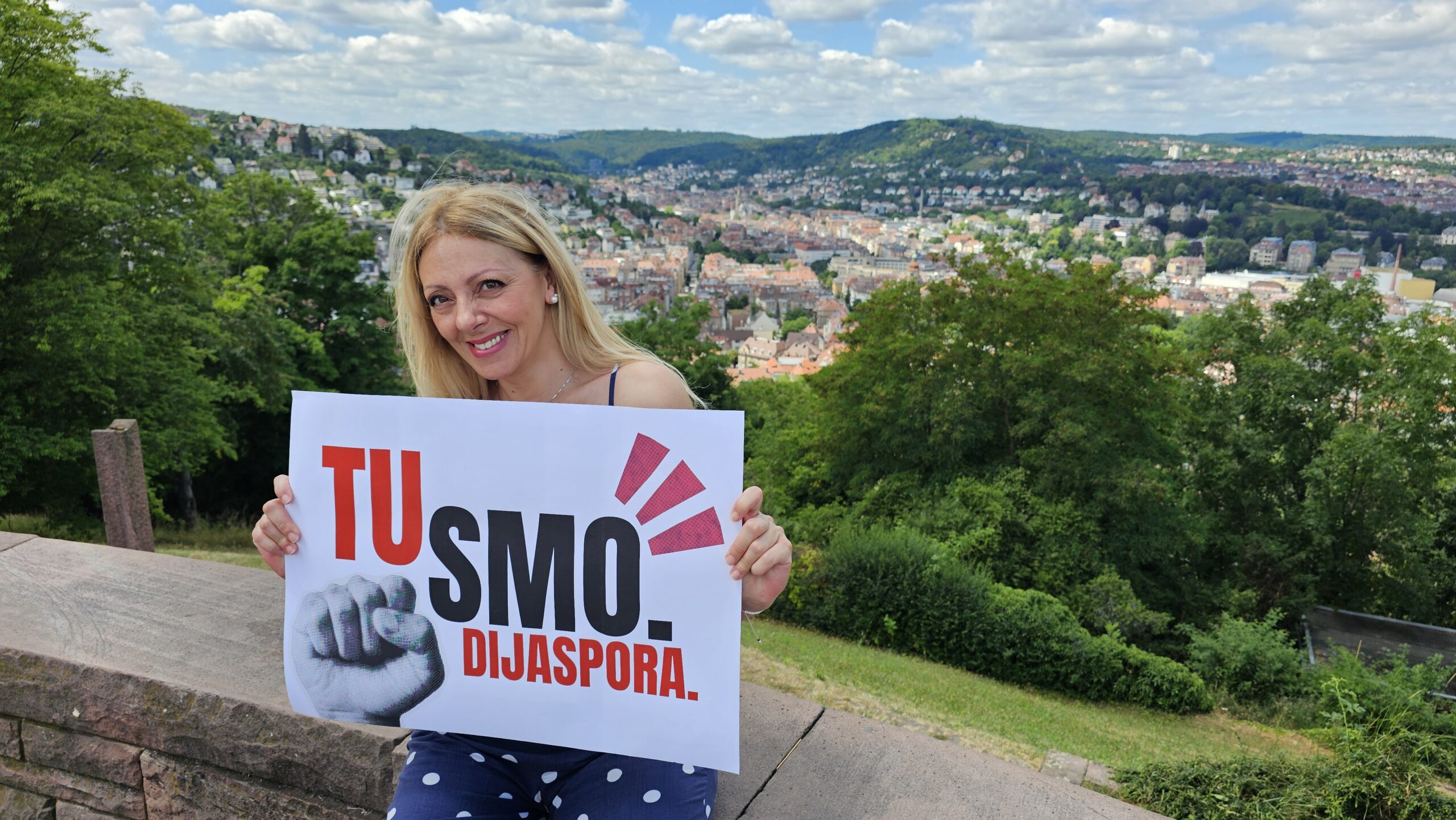
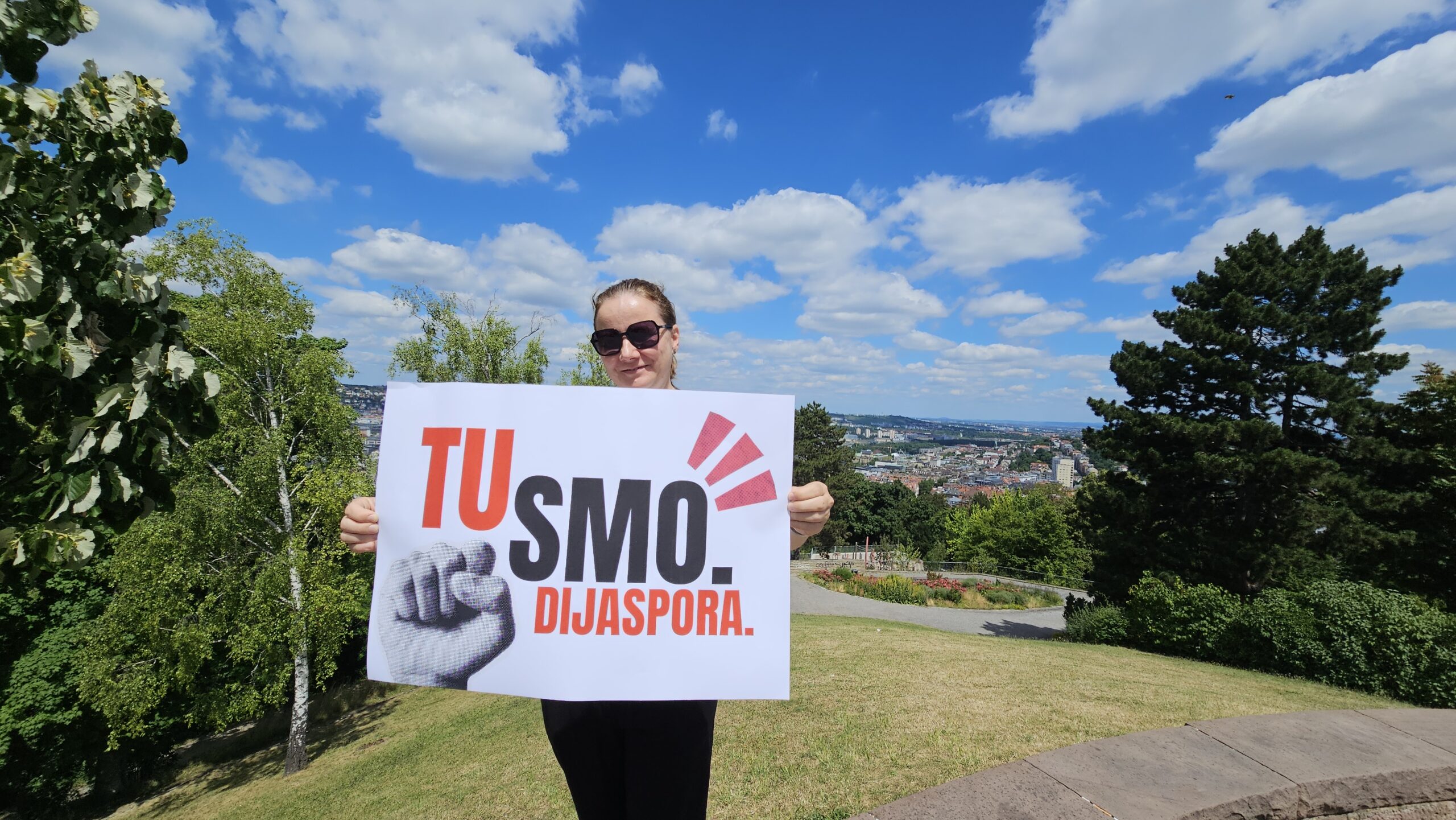
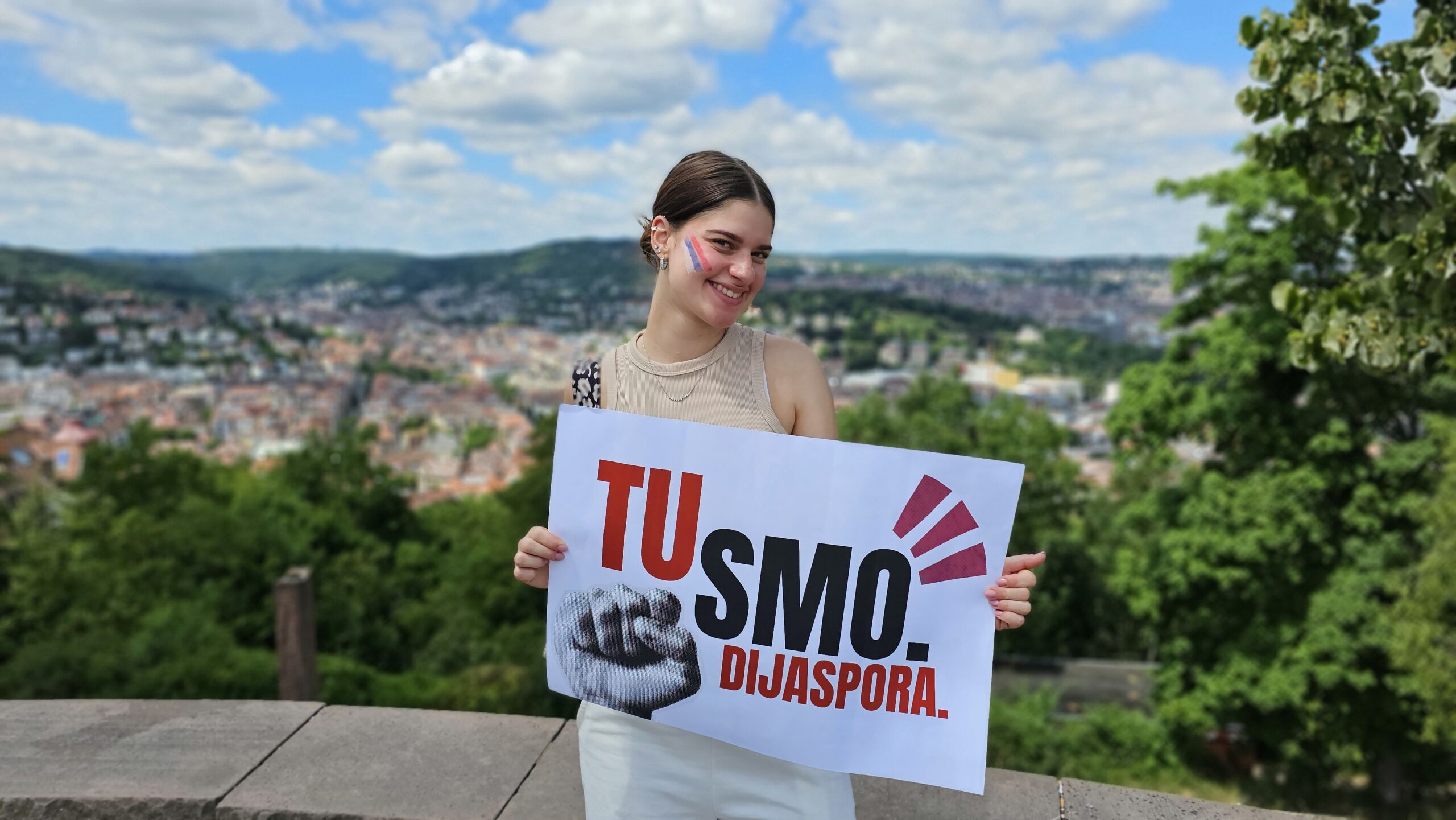
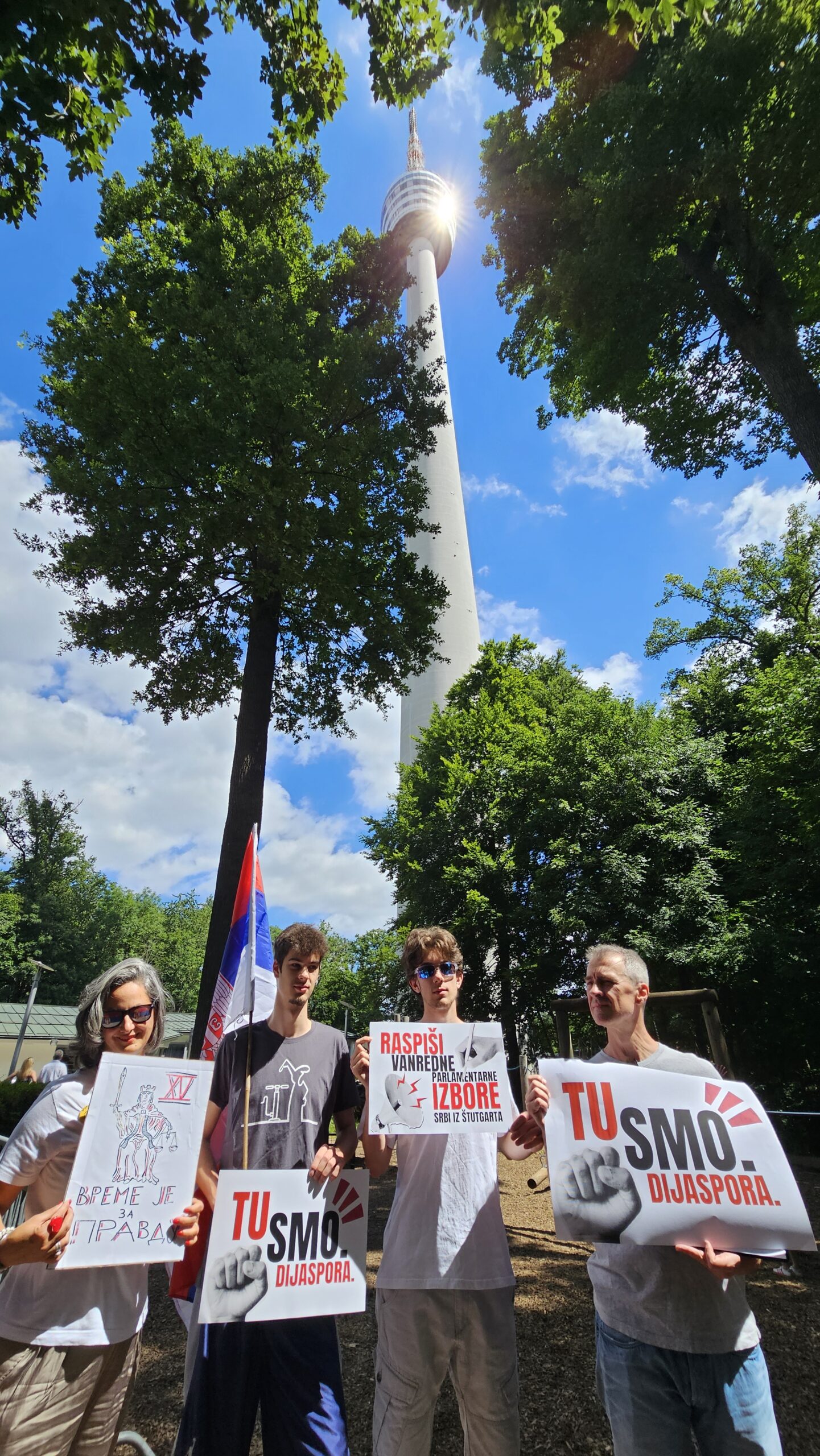
What happens when protests from Serbia spill over thousands of kilometers away? Serbian activists abroad no longer want to be just an audience that follows events in Serbia from afar. After months of protests and support for students, international initiatives and connecting the diaspora, they are facing a new phase of engagement - the elections
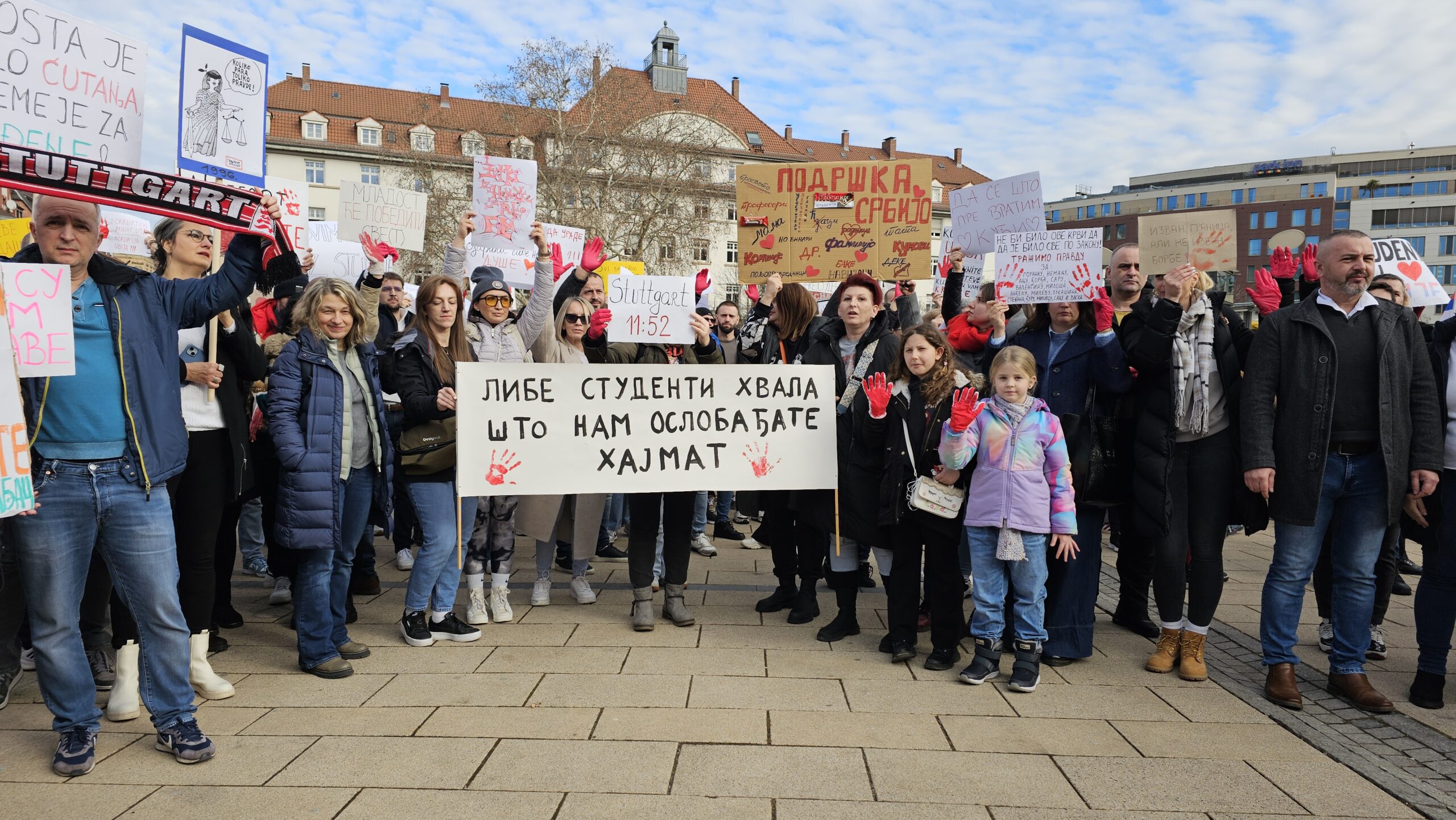
For the part of Serbs living in abroad, student protests in Serbia have not remained an event that is followed through social networks. They were formed in cities all over Europe informal groups that organized support protests, connected with each other, addressed international institutions and helped students.
Now, on the eve of the elections, part of that movement is taking on a new dimension: people who have been organizing around protests for months are trying to transfer their experience to election day.
In Geneva and Lausanne, organizing began at the beginning of 2025, at the first support gatherings to students. Since then, the group has connected with similar initiatives in other Swiss cities, and then with communities in Germany and France. They participated in the organization of the reception of student cyclists in Strasbourg, support actions, international initiatives and addressing institutions.
One letter to the UN High Commissioner for Human Rights, Volker Turk, regarding the violence against protesters and the arrest of political activists, was signed by more than 12.000 people around the world in just 24 hours.
Photo: Nataša Devetaković LičinaSupport to the Student List from Geneva
Od "Serbia against violence" to "Students win"
"Since the parliamentary elections were announced, the interest and mobilization of people on the ground is much greater," Nataša Devetaković Ličina, who speaks on behalf of the informal group "Support Geneva and Lausanne", tells Vreme. On September 20, the group organized a forum in Geneva where they discussed the reasons why the diaspora should participate in the elections.
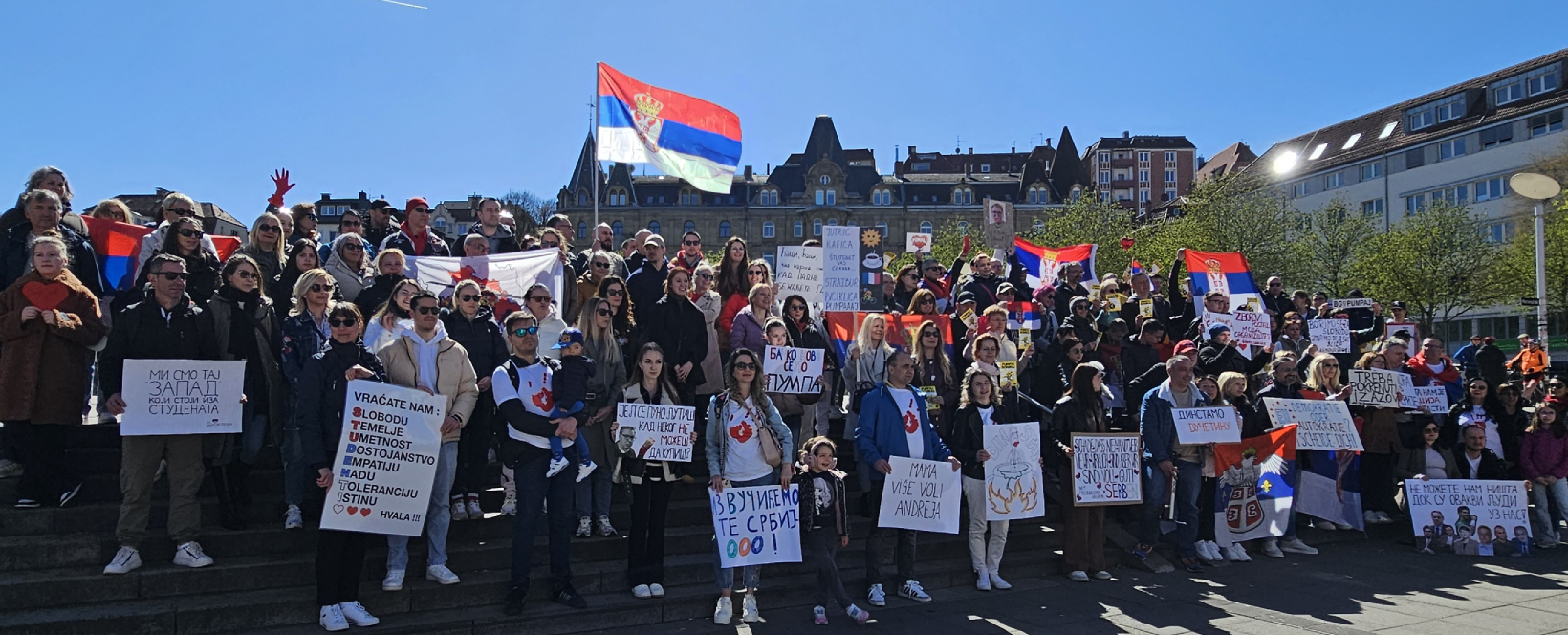
A similar development took place in Frankfurt. There, the community of Serbs interested in political events in Serbia existed even during the "Serbia against violence" protests, and became more active again after the student blockades and civil protests after the fall of the canopy at the Railway Station in Novi Sad.
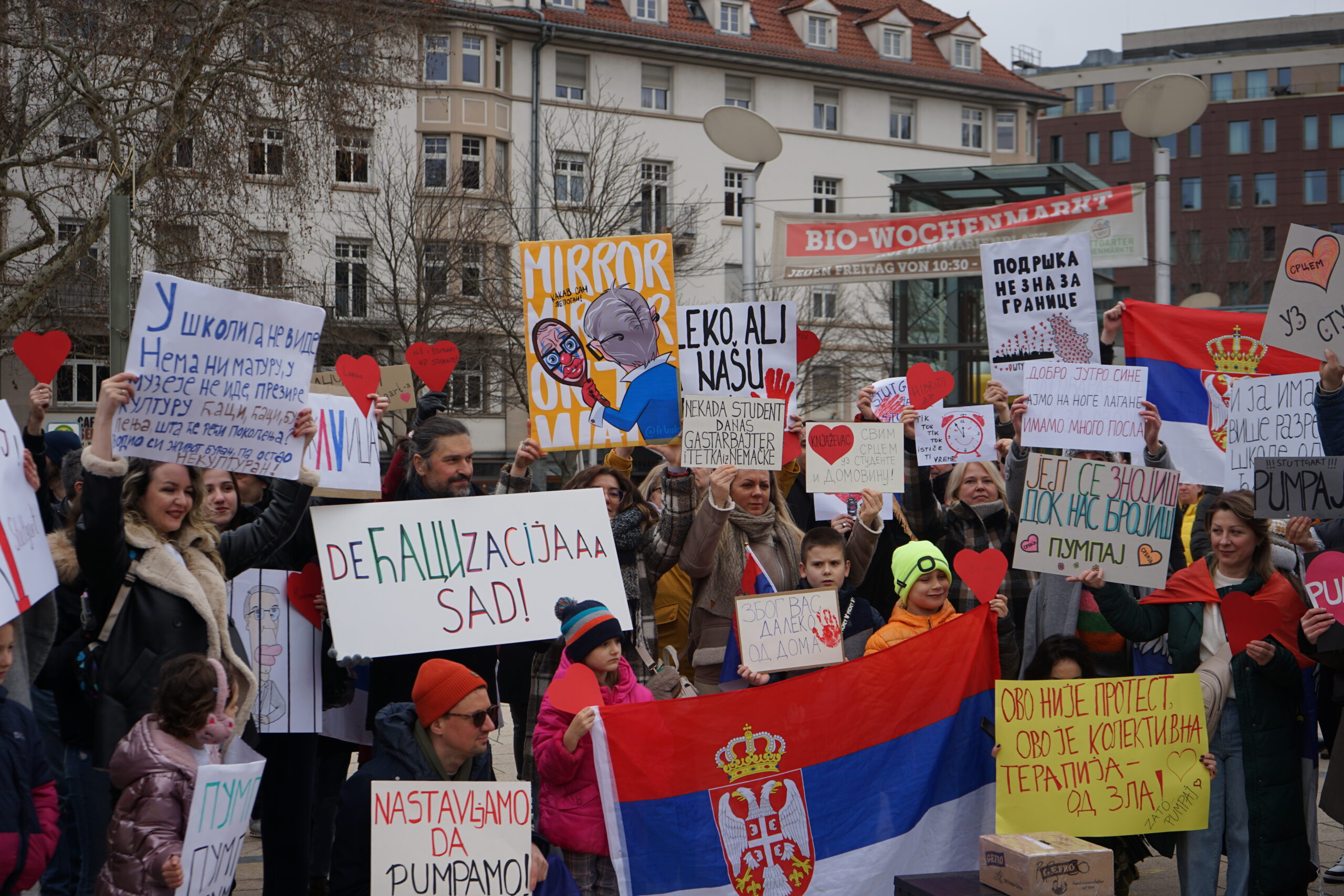
In January 2025, more than 1.000 people gathered in front of the Serbian consulate in Frankfurt. The organization rested on social networks and immediate agreement, without a formal leader. People themselves proposed actions, prepared materials for protests and connected with German politicians and officials.
One of the protests had an international character, and among the speakers was Tarek Al-Wazir, member of the Bundestag and former Minister of Transport of Hessen, who participated in the rally as a citizen.
Photo: Private ArchiveNatasa Devetakovic Ličina
Today, "Frankfurt with students" is part of a wider global network that coordinates activities through social networks and the "ukljucise.info" platform.
Why the election changed things
According to the testimonies of activists, the protests brought together people who were not necessarily politically organized before. What connected them was the concern about the events in Serbia and the need to show support outside the country.
With elections, however, a different kind of engagement emerges. Activists no longer just want to organize support rallies, but to be part of the political process taking place in Serbia.
"Many citizens in Germany and beyond in the diaspora have long since tried to raise awareness that every vote is important and that the diaspora has the right to participate in making political decisions in the homeland," Olivera Stošić Rakić from the group "Frankfurt with Students" told Vreme, adding that the student movement further encouraged people abroad to get involved in democratic processes.
Photo: Frankfurt with studentsSupport from Frankfurt
In Geneva, this personal attitude towards elections is particularly pronounced. Devetaković Ličina says that she herself did not use her right to vote for a long time, but that over time she changed her attitude towards voting.
"Voting is always important," she says, assessing that it is a way for citizens to influence decisions concerning Serbia.
Behind this engagement, however, is not only the issue of elections. For the interlocutors, it is about a broader attitude towards the country from which they left, but with which they did not break the connection.
Devetaković Ličina reminds that the diaspora has great economic importance for Serbia and that the money that people from abroad send to their families is an important part of economic flows. Therefore, she believes, the argument that people living outside of Serbia should not decide on its future cannot be sufficient to exclude them from political life.
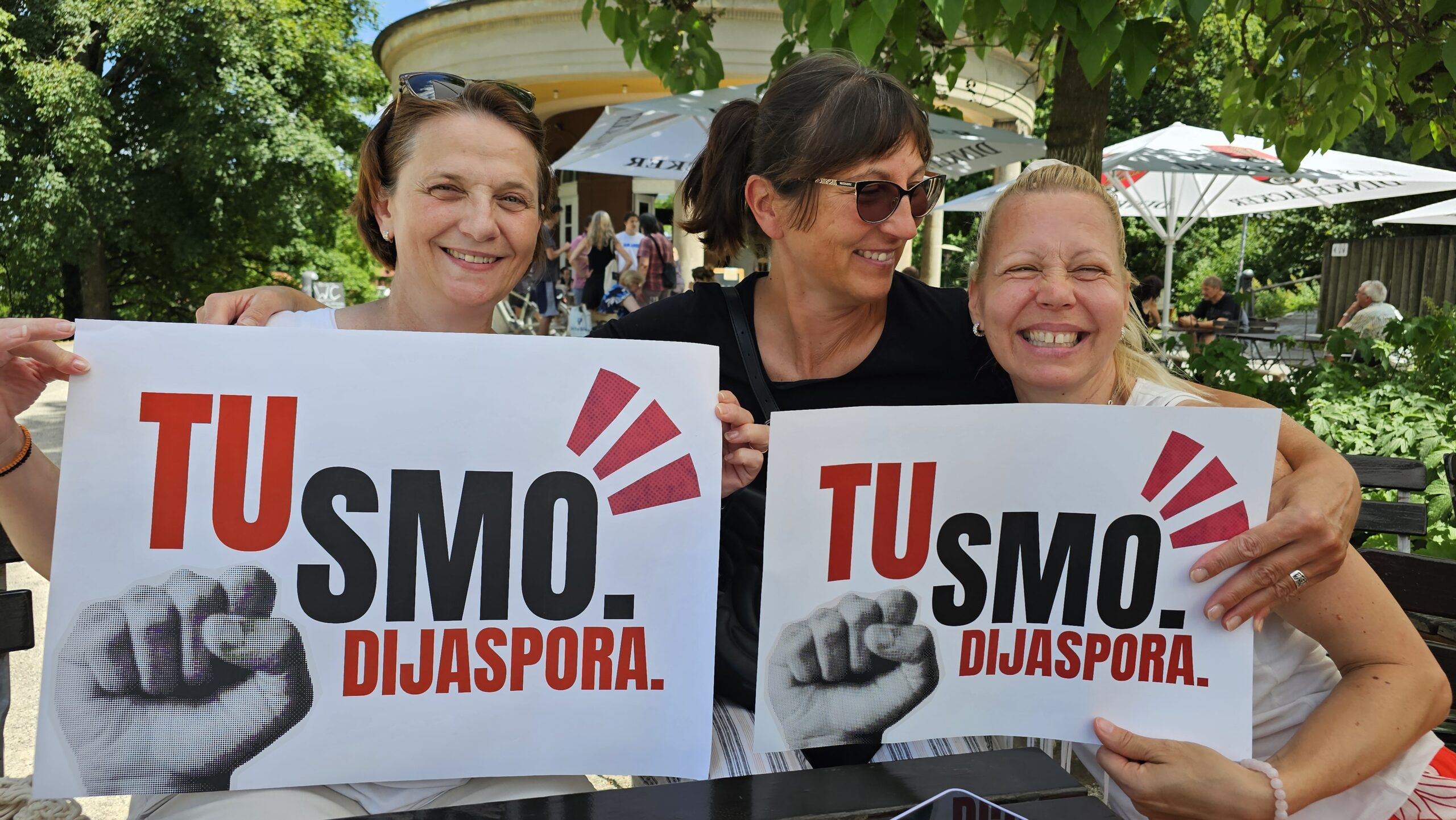
Photo: Nataša Devetaković LičinaMessages from Switzerland
From Facebook groups to polling stations
The communities formed during the protest have a common way of organizing. Instead of classic associations and hierarchies, they rely on WhatsApp, Instagram, Facebook and other social networks. In Geneva and Lausanne, WhatsApp communities remained the main channel of communication. The Frankfurt Group operates without a formal leader.
They are now trying to transfer that experience to election day.
In Switzerland, activists have connected with people who are ready to be part of electoral committees, while the student movement is coordinating the training of inspectors. Mobile teams are also planned, as well as the organization of transportation for people who have to travel to polling stations.
In Frankfurt, they expect to be sufficiently organized on election day to be able to follow what is happening and to inform the public in Serbia about it.
"First of all, we expect ourselves to organize ourselves well on election day, to have enough controllers and to be able to report to the public of Serbia about election day in the diaspora," says Stošić Rakić.
And then she adds what is clearly a political expectation for her group: "We expect the students to win."
This engagement does not mean that people from the diaspora are deprived of political and social pressures. The interlocutors state that negative comments and insults appear on social networks, but that the pressures are still different than in Serbia.
"The pressure is much lower here than in Serbia, because we are also German citizens," says Stošić Rakić.
And Devetaković Ličina said that she had no discomfort either in Serbia or in Geneva, although she admits that she feels discomfort when entering or leaving Serbia. He does not respond to insults on social networks.
However, what is perhaps more important than individual inconveniences is the fact that the people who gathered around the protests in Serbia began to see their diaspora as a political community.
In that sense, the election is more than a day of voting for them. They are a continuation of the activities that began on the streets of Geneva, Frankfurt, Lausanne and other European cities - only now the question of supporting the student movement is being translated into a question of political choice.
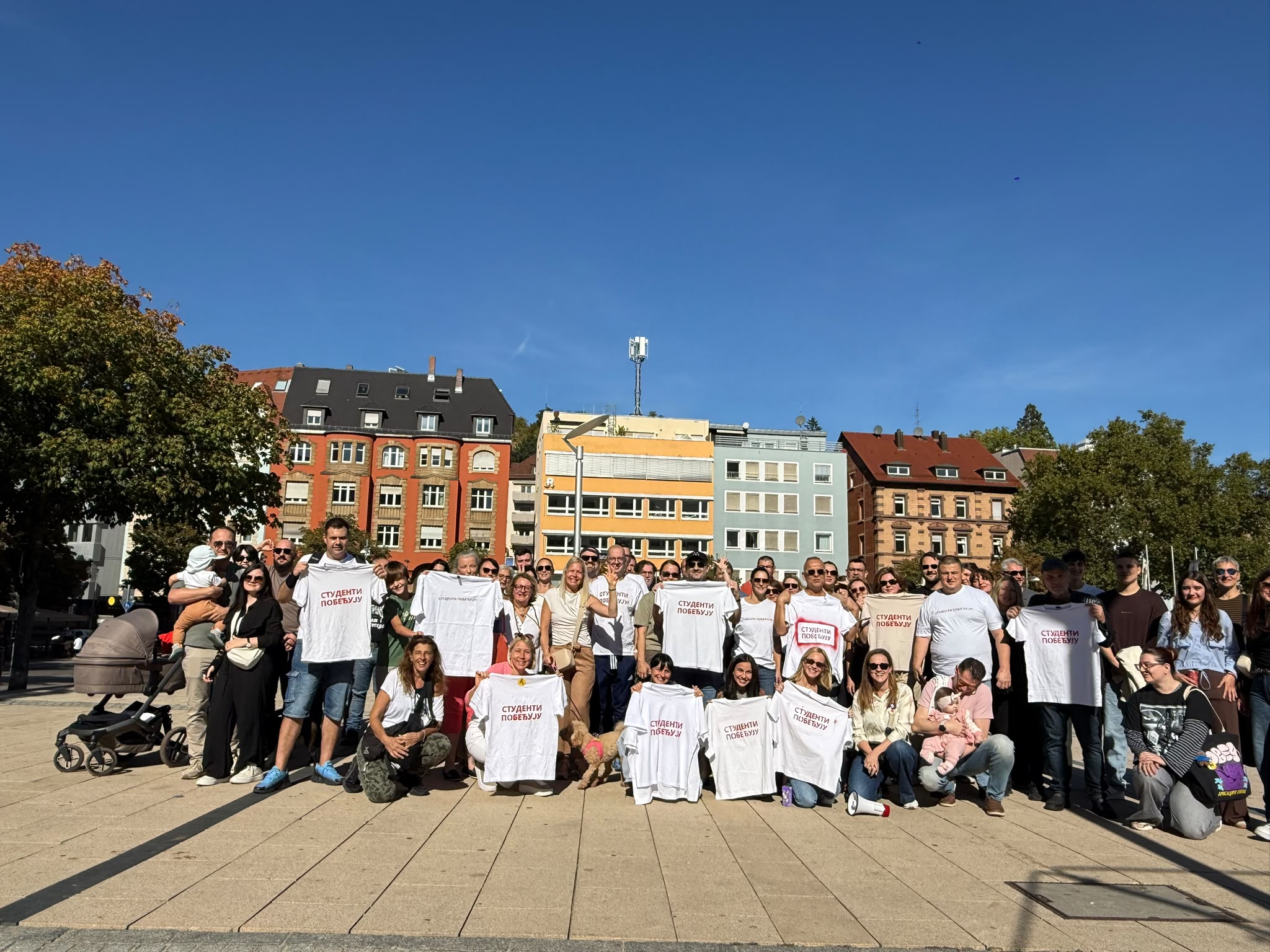
Photo: Anamarija NikoletićFor students from Basel
"We see the student and civic struggle as a struggle for a better global tomorrow, as an example that can and should inspire other people around the world to participate in civic participation," says Stošić Rakić.
In Geneva, the expectation is somewhat broader: a change in the political system, the rule of law, less corruption and Serbia's exit from, as Devetaković Ličina says, the "vicious circle" in which it has been for decades.
For the people who organized protests thousands of kilometers from Serbia in recent months, election day will thus be a kind of test of everything they did during the previous year. From informal groups on WhatsApp and support gatherings, through international contacts and student actions, they have reached the moment when they want to show that the diaspora can be more than an audience that observes events in Serbia from afar.
Election time! And someone has to report to you independently. That's why it's in October annual subscriptionthe digital edition of "Vremena" even 2.500 dinars cheaper. Choose now!
What is happening in the country and the world, what is in the newspapers and how to pass the time?
Every Wednesday at noon In between arrives by email. It's a pretty solid newsletter, so sign up!
The former ambassador of Belgium in Belgrade, Denise de Hauer, said that the European Union pressured Aleksandar Vučić to withdraw security forces from Pionirski Park on election night, in order to avoid a possible civil war.
"The contract on termination is in the formalization procedure and it is expected to be completed at the beginning of next week, about which the public will be informed", announced the Ministry of Construction, Transport and Infrastructure and confirmed the earlier writing of "Vremen"
Serbia and Jared Kushner's company waived all possible mutual claims upon the termination of the contract for the General Staff, claims "Vremena" source from the Government.
A group of individuals has created two websites where public procurement of the Telecom and IT sectors can be searched and compared. They invite the media, experts and citizens to review the documentation and submit reasoned observations
At the moment when the institutions of the Republic are destroyed, when Vučić's octopus is still alive, when people are disgusted by the injustice and the stench left behind by the Essenes regime, we have, as Machiavelli said, only civic virtue as the fuel with which we can return to the beginning
The four independent members of REM are an example of perseverance and civic responsibility. Rodoljub Šabić even, upon leaving the premises of REM, after the sentencing of the Informer, experienced that the Essenes insulted him, hit him with their hands and feet. But that too will soon be over
Vučić pardoned the batterers and Dijana Hrkalović. The election winners should abolish the sultan's power that allows one man to run afoul of the entire judicial system
The archive of the weekly Vreme includes all our digital editions, since the very beginning of our work. All issues can be downloaded in PDF format, by purchasing the digital edition, or you can read all available texts from the selected issue.