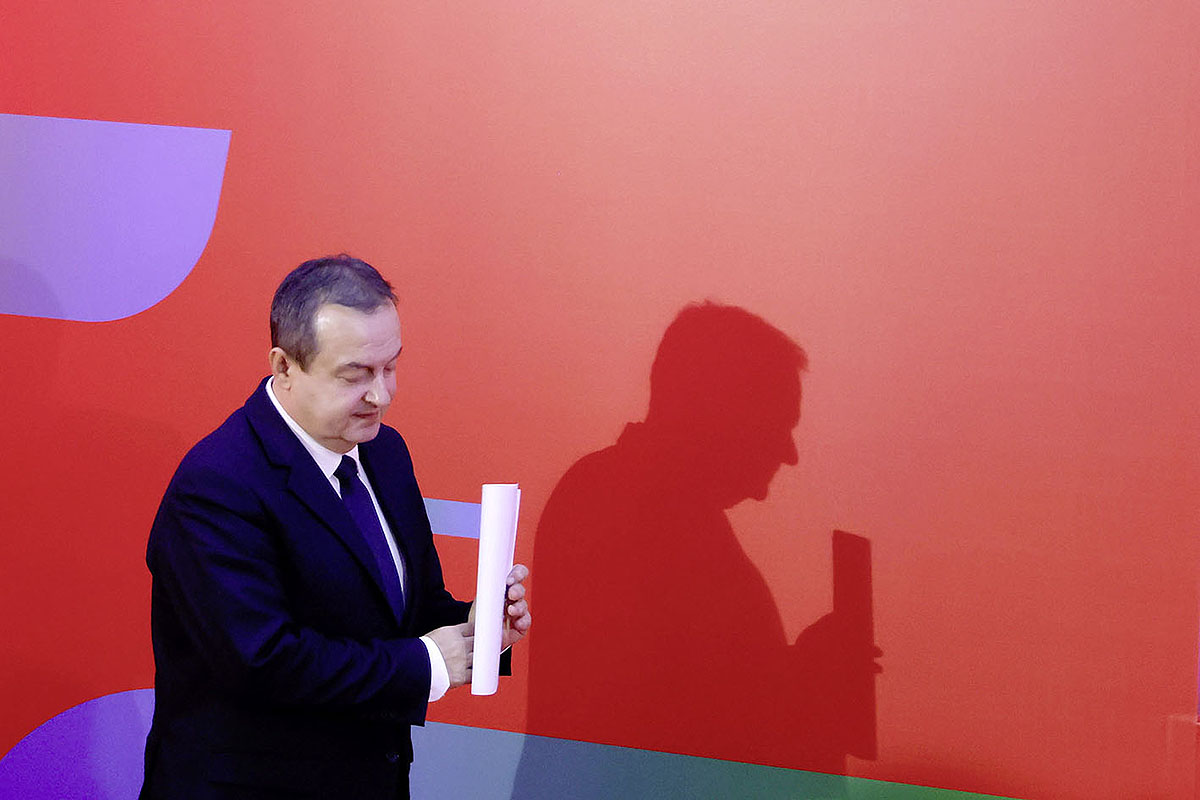
- Radovan Lazić, president of the Management Board of the Center for Judicial Research (CEPRIS) and a prosecutor, assessed that it is a justified question whether pardons which Aleksandar Vučić signed on the day of his resignation, an act of mercy or "returning the debt to party associates and sympathizers".
- The names of the 49 pardoned, apart from 12 activists from Novi Sad, are not yet public, and the Ministry of Justice claims that it does not know who Vučić pardoned and that it will not participate in the implementation of that decision.
- Lazić believes that the legality of the act is "questionable" because the procedure for amnesty from criminal prosecution can only be initiated by the Minister of Justice, who is in a technical mandate.
- Two interpretations differ: Ministry of Justice says that it did not participate, and the professor of the Faculty of Law, Vanja Bajović, points out that the president has the right to pardon from criminal prosecution and that the minister should be asked if he made a proposal.
What happened
Lazić told today's edition of the newspaper "Nova" that the law does not prescribe the obligation to publish the act of pardon in the Official Gazette, so the non-publication of names "certainly is not for legal reasons, but for political reasons".
He explained that the Law on Pardons recognizes two types of pardons: from criminal prosecution, when the person has not yet been convicted, and from the execution of the sentence. A pardon from criminal prosecution, he said, represents interference of the president in the judicial power and is applied extremely rarely, but the law gives that right to the president under prescribed conditions.
In the case of 12 activists from Novi Sad, it is a matter of pardon from criminal prosecution, and nothing is known about the others, he says.
According to Lazić's interpretation, the procedure in such cases can be initiated only by the Minister of Justice. The ministry announced that it did not participate, so if the president made the decision without the minister's proposal, he would have violated the law, and if the proposal did exist, it was given by the minister in a technical mandate, who is not authorized to do so.
Lazić concludes that the described illegalities are very serious, that they violate the separation of powers and the rule of law, and that they may contain elements of a criminal offense.
Background of the story
On September 27, the day he resigned as president of Serbia, Vučić said he pardoned 49 people, among them 12 from the so-called Novi Sad group, led by Milo Pajić, and 11 people who participated in incidents against participants in the blockades. Regarding the 23 people involved in the events of the last year and a half, he said that he made the decision despite the opinion of the commission and the security services, and that it was his personal decision.
Novi Sad activists were accused of acts against the constitutional order, and STAV announced that they "got their freedom" and that the proceedings were "rigged". The identity of the remaining 26 people has not been released.
The Ministry of Justice stated for Beta that everything was the decision of the former president, that he does not know who he pardoned and that the decisions should be submitted to the competent prosecutor's offices and courts.
The lawyers quoted by "Danas" believe that the procedure was violated because, according to the law, the initiative for a pardon from criminal prosecution must come from the Minister of Justice, while Vanja Bajović states that the president has the right to pardon a person from criminal prosecution and that the minister should be asked why he proposed certain persons.
Vučić previously stated that in his nine years in office, he did not make decisions on pardons because it is "always very risky", and the BBC reports that he pardoned 18 people last year.
Why is this important?
A pardon from prosecution stops proceedings before a court can determine whether someone is guilty, affecting both defendants and injured parties, who can no longer receive a verdict
If it is not known who was pardoned and for what acts, citizens cannot judge whether it is mercy or preferential treatment, which is the essence of Lazić's remark.
For institutions, primarily prosecutors' offices and courts, it is a question of how to act on a decision whose content is unknown, and for future proceedings the question is whether someone will challenge the legality of the decision.
Decisions on pardons should reach the competent prosecutor's offices and courts, and it is not known whether anyone will initiate a procedure to assess their legality, nor whether the names of the remaining 26 pardoned will be published.
Election time! And someone has to report to you independently. That's why it's in October annual subscription the digital edition of "Vremena" even 2.500 dinars cheaper. Choose now!