We have been hearing the same boilerplate stories about geopolitics for years Europe: NATO against Russia, West vs. East, North vs. South, Center vs. Periphery, EU vs. Authoritarianism...
Beneath that daily media noise, however, deep, tectonic processes are unfolding that will reshape the European continent: from quiet deindustrialization and digital transformation, to demographic emptying and the so-called "militarized peace", which will permanently change the balance of power and the internal stability of Europe.
A continent in webs of dependency
From the outside, despite numerous crises, everything works as before: the formal sovereignty of individual states, despite the wishes of influential circles from Brussels, has not disappeared anywhere. Flags, borders and parliaments are still there. But the functions that make a country viable - the ability to heat homes, defend the skies, pay pensions, employ people, run factories and transport passengers - increasingly depend on something that is neither national nor fully European - a system of complex, supranational "webs of influence". They control global flows of goods, money, energy, information and technology, and have become the primary means of political power and control.
Who today manages electrical interconnections, cloud and data centers, submarine cables, satellites, chips, ports, payment systems or supply chains?
Since the global system rests not only on governments, but on a complex network of private corporations, technological giants, international consortia and regulatory bodies, a new, unusual Europe is emerging in which a state can be politically completely sovereign and functionally deeply dependent. The old continent is therefore no longer drawn only by formal borders, but by what is called in political theory "dependency networks" - where many countries are simultaneously linked to German industry, French energy, the American cloud, Chinese logistics or Norwegian gas.
In such an order, the main question is no longer where the state is located on the geographical map, but in which networks it manages to be irreplaceable, or even indispensable.

Photo: AP Photo/Pascal BastienEuropean Parliament
Demographic erosion: The cost of aging Europe
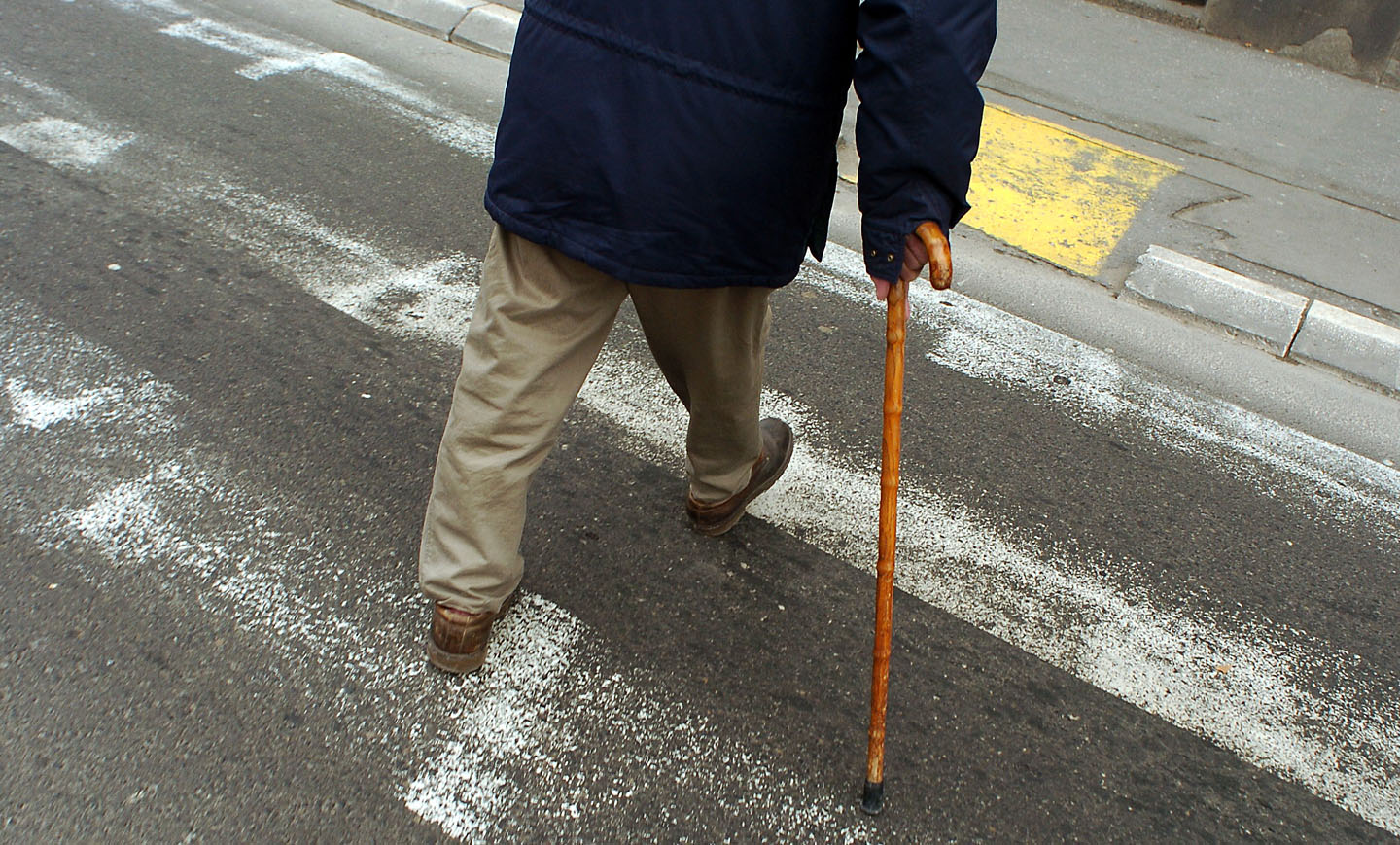
A seemingly more visible story than this concerns the demography of Europe. And here we are not talking banally about "Europe getting old", but about structural disruption: what happens when the territory and infrastructure remain the same, and the number of people who "maintain" them decreases permanently?
The numbers are inexorable: according to the report he passed on Reuters, the population of the EU will reach its peak in 2029 (453,3 million) and then begin a multi-decade decline that will reduce the population to 398,8 million by 2100. This means a loss of 11,7 percent of the population and a return to the demographic framework of the 1970s.
The same report states that by 2050, almost every third resident of the Union will be over 65, compared to every fifth today.
The labor force is "melting" even faster than the total population. Data from the European Commission's Joint Research Center show that the EU labor force could decline by more than 20 percent by 2070 (from 43 to 56 million fewer workers). Investment banks like Morgan Stanley-a are already calculating the economic consequences, estimating that aging could take four percent of the GDP of the entire Eurozone by 2040, with Italy as the biggest "victim" of this process (about six percent of GDP).
Photo: TanjugEuropeans are getting older
In Serbia, up to 30 percent less labor force
The region of Central and Eastern Europe, to which Serbia also belongs, was hit much harder. According to the IMF study, half of the countries of the CIEZ region will have a population decline of at least 15 percent by 2050, while the labor supply in Serbia will decrease by 10 to even 30 percent.
Bearing in mind that the European continent will be left without tens of millions of working-age people aged 20 to 64, while at the same time the population of Africa will increase by 1,3 billion, the migratory pressure on Europe will be greater than ever in the near future.
This raises the question of who will inhabit the continent in the first place, who will maintain its periphery, and will population density become the new currency of power? Power used to mean having territory, then capital and industry. In the future, it could increasingly mean this: having people and being a place where people want to come.
Photo: Tanjug / Sava RadovanovićCrowds at the Batrovci border crossing
Militarization of the Old Continent
And then comes the third layer of the story: the war in Ukraine as a permanent transformer of the continent, not a passing crisis.
Even if there is a truce, and once this conflict ends, the processes that this war started will be difficult to reverse.
While Europe is struggling with economic instability, political divisions, energy challenges and a crisis of trust in institutions, a new, extremely harsh condition is being set before EU and NATO members - the obligation to allocate as much as five percent of their GDP for defense. Although this step is justified by protection against global threats, primarily from the direction of Russia and China, in practice it increasingly resembles an ideologically colored and overpriced mechanism that loses touch with the real economic possibilities of European citizens.
The White Paper of the European Commission "Readiness 2030" breaks with the previous fiscal discipline and by the end of this decade foresees investments in defense of 800 billion euros, with an additional 150 billion euros through loans for direct financing of joint procurements.
The document defines several priority areas which, according to the analysis Defense Security Monitor-a, include air and missile defense, artillery, ammunition, unmanned systems and anti-drone technology, military infrastructure, artificial intelligence and electronic warfare, as well as strategic capabilities such as air transport.
Photo: Maxim Shipenkov/Pool Photo via APSoldiers of the Russian Federation
Ukrainian scenario
A special part of the story is Ukraine itself, which, regardless of how the war ends, grows into something bigger than a country that "just survived the war."
On the contrary, according to the analysis of the think tank Jamestown Foundation, Ukraine is gaining status as a military innovator, with battle-tested tactics, advanced command and control systems, and a rapidly growing private defense sector. All this makes it one of the world's leading laboratories of modern warfare, but also a future hub of Western military innovation.
According to a report by the Washington-based CEPA Center, Ukraine's "drone labs" -- workshops where unmanned aerial vehicles are tested, repaired and upgraded directly on the front line -- have shortened the development and modernization cycle of military technology to just three to four months or even less, a speed that European bureaucracies can hardly keep up with.
That is one of the reasons why NATO, according to writing CNBC-I, began to directly import the Ukrainian experience into its own doctrine: the Secretary General of the Alliance, Mark Rutte, stated that NATO "uses the latest innovative technologies, invests in the transatlantic defense industry and learns real lessons from the battlefield in Ukraine".
Photo: Filip Singer, Pool Photo via APDonald Trump and NATO Secretary General Mark Rutte
Adapting on the Fly: The Militarized Peace
It is less obvious that militarization also builds a specific type of infrastructure - ammunition and drone factories, military airports, warehouses, energy reserves, digital and satellite systems - which, once built, often "spill over" into the civilian economy.
Business Insider analyzed the Ukrainian model of warfare and technological adaptation and came to the conclusion that European military and civilian infrastructure are "irreversibly integrating". In this way, Europe is preparing for a long-term period of so-called militarized peace.
The story of arming Europe is not complete without a picture from the other side of the front. Russia, despite sanctions and predictions of rapid economic collapse, has shown unexpected endurance and ability to adapt. Russian military forces have learned to change tactics and technology from week to week - from the mass introduction of cheap FPV drones, to the formation of specialized units like the "Rubicon" for the rapid spread of combat innovations, to a dense network of electronic warfare along the entire front.
The Russian economy has shown similar resilience: by redirecting trade to Asia, creating alternative transport routes, as well as rapidly mobilizing industry, Russia has been able to sustain itself and continues to conduct its "special military operation" in its fifth year with undiminished ferocity. The fact that both the military and the economy, almost out of necessity, have become extremely resistant to challenges, represents an important lesson for anyone planning the security of Europe today.
Photo: FoNetSummit of the Western Balkans in Kotor
Where is the Balkans?
This is where the story becomes interesting for the region in which we live. If the European economic center was located around Germany, France, Benelux and northern Italy for decades, the security axis of Europe is now moving to the east – towards Poland, the Baltics, Romania and the Black Sea. It is not only a symbolic change, but a question of future infrastructure, innovation and importance for the security of the entire continent.
In that image, the Balkans ceases to be a mere periphery and becomes something like "the depth of European space". Romania and Bulgaria are gaining importance because of the Black Sea, Greece because of the Aegean and the Mediterranean, Croatia because of Adriatic logistics, etc.
Serbia, as the largest country in the Western Balkans, is located exactly between those systems - politically and militarily outside the EU and NATO, but geographically and infrastructurally it will hardly be beyond the reach of the logistics and plans of the Alliance or Brussels.
There, two opposite possibilities collide: the Balkans have what will be strategically important for Europe - space. But it lacks exactly what Europe will need most - people. This seems to be the central contradiction of the region in the coming decades: will this region become Europe's empty periphery, or the space for the new demographic and industrial cycle of the continent?
Brussels is already thinking in that direction. Euronews conveys the assessment of the European Commission that the enlargement of the Union to the Western Balkans and other candidates could partially alleviate the labor shortage, recalling that the historic enlargement of 2004 brought significant benefits and strong economic growth to the new members as well as to the Union as a whole.
Photo: AP Photo/Olivier MatthysPresident of Serbia Aleksandar Vučić
Serbia - hub or empty space
Serbia does not have to build the status of a military power in order to have more weight. Its strength may stem from its strategic positioning as a key hub in this part of the world. By connecting the Danube, modern railway routes to Central Europe, corridors to the Adriatic and the Aegean, as well as energy, digital and industrial networks into a single entity, Serbia can create value that does not rest on the size of its market, but on its irreplaceable position in regional flows.
In that scenario, the Balkans could also become a space for population return, industrialization, defense production, energy and logistics, so the demographic decline of Europe could, paradoxically, increase the value of this region.
However, if the demographic decline of this region continues to deplete the workforce, the wave of the departure of educated people continues, and the society continues to age, all our favorable geographical position and infrastructure will become nothing more than an empty backdrop, through which no one will move.
The untold story of Europe, therefore, is not reduced to a new division into Cold War blocs. We are talking about a much deeper transformation: a continent with fewer and fewer inhabitants, an increasingly lush infrastructure, and an increasingly weak ability of individual states to maintain and control that network themselves, while at the same time arming themselves at a speed unheard of since the period between the two world wars.
For Serbia, in such a context, the key issue is not just joining the European Union, but whether it will succeed in making its geopolitical position really functional before it is left with only geography, without people who would breathe life and significance into it on the map.
Exclusive in August: Save three thousand dinars on the annual subscription to the digital edition of "Vremena"! Take advantage of the discount here and support independent journalism.