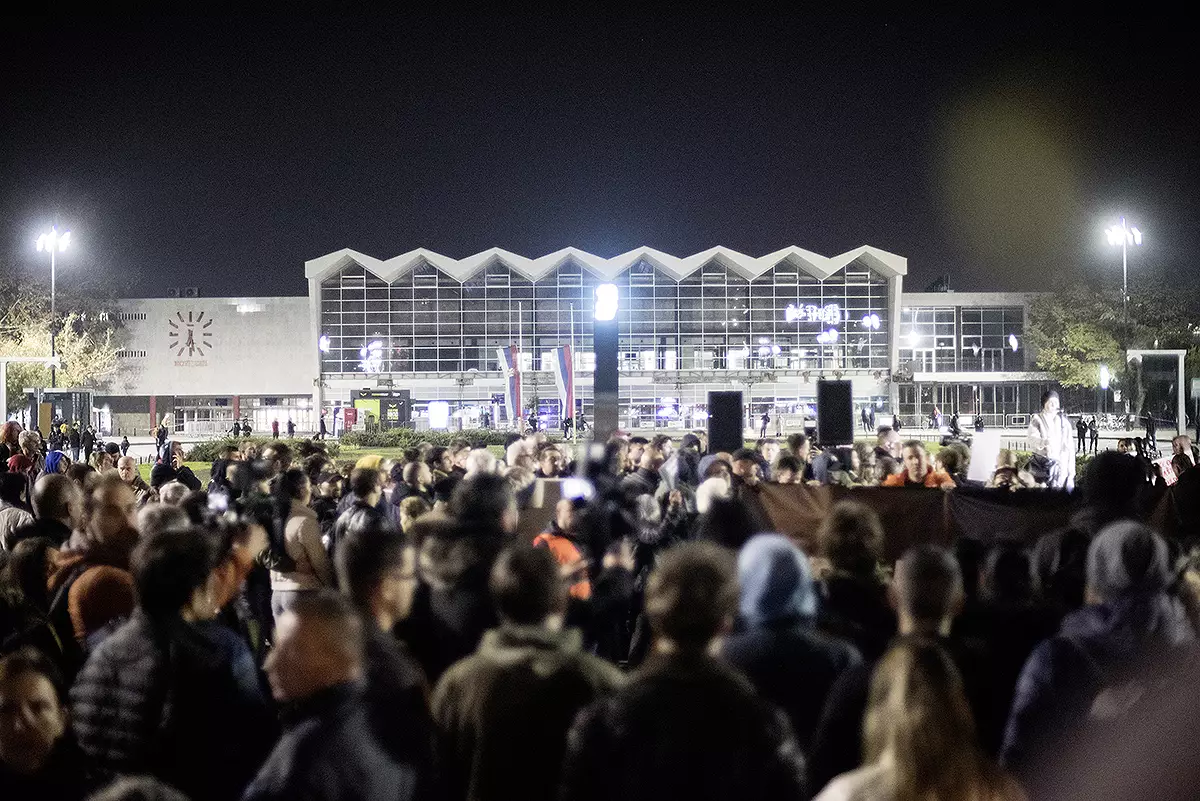
Three months have passed since the tragedy in Novi Sad, when a canopy collapsed and killed 15 people, while two were seriously injured. Since then they have protests in the streets students and citizens, and actions of 15 minutes of silence are everyday. Faculties are also blocked.
The question that arises is what next? And where is the opposition, which is not welcome among students, and what is it doing?
In the new issue of the weekly "Vreme", which has been on newsstands since Thursday, we write that intolerance towards opposition parties is still present, as well as towards party politics as such - at every mention of that particularity, a conflict starts.
Political scientist Dejan Bursać answered the question of what the opposition should do if the students won't support them in an interview for "Vreme".
"Students will not want them in the student protest." This does not mean that they are prohibited from acting. A good example is what the opposition did in Novi Sad during the first weeks of this protest. They fought their battle, inside and in front of the institutions. The first protest in Novi Sad, and the biggest until the last one, was organized by the opposition. Between 25.000 and 30.000 people came, which at that moment was the largest political gathering in the history of Novi Sad," explains Bursać.
He adds that the opposition may not go to the student protest, but he asks: "What prevents you from pushing something against the police minister who has proven himself unworthy in this crisis or the head of the security services, even the minister of education?" Or local leaders in numerous cities?"
Proposal for a solution to get out of the crisis?
When asked how he thinks the political crisis will end, Borislav Novaković, vice-president of the People's Movement of Serbia, said in an interview for "Vreme" that their proposal is the formation of a transitional government, in the establishment of which expert bodies from the blockaded universities, the opposition and the current government would participate.
"That government would have to fulfill three goals within a maximum of 12 months, which would be the deadline: full and immediate fulfillment of all the demands of students in the blockade, action against corruption and organized crime - which would also entail the removal of the Supreme Public Prosecutor - and to prepare and conduct democratic and fair elections," explains Novaković.
He adds that they are ready to discuss different solutions, but that no one has yet come up with anything.
Đorđe Trikoš, strategist for political communications, concluded for "Vreme" that the tragedy in Novi Sad must be solved politically, because it is necessary to establish responsibility, but students are shifting the focus from regular politics. "In other words, that revolution has political consequences, but its primary motive is moral purification."
The new issue of the weekly "Vreme" will hit newsstands on Thursday (February 6). You can subscribe here to a print or digital edition.