When would organized crime was a sports category, Serbia would be one step away from the bronze medal at the European competition.
According to the Global Index of Organized crime for the year 2025, among the 44 analyzed countries, Serbia is in fourth place and is the worst ranked country in the region.
Of the European countries, only Russia, Ukraine and Italy are ranked worse, writes Radio Free Europe.
According to the report on the Organized Crime Index for 2025, published by the Global Initiative to Combat Transnational Organized Crime (GI-TOC), Bosnia and Herzegovina (BiH) is in sixth place, while Montenegro is in tenth place.
Data for Kosovo have not been published.
Level of crime and resistance to organized crime
The Global Organized Crime Index assesses the level of crime and resistance to organized crime in 193 countries around the world.
The executive director of GI-TOC, Mark Shaw, pointed out that organized crime "undermines democracy, the sovereignty of states, and even international peace and security."
"The Global Index of Organized Crime is not just a tool for measuring crime: it is a mirror that reflects what is happening within countries and the international system," he said.
Key state actors
In terms of the level of crime, Serbia is at the top, and in terms of resistance to crime at the bottom of the list - in the 35th position out of 44 analyzed European countries of the Global Index.
In Serbia, "state actors play a key role in the landscape of organized crime", the authors of the report assessed, indicating that political elites allegedly influence key criminal markets.
They add that corruption within state institutions facilitates illegal financial transactions and protects criminal affairs, and that "high-ranking state officials are connected to notorious figures from the world of organized crime."
"Serbia remains one of the main hubs of smuggling in the Western Balkans", it was stated.
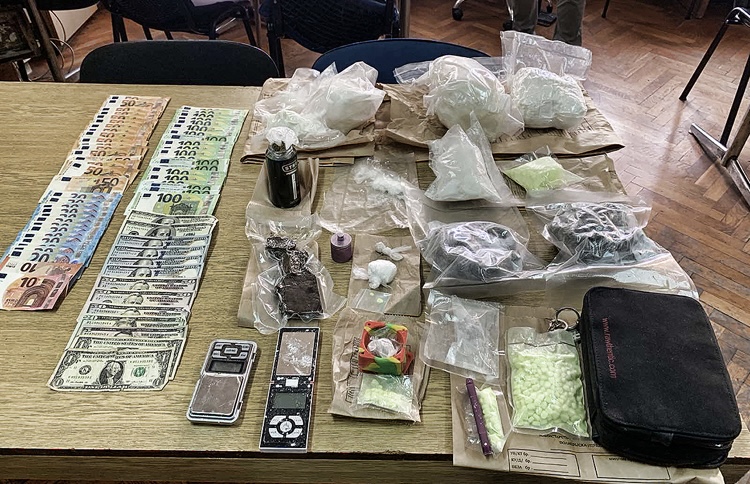
Drug and weapons smuggling route
Also, according to the report, Serbia is an integral part of the heroin smuggling route to Western Europe, while Serbian criminal networks play a significant role in global cocaine smuggling.
The report also underlines that Serbia is "home to several mafia groups" which, despite the arrests of key members, continue to dominate various segments of the European drug trade.
"Football club supporter groups are also involved in criminal activities, providing logistical support for smuggling operations and participating in paramilitary activities," the report (GI-TOC), a civilian organization based in Geneva, assessed.
In the report, Serbia is also mentioned in the context of the arms trade.
According to them, Serbia is a transit country in this trade, whereby weapons originating from wars in the former Yugoslavia, as well as from Turkey, Bosnia and Herzegovina, Montenegro, Kosovo, North Macedonia and potentially Ukraine, pass through Serbia to Western Europe.
Source: Radio Free Europe