
Election 2026.
REC determined the final number of voters in the elections
The Republic Election Commission (REC) made a decision today on determining the final number of voters in Serbia

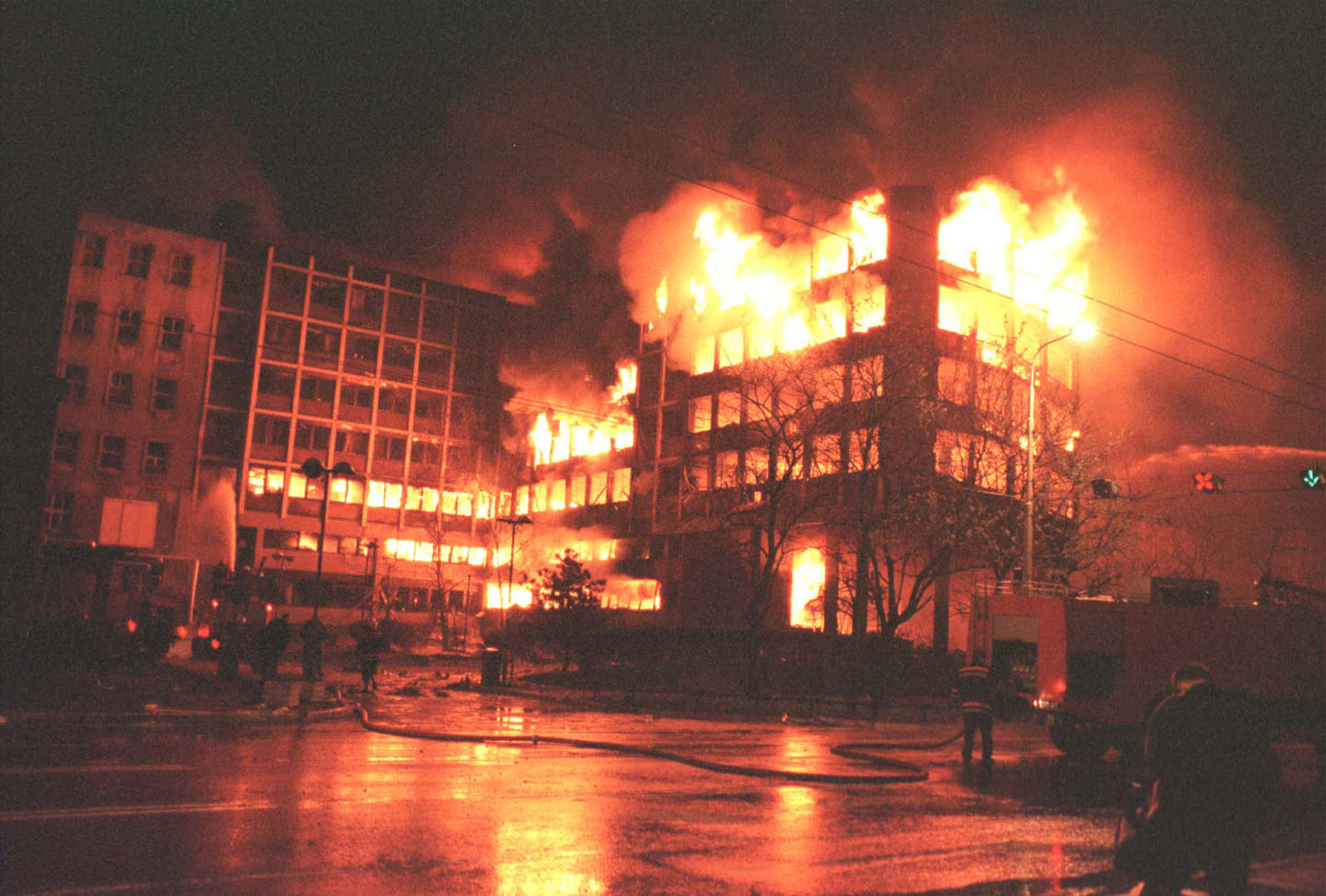
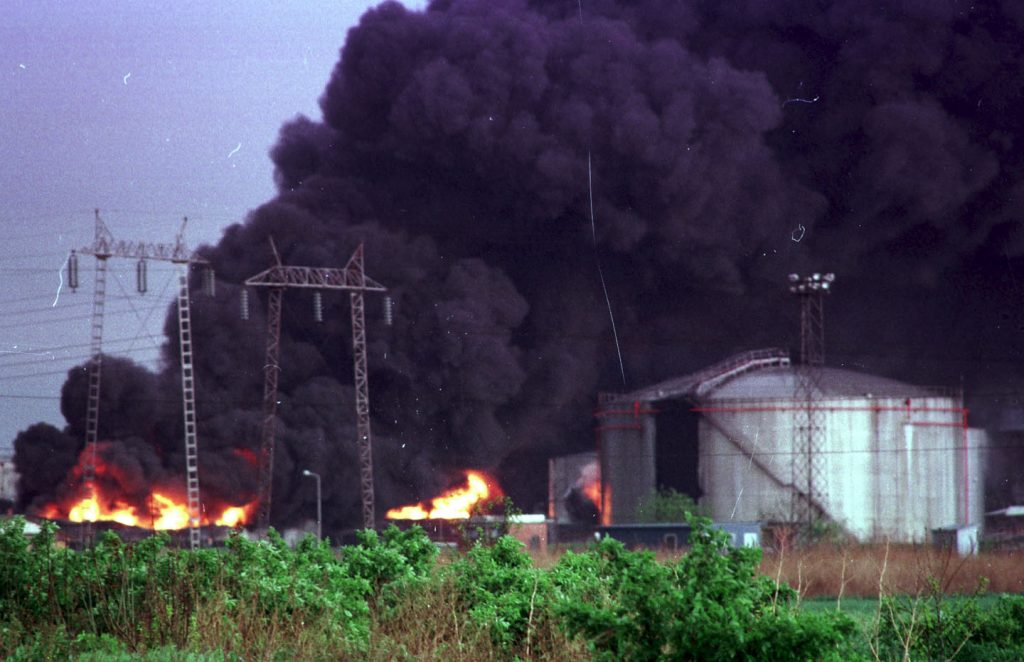
Air attacks by NATO forces on Serbia, that is, the then FRY, began on this day 25 years ago - March 24, 1999. It is estimated that around 2.500 civilians died, including 89 children, and around 6.000 people were wounded. Bridges were destroyed, infrastructure was destroyed, schools were bombed, health facilities, media houses, embassies, cultural monuments, churches and monasteries were destroyed, and there is almost no city that was not targeted by NATO bombs.
25 years ago today, NATO began bombing Serbia and Montenegro. The muffled explosions, the screeching of anti-aircraft defenses, the hissing of cruise missiles, the wailing of warning sirens, the state of emergency, collateral damage, civilian casualties, the suppression of the media, the Kumanovo defeat, the withdrawal of the army and the police from Kosovo were deeply etched in the Serbian collective memory and to this day cause anti-Western sentiments of many citizens.
We publish what the "Vremena" reporter team recorded during the first days of the bombing in the special edition of March 27, 1999.
As of Wednesday, March 24, 1999 at 20 p.m., our country is at war. At that time, NATO planes carried out the first attack on FR Yugoslavia, chroniclers say, the first attack on a sovereign country since the founding of this organization. The news about the attack on Yugoslavia was announced by NATO Secretary General Javier Solana, apparently, at the moment when the bombs had already started falling. Namely, about fifteen minutes before 20:30 p.m. near Pristina, a series of strong detonations was heard at intervals of about XNUMX seconds coming from the direction east of this city.
After the explosions, the electricity went out. The city was completely deserted, and sporadic shooting from automatic weapons could be heard in the streets. The correspondent of "Beta" reported that from some parts of Pristina, the action of anti-aircraft artillery can be seen in the vicinity of the Slatina airport. After the explosions, sirens rang out in the city, and an ambulance passed through the city center, which went in the direction of the Pristina hospital. The police are patrolling Pristina. The attack on Pristina was obviously expected. Around 18.50:XNUMX p.m., the sirens in Pristina sounded three times in short time intervals. Serbian sources in Pristina close to the government said that it was another exercise.
Before that, the commander of the Third Army of the Yugoslav Army (VJ), lieutenant-general Nebojša Pavković, stated that the danger of an attack by NATO forces from the airspace is real, that the members of that army are ready to survive NATO airstrikes and to repair the consequences of such attacks, that they "have a clear task to defend the integrity of Serbia and the FRY, to deal with the remaining Shiptarian terrorist forces in Kosovo and Metohija and to prevent any penetration of NATO forces into that area." We will do it", stated Pavković.
According to the announcement of the General Staff of the Army of Yugoslavia, 10 were killed and 38 wounded in the attacks of aviation and NATO cruise missiles on Yugoslavia during the first night, while one soldier is missing. A Yugoslav federal minister told CNN that at least ten civilians were killed. "In several mass strikes by NATO - USA, Great Britain, France, Canada, Italy, Germany, and Spain fighter jets and cruise missiles, in the aggression against FR Yugoslavia during the night of March 24-25, 1999, the units, formations and military facilities on the entire territory of our country", the statement of the General Staff states, specifying that more than 50 military facilities were targeted, including industrial facilities of purpose-built production: the factory "UTVA" in Pancevo, Air Force Base "Moma Stanojlović" and company "Milan Blagojević" in Lučani. NATO forces attacked military targets in Montenegro - the Golubovci airport near Podgorica, a military facility near Danilovgrad and installations on the Luštica peninsula.
An attack on a sovereign country
Yugoslav Prime Minister Momir Bulatović announced on Wednesday that the Federal Government has declared a state of war. "An attack was carried out on a sovereign country, against all principles and norms of international law." Therefore, due to the immediate threat of war, the Federal Government has decided to declare a state of war."
The Ministry of the Interior (MUP) of Serbia announced that "despite the criminal and ferocious aggression of NATO forces against our country, stable public order and peace were preserved throughout the territory of Serbia" and that all services of the MUP (public order and peace, criminal, fire, traffic and border police) function normally, with a high level of self-sacrifice, self-discipline and discipline. The MUP also announced that "the life of citizens on the territory of Serbia is proceeding normally, with a high level of awareness and discipline of our citizens." Schools were closed and students were sent off early for spring break. The previous day, on Tuesday, President Bulatović announced that, due to NATO's threats to our country, the government declared a state of imminent war, which comes into effect immediately.
It was problematic whether that act would be recognized in Montenegro, given that the Montenegrin government does not recognize any act of the federal government. When the aggression began, that dilemma seems to have been resolved when the President of Montenegro, Milo Đukanović, addressed the citizens: "I am addressing you as the president of all citizens in these difficult moments of trial for Montenegro and the Federal Republic of Yugoslavia, and I call for restraint, for peace and harmony, to overcome all the quarrels and divisions that have cost Montenegro dearly throughout history. In the interest of the most sacred goal - the preservation of Montenegro and the lives of its citizens. In the name of the future of today and generations to come".
Autumn
Formally and legally, the Federal Government made the decision to introduce a state of imminent war on the basis of the decision of the Federal Assembly held on October 5, 1998, during the previous crisis. Then the danger of war was avoided by the agreement between President Milosevic and the American mediator Richard Holbrooke on the limitation of military and police forces in Kosovo, on the introduction of an unarmed international verification mission and on the establishment of aerial surveillance in Kosovo.
Unlike the October '98 hepiend. March drama '99. had a different course. Two hours after Bulatović's address to the nation, Javier Solana, Secretary General of NATO, (who once, as a "convinced socialist" was an opponent of NATO, which some chroniclers call "juvenile delinquency") announced that he had ordered the NATO commander for Europe American General Wesley Clark to undertake air operations against Yugoslavia. Federal Minister of Defense Pavle Bulatović estimated that military and police targets will be exposed to those strikes, that America and NATO are standing in the defense of terrorists in that way, which is literally vandalism, and that, bearing in mind the danger, VJ units are deployed in the area in order to avoid and reduce possible damages and losses.
Negotiations between Milosevic and Holbrook
The negotiations between Slobodan Milošević and Richard Holbrooke ended in failure on Tuesday afternoon, March 23, as the Yugoslav side did not accept two key American demands - to stop operations in Kosovo and reduce military and police effectiveness in this province, and to accept the text of the agreement in the form in which they were signed in Paris by the Kosovar Albanians with the co-signature of US Ambassador Hill and EU representative Wolfgang Petrich.
As for that first demand of a military nature, in some news of the Reuters agency and in the broadcasts of the London BBC in English, there were speculations that last week the Yugoslav forces broke two or three of the total of seven so-called war zones of the illegal and terrorist KLA. It was even mentioned that some unnamed NATO official, when asked if this is how NATO becomes the aviation of the KLA, answered that it is a moral obligation now that the representatives of the KLA have signed. In Belgrade, in that context, Holbrook's request was understood as an American attempt to save the KLA, which would lose the motive for the occupation of Kosovo by NATO for the pacification of the area, disarmament and transformation of the KLA.
News of some vague military activities in Kosovo came from various quarters almost a week before the culmination of the crisis.
The General Staff of the Yugoslav Army announced that such information was fabricated and undoubtedly originated from the so-called Kosovo Liberation Army and some foreign factors, and that the Yugoslav Army in Kosovo and Metohija, as part of the territory of its sovereign state, is only performing regular tasks and that due to threats to our country and the accumulation of foreign troops at the borders, the army is only taking certain measures of preparedness and that they will return to their barracks after the end of the danger and that they will comply with all international obligations.
From the very synchronous speech of Yugoslav officials and political functionaries, which has not changed in recent weeks, it is clear that the focus of Belgrade's "no" was on rejecting the arrival of foreign troops on the soil of the sovereign country. The Yugoslav public was frequently informed about the impending danger of war, and discreetly about what people should do in the situation. In Belgrade, alerting and reporting headquarters were activated, in addition to fleeting searches for sour water, on the first critical night, no reactions were observed that would indicate panic or a consumer stampede. Later, as the war came to this country, people quickly got used to preparing for wartime scarcity from the state of long-term starvation.
The state of mind was relatively accurately reflected by a foreign correspondent who coined the term "gloomy inevitability". A more accurate picture before the start of the attack was given by the slang sentence: "Let them shoot, I'll shoot them once!" In official programs, the words "Kosovo is Serbia" are repeated. Radio B92, which during the first hours tried to calm the citizens by broadcasting a lot of information about the course of the crisis, shelters and the efforts of authorities to work in a state of war, was closed under a transparent excuse, and its editor-in-chief Veran Matić was detained for an informative interview. We believe that shutting down that radio is a shame, let's just remember how that team dedicatedly worked in 1995 to take care of refugees from Krajina.
Shadow of the threat
US officials told Reuters on Wednesday morning that the attack could be scheduled for Wednesday night when the clouds over Yugoslavia are expected to clear. It was reported that eight B-52H bombers, which were based in Britain, were heading for Yugoslavia; that a certain number of warships left the port of Trieste; that they headed to the vicinity of the Yugoslav coast. On Thursday morning, the agencies and television stations of the interventionist countries announced that the first attack had passed, that NATO was analyzing the effects and that the attacks would probably continue on Thursday night. Solana said the bombing would continue for days, not months. Around nine in the morning on Thursday, the aggression continued. Alerts were announced in several cities in Serbia. The use of "Tomahawk" cruise missiles was announced. Witnesses reported that 12 "A117" aircraft took off from the Aviano base, as well as "A10", "EA6B", "C130", "CF18", "F16", "F15" and F18 aircraft of the US, British, Spain, Portugal and Canada. On the first night, NATO planes took off from the bases in Vicenza, Istrano, Gioia del Cola and other bases in Italy.
Millions of articles have been written about the precision of those killing machines since the Iraq war in 1991, and along with that came a mythologizing of the so-called. "clean war" that depicts destruction and dismembered bodies in the air as a dot approaching a square in a video game. In parallel with that, a kind of "amorality of pilots" was cultivated, which must impress Western small townspeople. Many peacemakers were also caught in that trap, so the aggression against Yugoslavia was justified by "moral imperative". For now, the "moral imperative" has resulted in the fact that this war has dug a very deep hole between Serbia and its European environment. Political scientist Ranko Petković declares in a TV program that he feels like in 1943, when the allies bombed occupied Belgrade and never explained later what the purpose of that bombing was. Many, however, bring back the memory of another bombing - the one in 1941. A lot of water will flow through the Danube to soften the feeling that these bombs instilled in people.
Filip Švarm's reminders of the danger of war
By the way, for the first time after World War II, on October 1, 1998, a state of imminent war was declared in the Federal Republic of Yugoslavia: diplomats left Belgrade, warning sirens were tested, the Supreme Defense Council announced that the country would defend itself by all means, and television broadcasted patriotic videos.
In order to calm the war psychosis and strengthen the morale of the population, Milošević behaved in a very strange and unusual way: he received children from the Joy of Europe festival in the Federation Palace.
The peak of the crisis came when US Secretary of State Madeleine Albright and NATO announced that the bombing was only a matter of days...
And then Richard Holbrook sat down on Milošević's couch again. After several days of negotiations behind closed doors - known in Serbia as holbrooking - an agreement was reached. On the basis of the Agreement reached by Milosevic and Holbrook, a ceasefire was declared in Kosovo. Part of the Serbian security forces had to withdraw, and NATO gained the right to aerial surveillance of the province. To control what was agreed, two thousand six hundred OSCE observers, known as verifiers, were deployed in Kosovo. They were headed by American diplomat Christopher Walker.
The KLA immediately took advantage of the truce and the withdrawal of the police and the army and began to reorganize: at the beginning of the winter of '98, the KLA re-established the bases from which it was expelled in the summer. In the winter of 1998 and 1999, the KLA carried out a series of terrorist attacks in the cities of Kosovo. Bombs, assassinations and kidnappings became everyday. After a series of murders in Kosovska Mitrovica, strong police forces surrounded the KLA base in the village of Racak. The fierce conflict took place on January 15, 1999. The head of the OSCE verification mission, Christopher Walker, immediately announced, without any investigation, that the forty killed Albanians were civilians, victims of the massacre, and not members of the KLA as claimed by the police. Although Belgrade demanded an international investigation, plans for intervention were reactivated.
The United States of America and NATO gave Milosevic an ultimatum: either accept the Contact Group's plan for the status of Kosovo or bombardment.
The negotiations at which the Serbian and Albanian sides were supposed to agree on solutions from the Contact Group plan began on February 6, 1999 in Rambouillet.
The Albanian delegation, in addition to Rugova and other politicians, also included KLA commanders such as Hashim Thaci.
The Serbian negotiating team was composed of unknown representatives of various nationalities from Kosovo - Egyptians, Goranians, Ashkali and others. The delegation was headed by Milan Milutinović, President of Serbia.
During the negotiations, NATO Secretary General Javier Solana had a free hand to order intervention as soon as he judged that the negotiations had failed. The Alliance was not interested in the approval of the United Nations Security Council.
The Contact Group's plan for the status of Kosovo was the diplomatic brainchild of US Secretary of State Madeleine Albright. For the Kosovar Albanians, autonomy bordering on independence was foreseen, with the condition that in three years, after the referendum, the status of Kosovo would be definitively determined at a new conference.
The contact group demanded that Serbia - with the exception of symbolic contingents - withdraw its entire army and police. Kosovo would then become a protectorate protected by twenty-eight thousand NATO soldiers.
The Albanian delegation barely accepted the Contact Group plan under American pressure. Negotiators from Serbia refused to sign the final agreement in Rambouillet.
The key reason for rejecting the Agreement was the deployment of NATO soldiers, the same ones who will arrive in Kosovo after two and a half months of bombing.
While the NATO pilots were receiving the coordinates of the targets in Serbia, Richard Holbrooke sat down on Milošević's couch for the last time. The last time he tried to convince the President of the Federal Republic of Yugoslavia to accept the Rambouillet Agreement. For the first time, he returned from Belgrade with unfinished business.
Steering
From March 24 to June 11, 1999, waves of hundreds of NATO aircraft alternated over the Federal Republic of Yugoslavia. The opponent of the most powerful military alliance in history was a small army, with poor and outdated equipment. Nevertheless, it also achieved certain successes: in the atar of the village of Budžanovci, an F117A stealth aircraft, called invisible due to its extremely low radar reflection, was shot down for the first time, and in addition to several cruise missiles and unmanned aerial vehicles, an American F16 fighter-bomber was also shot down. Radarmen, rocketmen and gunners were constantly on the move and constantly changing positions. Together with members of the ground army, they showed enviable creativity in camouflaging and deceiving the enemy.
The Yugoslav Army proved to be a tough opponent of NATO. Air strikes on its units and facilities did not bring results. NATO thus celebrated its fiftieth anniversary at the beginning of April '99, and the intervention, which was expected to be short, could not be seen to end. From that moment on, infrastructural objects became the target of cruise missiles and bombs.
A large number of Serbian citizens, especially those who lived next to barracks and state institutions, spent nights and days in shelters. There they anxiously followed the news about the targets of the NATO attack and guessed what was next. Because, after the destruction of the embassy of the People's Republic of China, it seemed that no rules apply.
Cities in Serbia are bombed day after day, night after night. However, from the very beginning of the intervention, the heaviest and most intensive airstrikes were carried out by NATO in Kosovo. As soon as the bombing began, the Yugoslav Army and the police launched a major offensive against the units and bases of the Kosovo Liberation Army: their bases fell one after the other.
While NATO bombed villages and towns, and the police and army fought with the KLA, the Albanian population left Kosovo in large numbers. It is indisputable that a large part of Albanian civilians in '99. escaped from Kosovo due to bombing and fighting. But it is also undeniable that a huge part was forcibly expelled. It is also indisputable that the Serbian security forces committed war crimes, for which the trials are still ongoing, and the entire top of the VJ and MUP of Serbia were sentenced to multi-year sentences before the Hague Tribunal.
While the bombing continued, the Yugoslav Army was also preparing for a conflict with NATO troops on the ground. It was expected that one of the main lines of ground intervention would come from Albania. Behind the minefields on the border with Albania, large forces of the Yugoslav Army were deployed and fortified.
As a NATO ally, the Kosovo Liberation Army is reorganized and well armed in Albania. Its goal was to break through the positions of the Yugoslav Army and occupy as much of Kosovo as possible. A few weeks after the start of the bombing, large forces of the KLA, including Albanians from Albania, gathered at the border with the Federal Republic of Yugoslavia.
Fighting soon began: KLA attacks on the ground were followed by NATO aircraft support. Members of the Sixty-third Parachute Brigade of the Yugoslav Army were deployed on the most threatened part of the border - between the Košara and Morin checkpoints.
During their entire stay at the border, there were fights with the KLA, which could not compete with the elite unit of the Yugoslav Army.
NATO tried to compensate for the lack of discipline and military skills of the members of the Kosovo Liberation Army with constant airstrikes.
At the end of May 1999, the KLA launched an offensive on Mount Pastrik with large forces on a front six kilometers wide. The offensive was broken, and the few lost square kilometers of territory of the Federal Republic of Yugoslavia were soon returned. This attack by the KLA - like almost all the previous ones - was followed by carpet bombing from NATO strategic bombers.
Paratroopers and members of the Pristina Corps of the Yugoslav Army remembered one type of aircraft in particular. It is about the American plane A10, nicknamed "tank killer", which fires grenades with depleted uranium. In Kosovo '99, the A10 was used mainly for attacks on infantry positions.
While the Army firmly held the border, Milošević was finalizing the negotiations that were supposed to end the intervention. Representatives of the Yugoslav Army and NATO began talks in Kumanovo at the beginning of June. Bombardment from strategic bombers, however, did not stop even when the signing of the armistice was only a matter of time.
When the Kumanovo Agreement was signed on June 11 and the NATO intervention ended, there was only one bridge on the Danube; in Belgrade, Novi Sad, Kragujevac, Pristina, Prizren and other cities, factory halls and houses were smoldering, and from Kosovo, together with the withdrawal of the Army, the Serbian population went into exile. The price of miscalculations and even worse decisions by all parties in this war was paid.
The Republic Election Commission (REC) made a decision today on determining the final number of voters in Serbia

A citizen of Belgrade whose polling station in Banja Luka was changed in the voter list without his knowledge claims that the Ministry did not correct his data and that the deadlines have expired. The elections are on October 25 and he still doesn't know where he will vote.

The pardon procedure implies the appropriate role of the Minister of Justice, who should initiate the procedure or submit an opinion on the pardon, says prosecutor Radovan Lazić.

Phone numbers 064 876 85 05 and 011 2068 100 will be available 24/7 for reports and addresses to citizens, and the possibility of direct addresses at the premises of the Protector of Citizens is also provided.

NUNS demands an urgent investigation due to the threats sent to two Radar journalists who wrote about the Sky correspondence in which Aleksandar Vučić is mentioned. The association states that the threats also mention violence against children of journalists and warns of impunity

There is, literally, no difference between the one who claims it is day in the middle of the night, or the one who claims to be a giraffe, from the claims we read on billboards: that Vučić is working to unify Serbs and that Serbia is doing better and better day by day.

The pre-election arrests due to the alleged "overthrow of the state" testify to the regime's panic. The bad news for them is - they can't arrest the whole people who decided to defend themselves from progressive beatings and election theft

The ring that tightens around Ćaciland Student list is getting narrower. Because there are more and more spoiled people who see the false prophet for what he is: a street obscener who is fighting Serbia

The archive of the weekly Vreme includes all our digital editions, since the very beginning of our work. All issues can be downloaded in PDF format, by purchasing the digital edition, or you can read all available texts from the selected issue.
See all