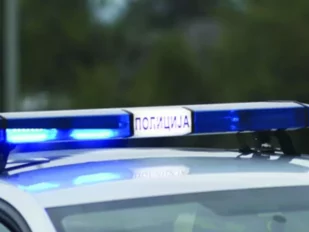
Journalists who follow the protests often see that behind the cordon Gendarmerie in Belgrade and Novi Sad there are masked people in civilian clothes who carefully record everything with cameras. This also happens when members "act". Police brigades in Belgrade or intervention units in other cities.
They record all events, but not only to identify protest participants, because members of the public order and peace department already do that, but also to monitor their colleagues, to record how they behave.
Those recordings are then analyzed at command meetings, to see if and how individual police officers acted, what weakness they showed, but also who was not sharp enough.truncheon" protest participants.
Controlling eagerness when caning
There are a lot of professional things, from the failure to organize the formation, to keeping a distance, the way to go with the shield, the behavior when the demonstrators attack them and similar things.
But also what is inappropriate - to record who did not show enough "zealousness", who was "sloppy".
One of the members of the Gendarmerie tells "Vreme" that the method of "enforcing obedience" is such that for failure to comply with the order to use the official baton, people are punished with a deduction of up to 20 percent of their salary, especially if the official camera recorded that they did it twice in a row.
What does the Internal Control Sector do?
Of course, for the Department of Internal Control (SUK) of the MUP, those recordings do not officially exist, nor do they ask to check them, or take them as evidence of excessive use of force against citizens. That SUK simply does not interfere in its work.
From everyone journalists and videographers attacked by the police no one, as far as is known to the public, has been invited to SUK to give a statement. They tell them to send the application by e-mail, they will not even receive them in the official premises in order to give and sign an official statement to an authorized official. SUK works on the email principle.
But that's why police officers suffer pressure and have to "beat zealously" in order not to be left without a part of their salary, and some without the possibility of career advancement.
That is why it is not surprising that at the protests in Belgrade, Novi Sad, Niš, Čačak, Užice and other cities, police chiefs or unit commanders are also present, who personally not only attack, beat and detain protest participants, but also supervise their own people, to see who is "easy" and who is "lukewarm" on the stick.