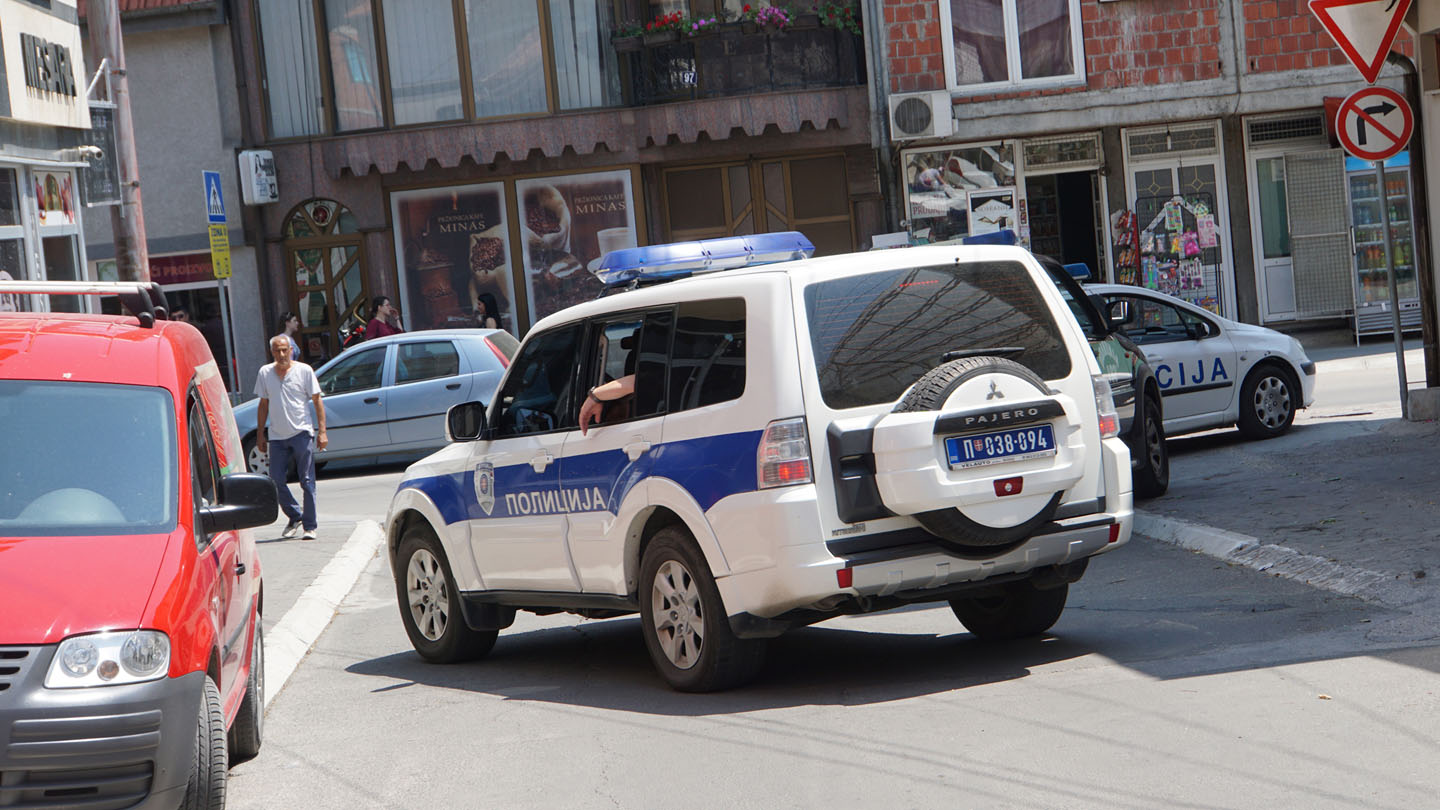
Meeting with the police in Serbia on the street is not an unfamiliar thing to us, if we take into account the protests in the past and present, it is a "natural thing" for us adults. Even if we are walking down the street and a policeman approaches us, we know how to behave, we have learned something during our life. How to behave, we talk regardless of a certain amount of discomfort and fear when we know that we are being stopped for no reason.
However, we were also contacted by parents of teenagers whose children, mostly boys, are stopped by the police every now and then on the street. They are neither the same children, nor from the same area, with different societies, with and without records, sometimes completely alone in the middle of the day, suddenly a policeman appears in front of them, stops them, asks for their documents and often searches them. As one teenager (name known to the editorial staff) who is now 19 told us, he has been searched and stopped for the past three years.
"I was stopped again the other day on Vračar while I was walking from Slavija. I was wearing a cap, shorts and a T-shirt, I was listening to music. Now I'm used to it, but I'm always uncomfortable because I don't know why I'm being stopped," the teenager, who will remain anonymous, told us.
As he says, he once asked them a couple of years ago why they were stopping him, and the policeman was very rude, there was no concrete answer, but instead he asked him: "Do you want us to arrest you now?"

There was also the stripping and removal of socks, a thorough search, and finally they let him go. According to him, all of this is very traumatic because even though he knows that he has not hidden anything and has nothing illegal on him, it is the police and he does not want to confront him so that he "does not get beaten up or end up in prison."
"Since then, I don't ask anything anymore, I just keep quiet and do what they tell me." Once I had a lighter left in my pocket after a search, when they found it they were rude again. For the most part, they never found anything on me, I don't have a file, and I carry my documents properly."
Parents are worried because they often have no insight into when the police legitimize their minor children on the street without any warning or explanation as to why, while on the other hand teenagers return home terrified and traumatized by this encounter.
We went through the Guide: My rights in case of identification, search and deprivation of liberty by the Committee for Human Rights (Jukom) and it clearly states when the police can stop you and when you should stop.
For example:
"Answer the questions of the authorized official politely." Ask in a calm manner why you have been stopped."
"The police/community officer is obliged to inform you of the reason for checking your identity."
As for the reason for the stop, it almost doesn't even have to exist, the police simply evaluate at their own discretion and stop the teenager on the street without any explanation.
Parents wonder why they stopped their child, which is how the police determine why and how to stop them, and teenagers are usually scared and can't ask anything.
"The police should not discriminate against citizens based on their appearance, skin color or some other characteristic during identification, but we have all witnessed that this happens, even if unconsciously, during contact between the police and citizens."
In the procedural sense, there is not, nor should there be, a regulation that states what those characteristics are that would mark someone as potentially interesting for frequent legitimization by the police.
However, we know from practice that the most frequent targets are younger men, often with some physical characteristic (like a shaved head) that potentially suggests to the police that this is a "dangerous" guy. This is why it happens that the same people, due to their appearance or behavior on the street, are subject to identification more often than others," says Bojan Elek from of the Belgrade Center for Security Policy for "Vremena" portal.
Our interlocutor, a teenager (19), has been stopped by the police for the last three years at different locations in the city, at different times, from New Belgrade, on the Knez Mihajlovo walk, in Vračar.
"Police should not stop and search without reason, especially minors." The Law on Police prescribes the conditions under which this police authority is applied and there is no so-called "routine" legitimization which is most often cited as the reason.
The police officers should certainly inform about the reasons for the identification, and the identified person has the right to ask why they are looking for his documents. "I am afraid that there is no fast and efficient system, except for improving the work of the police and its gradual transformation from an apparatus of coercion to a service for citizens," says Elek.
He also states that minors often do not know how to behave when they come into contact with the police, especially since it is their first contact with these authorities and there is always fear, especially if the police act towards them with the intention of intimidation.
For any insult or inappropriate address, a complaint can be subsequently filed, but it is too much to expect that minors could know this and the police officers count on the fact that they will not bear the consequences for unprofessional behavior. It would certainly be good for them to at least know their rights when contacting the police, in the most common scenarios such as identification or in traffic, and to insist on polite communication and to be aware of the reasons for the action.
"If parents believe that the child's rights were violated or the police officer acted unprofessionally, they can file a complaint in person at the local police station or the Department of Internal Control of the MUP, but it would be useful to know the name or badge number of the police officer who acted." These are the data that are visible on the uniform and that we have the right to request from the acting policeman," points out Bojan Elek.
Read daily news, analysis, commentary and interviews at www.vreme.com