

News
EPS: The biggest debtors are Železara Smederevo, Resavica, GSP, MUP
State companies and ministries are among the 50 largest EPS debtors. They owe a total of 176 million euros
 Photo: Unsplah/Caly Banks
Even in public transport, they no longer accept cash, and there is a good chance that in shops, restaurants, museums, hotels, the customer will be left without goods or services if he does not have some form of digital payment, writes "Biz Portal". We are talking about Sweden, which is on the verge of complete digitization of payments
Sweden is currently the most advanced country in the world when it comes to cashless payments, and their banks are the leaders of that trend. The majority of citizens have never held large banknotes in their hands and often do not even know what they look like
Even in public transport, they no longer accept cash, and there is a good chance that in shops, restaurants, museums, hotels, the customer will be left without goods or services if he does not have some form of digital payment, writes "Biz Portal".
At the time of the pandemic, it was announced that coins and banknotes have not been the preferred means of payment in that country for a long time, and that the corona virus only intensified that trend. Even the central bank warned citizens about it, fearing that cash could physically disappear completely. The German weekly "Focus" announced that only 16 percent of children in that country receive pocket money in cash, and 84 percent have digital savings books. Research has shown that in Sweden, the generation between the ages of 18 and 34 does not pay with cash in 75 percent of cases.
However, those who advocate for cash payments in that country have objections that despite the fear of the state that cash is disappearing, it is surprising that even the tax administration does not accept any cash payments.
Hospitals obliged to accept cash
The only institutions that are legally obliged to receive cash when paying co-payments are hospitals.
According to reports, a recent survey conducted by the Swedish central bank showed that only eight percent of citizens paid for their last purchase with coins or banknotes. Until just ten years ago, 40 percent of citizens paid in cash. It is interesting, as pointed out, that even the elderly, who normally have a hard time accepting new technologies, no longer use cash.
The survey shows that the share of people aged 65 to 84 who say they used cash for their last purchase fell to nine percent. Most Swedish citizens have never held large banknotes in their hands and often do not know what they look like. Recently, physical, plastic credit and debit cards are rapidly disappearing, and are being replaced by digital and mobile versions, as well as various other forms of instant digital payment.
The media state that Sweden's total cash today amounts to just over one percent of the total money supply, and analysts expect that in fifteen years cash will completely disappear and that Sweden, probably the first in the world, will become a cashless society. Cash is seen as an unnecessary expense and security risk, as well as a constant target for counterfeiting. In addition, the media also emphasize that digital transactions are easier to control.
Neighboring Scandinavian countries also see a similar trend, but in Denmark, for example, there is a law that says all shops with staff are obliged to accept cash, with certain exceptions at night. In Norway, the government is also proposing to tighten cash laws.
Extreme digitization
In Sweden, there has been a Cash Movement for years - an organization that fights against the disappearance of cash in the public and warns that the country is not the leader of the trend, but that it has remained alone in the extreme digitization of payments.
This organization has introduced an award for anyone who stands out in terms of bucking that trend. This year, a cash prize of around one thousand euros was won by a kiosk at the railway station in Köping, which continued to sell travel tickets for cash even after the Swedish State Railways abolished such possibility.
Unlike fans of electronic payments, those who live and work "on the black" in Sweden will not easily agree to these changes, and as citizens comment, there are several million people who belong to this group.
ZS/Biz
Read daily news, analysis, commentary and interviews at www.vreme.com
State companies and ministries are among the 50 largest EPS debtors. They owe a total of 176 million euros

"The contract on termination is in the formalization procedure and it is expected to be completed at the beginning of next week, about which the public will be informed", announced the Ministry of Construction, Transport and Infrastructure and confirmed the earlier writing of "Vremen"
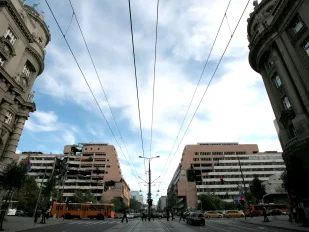
Serbia and Jared Kushner's company waived all possible mutual claims upon the termination of the contract for the General Staff, claims "Vremena" source from the Government.

A group of individuals has created two websites where public procurement of the Telecom and IT sectors can be searched and compared. They invite the media, experts and citizens to review the documentation and submit reasoned observations

Very soon it could become obvious whether Milan Radoičić has left Serbia or not

At the moment when the institutions of the Republic are destroyed, when Vučić's octopus is still alive, when people are disgusted by the injustice and the stench left behind by the Essenes regime, we have, as Machiavelli said, only civic virtue as the fuel with which we can return to the beginning

The four independent members of REM are an example of perseverance and civic responsibility. Rodoljub Šabić even, upon leaving the premises of REM, after the sentencing of the Informer, experienced that the Essenes insulted him, hit him with their hands and feet. But that too will soon be over

Vučić pardoned the batterers and Dijana Hrkalović. The election winners should abolish the sultan's power that allows one man to run afoul of the entire judicial system

Interview: Branko Stamenković, public prosecutor of the Supreme Public Prosecutor's Office
A black picture and the breakdown of the rule of law subscribeThe archive of the weekly Vreme includes all our digital editions, since the very beginning of our work. All issues can be downloaded in PDF format, by purchasing the digital edition, or you can read all available texts from the selected issue.
See all



