

News
October 5: Watch the remastered version of the documentary "The Final Showdown"
This documentary provides a detailed chronology of the events that led to October 5, 2000 and the final fall of Slobodan Milošević's regime.
 Photo: Screenshot
The video clip shows that a Russian helicopter was shot down. How to check if this is true in complicated war conditions? Serious media houses claim that it is not difficult
On Friday, news emerged that there was a mutiny in the 37th Motorized Brigade of the Russian Army, during which its commander, Colonel Yuri Medvedev, was seriously injured. According to that information, unnamed soldiers from that unit attacked him with a tank, blaming him for the death of his comrades during the fighting near Makariv.
Initially, it was one of countless unconfirmed news about the war in Ukraine, which flooded the media and social networks. The video shows the injured colonel being taken to the hospital, and it was first posted on social media by Chechen leader Ramzan Kadyrov, without explaining how the injuries occurred. Ukrainian journalist Roman Cymbayluk then stated on his Facebook account that Medvedev was attacked by soldiers from his unit.
The official Russian media kept quiet about this incident, and on pro-Russian portals it was presented as Ukrainian propaganda. However, after another confirmation from a source from the "intelligence community", the Washington Post published this story, and during the evening it was carried by many world media.
In the absence of independent sources
Most media houses insist that certain news or the authenticity of a video, especially in the complicated circumstances of war, be confirmed by independent sources before publication. But what to do if independent sources cannot be found and the news is potentially of great importance? A special problem is video recordings, which, with the use of basic and accessible tools, are very easy to manipulate. However, a surprising amount of authentication of social media videos can be achieved with fairly simple checks.
A good example of that process is the investigation of the authenticity of the video clip that was obtained by CNN at the beginning of the war in Ukraine. In the video, Russian army helicopters were seen flying, and one of them was shot down by anti-aircraft fire. Ukrainian authorities claimed that it happened in the immediate vicinity of Kiev, a few kilometers from Hostomel airport. But, at that moment, no one guessed that Russian troops had already penetrated so deep into Ukrainian territory.
Check the weather conditions.
According to Kathy Polglaze, a member of CNN's research team, a simple search first determined that it was not content that had already been posted on the Internet before.
Then it was necessary to determine when, and after that through the process of geolocation, and in which location the recording was made. The weather conditions seen in the video were compared with those of the day's weather reports from sites like Wilfram Alpha or CNN Weather. Then we moved on to the analysis of visual traces from the clip itself: characteristic objects, monuments, churches or parts of the landscape were compared with images of the same landscape downloaded from Google Earth.
The aforementioned video successfully passed all tests and CNN managed to send a team to the scene, which was the only one to record the attack of the Russian army on the strategically important Hostomel airport.
Cross-reference of sources
A similar analysis was applied in the Washington Post, and this crossing of multiple sources led to one unverified piece of information becoming a very important piece of news that revealed the true state of the Russian invasion army in Ukraine.
Of course, all interested parties in the barbaric aggression against Ukraine filter the news, sometimes they adjust it more or less, and often they lie directly and knowingly. But not everyone lies equally and with the same motives. That's why no one would think to equate, for example, the Ukrainian release of exaggerated information about the amount of destroyed Russian military equipment and weapons, with the shameless statement of Kremlin spokesman Dmitry Peskov that "the Russian army does not target civilian targets..."
Read daily news, analysis, commentary and interviews at www.vreme.com
This documentary provides a detailed chronology of the events that led to October 5, 2000 and the final fall of Slobodan Milošević's regime.

The Republic Election Commission (REC) made a decision today on determining the final number of voters in Serbia

A citizen of Belgrade whose polling station in Banja Luka was changed in the voter list without his knowledge claims that the Ministry did not correct his data and that the deadlines have expired. The elections are on October 25 and he still doesn't know where he will vote.

The pardon procedure implies the appropriate role of the Minister of Justice, who should initiate the procedure or submit an opinion on the pardon, says prosecutor Radovan Lazić.
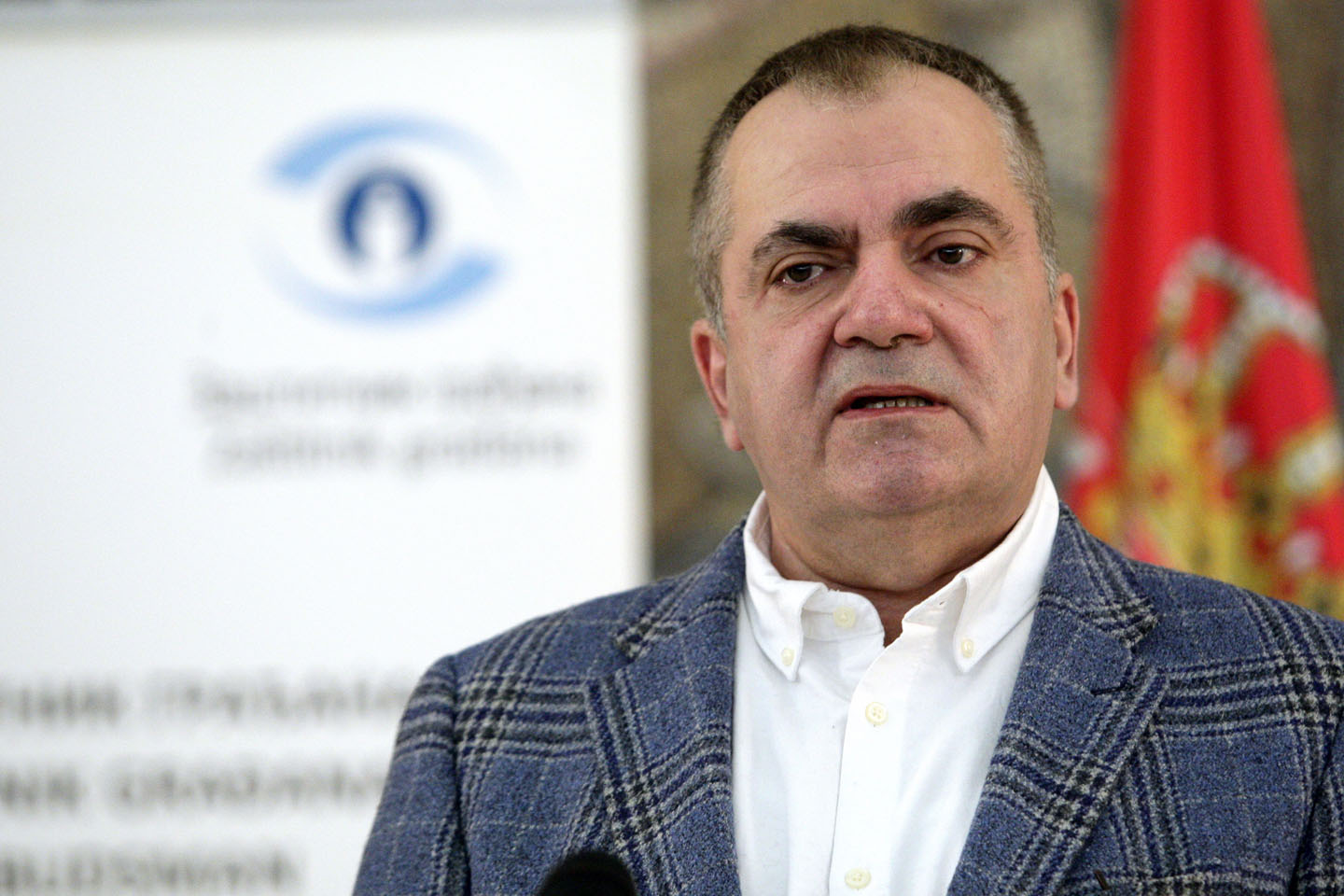
Phone numbers 064 876 85 05 and 011 2068 100 will be available 24/7 for reports and addresses to citizens, and the possibility of direct addresses at the premises of the Protector of Citizens is also provided.

There is, literally, no difference between the one who claims it is day in the middle of the night, or the one who claims to be a giraffe, from the claims we read on billboards: that Vučić is working to unify Serbs and that Serbia is doing better and better day by day.

The pre-election arrests due to the alleged "overthrow of the state" testify to the regime's panic. The bad news for them is - they can't arrest the whole people who decided to defend themselves from progressive beatings and election theft

The ring that tightens around Ćaciland Student list is getting narrower. Because there are more and more spoiled people who see the false prophet for what he is: a street obscener who is fighting Serbia

The archive of the weekly Vreme includes all our digital editions, since the very beginning of our work. All issues can be downloaded in PDF format, by purchasing the digital edition, or you can read all available texts from the selected issue.
See all




