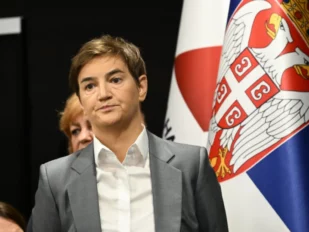
European Commissioner for Enlargement Marta Kos she stated in to the European Parliament during the discussion at the plenary session on this year's report on Serbia, that Serbia is an important partner in the region and that the European Commission encourages Serbia to get closer to the EU.
"We heard clear commitments from the authorities in Belgrade that their path is towards the EU, but we have to see that reforms are implemented. Two weeks ago, the parliament took a step in the right direction and corrected the judicial laws from January. It is important that electoral reforms are made, that important laws are being prepared," said Marta Kos.
According to her, Serbia must make clear strategic decisions, as well as align itself with EU policies.
She also pointed out that due to positive changes, the European Commission recommended the opening of Cluster 3.
"We will encourage additional reforms for the benefit of society," said Kos.
Picula called on the European Commission to stop the funding
During his presentation, the rapporteur of the European Parliament for Serbia, Tonino Picula, repeated a series of criticisms against Serbia and the authorities in Belgrade and called on the European Commission to stop the payment within the Growth Plan for the Western Balkans.
"Weak progress was recorded in numerous chapters, if there was any at all. We had a very difficult situation at the beginning of this year when we were attacked by members of parliament in Serbia, the media, politicians... There were statements from the government representatives that we supported the revolution," he said.
The EP rapporteur for Serbia pointed out that reforms are "certainly necessary before accession, but that Serbia is lagging behind". He added that there are also problems in relations between Belgrade and Pristina in connection with security issues.
"There is also aggressive rhetoric towards the EU, the media has no freedom, civil society is excluded. When it comes to recommendations for reform and their implementation, for example the reform of the electoral process, there has been little or no progress. The Government of Serbia said that joining the Union is a strategic goal, but the facts do not support that," he said.
Picula assessed that there is a regression when it comes to democracy and the rule of law.
"There is a big gap between those citizens of Serbia who are in favor of the EU and what is happening in the political reality. For example, there was a collapse of the canopy at the Railway Station in Novi Sad and there is dissatisfaction among the citizens of Serbia. Especially when it comes to the rule of law, the situation is very bad. We want to call on the (European) Commission to suspend funding for Serbia, when it comes to the Growth Plan for the Western Balkans," he added.
Picula pointed out that much still needs to be done for civil society, judicial independence and other areas.
Viček: Serbia's results should be recognized
The representative of the "Patriots for Europe" group, Anamarija Vicek, emphasized that Serbia should not only be criticized, but should also be praised for what it has accomplished.
"It is important to look at everything in the political context. Enlargement is a strategic goal of the EU. The European Commission supports the opening of a cluster with Serbia because of what has been achieved. This is an opportune moment. The results should also be recognized. Serbia adopted 23 basic laws," she said.
She emphasized that it is a shame that the report is not balanced and that it does not mention the achieved results or relativizes the condemnations.
"The expansion is not only a criticism but also a praise," she said.
The country is regressing.
Other representatives of the groupings in the EP mainly criticized Serbia and President Aleksandar Vučić, stating that what has been achieved has little effect on changing the situation, that the country is regressing, while some also criticized enlargement in general, because they believe that EU citizens should be helped first, and only then should enlargement take place.
In the report adopted by the EP Foreign Affairs Committee at the beginning of June, Picula presented a series of criticisms against Serbia in all areas, as well as that Serbia has achieved a certain level of preparation and partially implemented the recommendations of the EC, but that Serbia's basic obligations aimed at solving the remaining obstacles remained largely unfulfilled.
The European Parliament is due to vote on the Report today (July 8).
Real journalism costs money, and we will not be bought by tycoons and corporations. Support us with a one-time or monthly donation. The time for it is now!