
Election 2026.
REC determined the final number of voters in the elections
The Republic Election Commission (REC) made a decision today on determining the final number of voters in Serbia

If there was a referendum on Serbia's membership in the European Union tomorrow, how many people would vote in the affirmative?
Serbia is stagnating on the path to EU, has not opened for many years no cluster, but despite this, public support membership in the European family, there is a slight increase.
It is most pronounced among young people, according to a regular public opinion poll conducted in January 2026 for the Delegation of the European Union in Serbia, the European House announced.
According to the results of the research, 45 percent of citizens would vote for Serbia's membership in the EU if the referendum were held tomorrow, which is two percentage points more than last year, while 32 percent would be against it.
At the same time, the European Union is still recognized as Serbia's biggest donor, its main trading partner and the leading source of foreign investments.
Support for EU membership is still highest among young people aged 18 to 29, where it is more than 63 percent, while it is lowest among citizens over 60, where support is around 30 percent, which, as stated, indicates a pronounced generation gap.
Respondents most often cite a higher standard of living, freedom of movement, strengthening the rule of law and the fight against corruption as the main advantages of EU membership. Corruption, organized crime and economic problems were simultaneously identified as the most important challenges facing Serbian society.
The survey also shows that the largest share of respondents in the last seven years who believe that the European Union will survive and have new member states was recorded, which is interpreted as an increase in confidence in the future of the Union and the enlargement process.
At the same time, some citizens still believe that the EU is imposing new conditions on Serbia, that the recognition of Kosovo is a prerequisite for membership, or that the Union does not want Serbia as a future member. The research also indicates a high exposure to disinformation, especially in connection with the war in Ukraine.
The EU ambassador in Serbia, Andreas von Beckerat, assessed that the results of the survey give grounds for "cautious optimism", but also indicate the need for more objective and factual communication about the process of European integration.
"A growing number of citizens recognize that EU membership means better economic opportunities, stronger institutions and greater freedoms. At the same time, persistent misconceptions and misinformation continue to influence the public debate," said Von Beckerat.
The research was conducted by the Ninamedia agency from December 24, 2025 to January 11, 2026, using the direct survey method, on a representative sample of 1.501 respondents.
Source: FoNet
The Republic Election Commission (REC) made a decision today on determining the final number of voters in Serbia

A citizen of Belgrade whose polling station in Banja Luka was changed in the voter list without his knowledge claims that the Ministry did not correct his data and that the deadlines have expired. The elections are on October 25 and he still doesn't know where he will vote.

The pardon procedure implies the appropriate role of the Minister of Justice, who should initiate the procedure or submit an opinion on the pardon, says prosecutor Radovan Lazić.
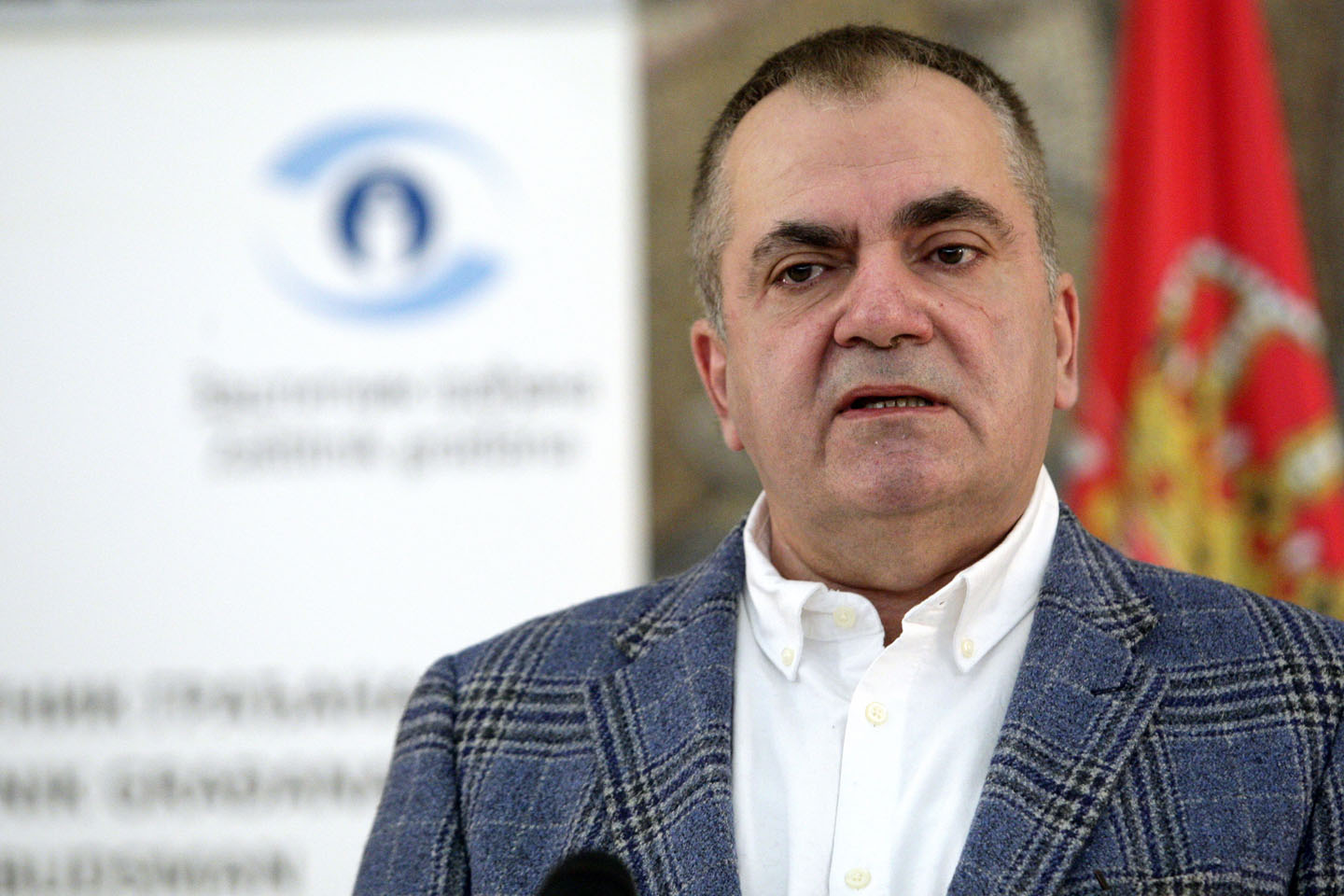
Phone numbers 064 876 85 05 and 011 2068 100 will be available 24/7 for reports and addresses to citizens, and the possibility of direct addresses at the premises of the Protector of Citizens is also provided.

NUNS demands an urgent investigation due to the threats sent to two Radar journalists who wrote about the Sky correspondence in which Aleksandar Vučić is mentioned. The association states that the threats also mention violence against children of journalists and warns of impunity

There is, literally, no difference between the one who claims it is day in the middle of the night, or the one who claims to be a giraffe, from the claims we read on billboards: that Vučić is working to unify Serbs and that Serbia is doing better and better day by day.

The pre-election arrests due to the alleged "overthrow of the state" testify to the regime's panic. The bad news for them is - they can't arrest the whole people who decided to defend themselves from progressive beatings and election theft

The ring that tightens around Ćaciland Student list is getting narrower. Because there are more and more spoiled people who see the false prophet for what he is: a street obscener who is fighting Serbia

The archive of the weekly Vreme includes all our digital editions, since the very beginning of our work. All issues can be downloaded in PDF format, by purchasing the digital edition, or you can read all available texts from the selected issue.
See all