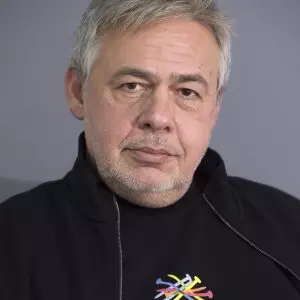
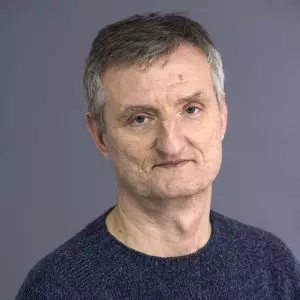
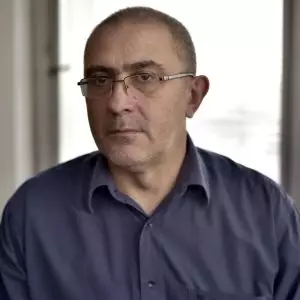
The constituent session of the Belgrade City Assembly was postponed to March 1 due to the lack of a quorum. The President of the Provisional Authority of the City of Belgrade, Aleksandar Šapić, said before the constitutive session of the city parliament that, if in ten days there is not a unified position in Branimir Nestorović's movement "We - Voice from the People" to side with the SNS and the SPS, they will go to new elections.
If there is no new majority even after the mentioned date, a new period of 45 to 60 days for holding new elections begins. The holder of the "We - Voice of the People" list, Branimir Nestorović, said that they do not want to be tied in the balance and that the best solution is to call new Belgrade elections. He also mentioned that, after the election, two councilors from that list completely cut off contact with that movement. reports Deutsche Welle (DW).
The opposition considers this to be its great victory. As pointed out in the first reactions, the cancellation of the session is clear evidence that those elections were not legitimate. The elections must be repeated under democratic conditions, the opposition leaders state, and say that the revision of the voter list with the participation of observers is the absolute minimum condition for new elections.
On the other hand, Prime Minister in technical mandate Ana Brnabić claims that this is not a victory for the opposition and that the government did not steal a single vote, nor was there any election theft.
An (un)sustainable majority in Belgrade
It's about the government buying time, comments Zoran Gavrilović from the Bureau of Social Research (BIRODI) for DW:
"It is obvious that forming a majority in a process that was not legal would be unsustainable." It was simply established that the elections were full of irregularities and that there were serious violations of the law. In addition, the leader of MI, Doctor Nestorović, said that their MPs are being offered six-figure sums in euros. The European Parliament put a stamp on all of that, and I think that Aleksandar Vučić decided to give up for the time being because of the reaction both internally and externally," our interlocutor believes.

image (45)Zoran Gavrilović: It is obvious that forming a majority in a process that was not legal would be unsustainable / Photo: Media Center Belgrade
Zoran Stojiljković, professor of the Faculty of Political Sciences, sees the postponement of the session as buying time.
"I think that this was done so that the reactions of the domestic public and the European Union could be seen by March 1." "There will probably be an attempt to balance the whole thing with the readiness to go to the Belgrade elections again," Stojiljković told DW.
Repetition under the same conditions?
The question that arises is what the government expects to happen in the next ten days. And why weren't new elections held immediately? Professor Stojiljković believes that "that would be a gesture that would show weakness."
image (46)Zoran Stojiljković: The current government is trying to get out of every problem by spinning the situation and showing some cooperation / Photo: Medija Centar
"The current government is trying to get out of every problem by spinning the situation and showing some of its cooperation." What we are currently forgetting is that she will try to go to those repeated elections in largely unchanged conditions and thus try to win them," warns Zoran Stojiljković.
Political chicken-fighting
In recent days, officials of the Serbian Progressive Party (SNS), as well as the Socialist Party of Serbia (SPS), have claimed that they have the majority to form a government in the capital of Serbia. They stated that MPs from different parliamentary groups are contacting them and offering support to SNS and SPS in a secret ballot. It is difficult to establish now whether it was a bluff or whether there were other calculations and agreements behind those statements.
In any case, Zoran Gavrilović believes that "in the coming days, Vučić may try to negotiate avoiding the international investigation, and in return to repeat the elections in Belgrade." He will probably also try to somehow soften the ODIHR report. I think that we will witness some kind of political chickening out there," emphasizes Gavrilović.
There was some kind of hint that maybe there was a thin majority, says Zoran Stojiljković and adds that "this time it was too obvious that someone woke up as the government, and yesterday it was the opposition. That's why it was estimated that calling new elections would be something that would relax them in relation to the analyzes that were supposed to determine the scale of election theft".
Disputed legality of elections
The insistence of the authorities that they want "full legitimacy" of the future city administration in Belgrade is for Zoran Gavrilović "an empty story, because the citizens of Belgrade chose the list led by the President of Serbia. In order to do that, he violated the Constitution, the Law on the President of the Republic and the Statute of the Serbian Progressive Party, because he is only a member of the party. We simply cannot talk about legitimacy, because before that we have a problem with the legality of the election, and that is something the opposition should insist on," Gavrilović notes.
We will know the position of the opposition on the next steps soon, says Zoran Stojiljković. And we will see, he adds, "whether they will agree to those quick, repeated elections under similar conditions, which is a kind of risk, or whether they will still insist on better conditions." But there seems to be no final position and that is something that the government seems to wish for," notes Professor Stojiljković.
Until March 1, the opposition "must communicate with the public as much as possible and explain what it is about," Gavrilović assesses.
And he concludes: "The next thing is to put pressure on the procedures that have been started before domestic institutions through the public to do their job." I think that he should continue to address international institutions as well, because it is evident that domestic institutions are not qualified to do their job. This is where, I would say, they will need the help of the center for social work based in Brussels".