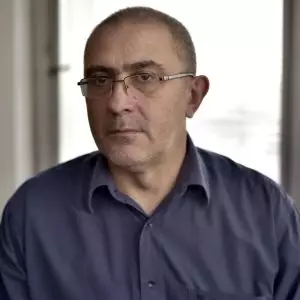
The Prime Minister of Serbia leads vladu voluntary. That's right Đuro Macut said in April, during the celebration of the anniversary of taking office. However, this does not mean that the Prime Minister does not have other sources of income.
Macut is a full professor at the Faculty of Medicine of the University of Belgrade, a visiting professor at the universities of Athens and Skopje, and the head of the Department for Tumors of the Endocrine System and Hereditary Cancer Syndromes at the University Clinical Center of Serbia, and he also works in a private practice.
In other words, the man who leads the Government of Serbia is simultaneously building an academic and medical career.
In a parliamentary democracy, the prime minister should be the key figure of the executive power. In Serbia, however, it has been shown for years that the president has the greatest political influence, so part of the public sees Matsuta more as an administrative than a political figure. Hence the question: can someone lead the state and perform several demanding professions at the same time?
Judging by the publicly available biographies of members of the Government - it can, and the law says it can.
In Serbia, it is thus possible for a minister to be a professor, doctor, researcher or court interpreter at the same time. The question, however, is not only what the law allows, but also how much public office leaves room for another career.
Most of the readers of our newsletter "In between"he thinks that this is not working at all. In the survey, 54 percent of them stated that MPs and members of the Government should not have another job because the state work they perform is serious enough.
37 percent of them believe that politicians can do other jobs, but that they must not enrich themselves at the expense of the state. Five percent of respondents believe that politicians should do whatever they want, while four percent think that additional work can only exist with reduced working hours.
Ministers with two careers
Macut is not an isolated case.
Minister of Education Dejan Vuk Stankovic is an associate professor at the University of Belgrade and employed at the Faculty of Teacher Education. Minister of Health Zlatibor Lončar in parallel, he remains attached to the Faculty of Medicine, where he teaches, and the Emergency Center of the Clinical Center of Serbia.
Minister of Agriculture Dragan Glamocic he is a full professor at the University of Novi Sad, while he is the Minister of Environmental Protection Sara Pavkov engaged at the Faculty of Science and Mathematics in Novi Sad as an intern researcher and doctoral student.
And the Minister for Human and Minority Rights Demo Berisha he has an additional professional engagement - he is a court interpreter for the Albanian language.
Among the members of the Government there are several professors and academic workers. The Minister of Science, Bela Balint, is a professor emeritus of the Faculty of Medicine of the Academy of Medical Sciences, a teacher at several medical faculties in the region and a member of the Council of the Faculty of Medicine of the University of Belgrade. Minister of Information Boris Bratina is an associate professor at the Faculty of Philosophy of the University of Pristina with temporary headquarters in Kosovska Mitrovica.
On the other hand, for some ministers, like the chief of police Ivice Dacic, it is often stated that they spend practically their entire professional career in politics.
Everything according to the law
According to the current laws in Serbia, ministers are not prohibited from performing professional activities in parallel, but they are obliged to declare income and avoid conflicts of interest.
The law prohibits them from managing private companies and using public office for private benefit, but allows academic, scientific, medical and author engagements, as long as they do not affect the performance of public office.
Admittedly, it is difficult to understand at all how running the Government or a ministerial department - which should be demanding jobs without regular working hours - can not be affected by doing some other work.
People's deputies have an even more liberal status, so with a mandate they can be lawyers, businessmen, consultants or company owners.
Critics of the system, however, warn that the biggest problem is not necessarily the existence of additional work, but weak control of conflicts of interest, especially in cases where business interests are formally transferred to family members or close associates, while political influence remains unchanged.
How is it abroad?
The rules in many European countries are much stricter than in Serbia.
In France, ministers cannot practically run private affairs in parallel, while MPs are restricted from holding several political functions at the same time.
Germany allows additional engagements such as law practice or university work, but with strict transparency and mandatory reporting of income.
In Great Britain, MPs can work as consultants or lawyers, which often causes political controversy because of the possible influence of private interests on public decisions.
One of the strictest systems is in the United States, where members of the administration often have to sell shares, leave boards of directors, or transfer assets to so-called "blind trusts" to avoid conflicts of interest.
Scandinavian countries like Sweden and Norway rely more on complete transparency and political accountability, so even without formal bans, the public has a detailed insight into the income and business connections of officials.
Real journalism costs money, and we will not be bought by tycoons and corporations. Support us with a one-time or monthly donation. The time for it is now!