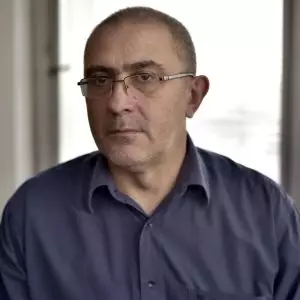
Perception of the European Union in Serbia it is significantly more negative than in other countries of the region, which is the result of a disinformation campaign about EU, said Sofija Popović, journalist of the Savremena politika portal.
Speaking about the results of the research commissioned by the European Commission (EC) in all candidate countries in the Western Balkans, Popović assessed that the reason for such a negative perception is that the authorities find someone else to blame for Serbia's stagnation in the process of European integration.
"Such a narrative has been going on for more than a decade, and I think it will be very difficult to change it if this way of reporting by pro-government media continues," Popović told the FoNet agency.
The EC's annual survey shows that less than a third of Serbian citizens have a positive image of the EU, that less than a third would vote for membership in the Union, and that 40 percent think that Serbia will never become a member.
"The European Union demands that the disinformation campaign about the EU stop in Serbia, but our government is not working on that at all, which is also shown by research that records the stagnation of Serbian citizens' support for membership," said Popović.
The government sends a negative image of the EU
She adds that the government very often speaks negatively about the EU and creates a narrative that it is the reason for the lack of progress Kosovo or that the EU does not want Serbia.
"I think the most responsible for this is the government, because for many years it mainly sends a negative image of the EU - that Serbia has fulfilled everything, but Brussels won't let us. You can even hear the minister for European integration saying such things. Incorrect messages are constantly being conveyed to the citizens, and that's why we have the results we have," claimed Popović.
Regarding the results of the research, which show that only 28 percent of citizens have a positive image of the EU, while the largest number of respondents, 38 percent, have a neutral attitude, Popović says that a good part of those citizens would be more inclined to join the EU if they saw that membership is really possible and if concrete steps forward were taking place.
"In other candidate states, especially in Montenegro and Albania, the authorities are very ambitious when it comes to the accession of their countries to the EU, and we see how they communicate in public when the country really wants to join the European Union," said Popović.
Commenting on the fact that 40 percent of citizens believe that Serbia will never become a member, she said that this percentage will change as other countries in the region join.
"Montenegro's progress has returned the EU and the accession process to our society. I think that a large number of citizens were surprised by the fact that Montenegro is making so much progress and that it is the closest to full membership," she pointed out.
The percentage of undecideds is surprising
Reminding that Serbia has not made any progress on the European path for four years, that it has been negotiating full membership for more than 12 years, Popović said that it is not surprising that such a percentage is undecided.
She stated that the EU was not in the mood for enlargement before and that this also affected the perception of the citizens, but that the situation completely changed after the start of the war in Ukraine.
In the survey, a large percentage of citizens said that the EU should support the fight against corruption, which, says Popović, is not surprising, because citizens still see the EU as part of the world in which the system functions.
"That's why I think it's important that the citizens at the protests expressed that expectation from the EU - to support the pro-democratic forces and the process of 'dismembering' the captured institutions in Serbia", she stated and assessed that part of the citizens in the last year and a half had unrealistic expectations from the EU and that this resulted in huge disappointment.
EU aid is presented as a matter of course
The survey states that Russia is still the country in which the largest number of Serbian citizens trust, followed by China, while the EU is in third place, which, according to Popović, is a consequence of the fact that the government is trying in every way to present both China and Russia as friends of Serbia, while the EU's help is presented as something that is taken for granted or is not presented enough.
She believes that the government has no intention of speeding up the process of European integration in a meaningful way and that it is difficult to expect progress until the political crisis in Serbia is resolved.
"Now, Serbia is required not only to adopt laws, but also to implement them and fundamentally change the situation on the ground, and we see that the situation is getting worse and that even the European Commission very clearly notes the regression in key areas, such as the judiciary and freedom of assembly," said Popović.
Resolutions have great political force
Commenting on the resolution on Serbia in the Parliamentary Assembly of the Council of Europe, she stated that it is very similar in tone to the report of the special rapporteur of the European Parliament, Tonino Pizzula, and that it shows that the situation in Serbia can no longer be ignored, especially when it comes to the rule of law, the deterioration of freedom of expression and the situation in the media.
"The government did not succeed in getting the Parliamentary Assembly to soften the criticism, hence the disappointment of the representatives of the Serbian delegation from the ruling coalition," added Popović.
Popović points out that those resolutions in themselves are not legally binding, but that they have great political power and that the vocabulary of the European Parliament very quickly spilled over into the vocabulary of the European Commission.
"Member states, when they decide whether to support Serbia's progress, will read those documents that are not favorable to the government in Belgrade, and they have a greater importance than our government is trying to present," says Popović.
Speaking about the relationship that the top government has with EU leaders, primarily with EC President Ursula von der Leyen, Popović says that "there is a wrong perception of the friendship between von der Leyen and the President of Serbia."
According to her assessment, the attitude of the EC towards the authorities in Belgrade has changed in the past year and a half, and in Brussels no one has confidence that the things that were promised long ago will be fulfilled.
"I think the situation is not ideal in the relations between the top of the EU and the authorities in Belgrade, because it is really expected that after a long time the things that the authorities have promised for a long time will be implemented," Popović assessed.
Source: FoNet
Real journalism costs money, and we will not be bought by tycoons and corporations. Support us with a one-time or monthly donation. The time for it is now!