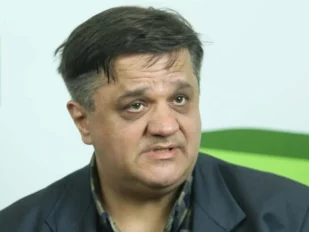
Coordinator of the National Convention Fr to the European Union Bojana Selaković estimated that before the extraordinary parliamentary elections on October 25, the European Union will engage more significant capacities for monitoring electoral process than during the 2023 election.
She stated that the mission will Organization for Security and Cooperation in Europe (OSCE) to be very numerous, while the European Parliament also announced the sending of a long-term election observation mission.
She indicated that European Parliament he has not had such a mission since 2014, when he observed the elections in Ukraine, which, according to her assessment, shows that he does not consider the current situation in Serbia to be normal, nor does he expect a simple return to the previous situation after the elections.
Speaking to N1 about the pre-election atmosphere, Selaković assessed that the government is promoting a narrative about "violent blockaders" who allegedly want to take over institutions instead of participating in the democratic process.
She added that messages are being sent from different levels of government that the other party will not recognize the election results, that they could cause violence and bring the country into chaos.
According to her, such rhetoric can represent preparation for certain scenarios that, as she stated, may have already been worked out.
Selaković also assessed that the months-long protests led by students did not lead to a clear political formation of the movement or to the creation of a political entity that could directly communicate with the European Union.
Speaking about Brussels' relationship with Serbia and the Western Balkans, she stated that the region is primarily important for the EU from a security point of view. In the circumstances of the unstable geopolitical environment, according to her, the Union tries above all to preserve the stability of the region.
Selaković believes that the EU will have no interest in becoming more actively involved in internal political events in Serbia as long as the current situation is assessed as sufficiently stable. She concluded that Brussels' attitude would change if Serbia were perceived as a security threat.
Real journalism costs money, and we will not be bought by tycoons and corporations. Support us with a one-time or monthly donation. The time for it is now!