
Election 2026.
IT Blockade: Don't Fall For Doorknob Voting Spray Rumors
"Don't fall for the spread of panic on Viber groups and networks. Feel free to open the door, take your ID card and exercise your right to vote," announced the IT blockade.
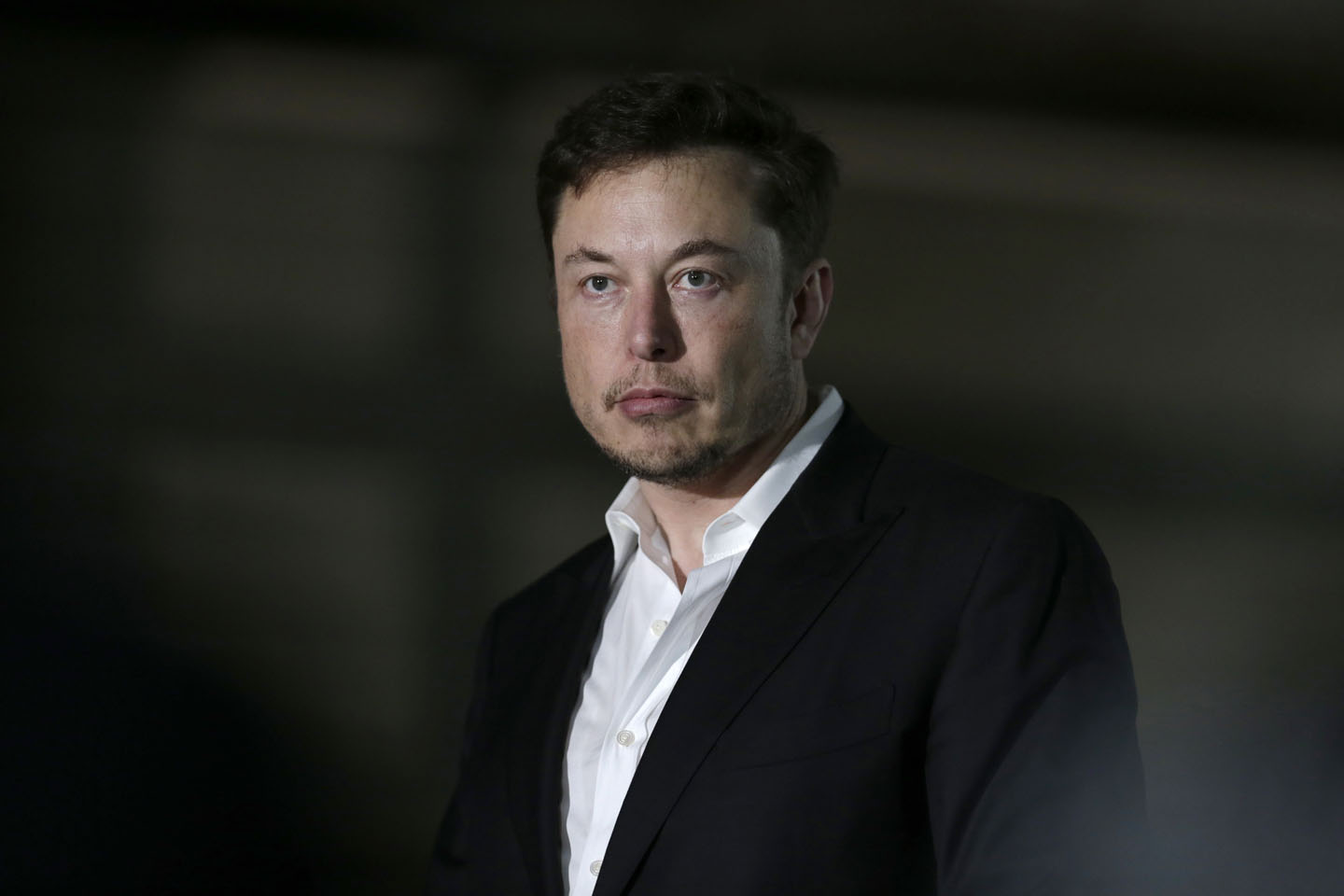 Photo: AP Photo/Kiichiro Sato
The wealth of the world's 10 richest people doubled during the pandemic. While one person died every four seconds due to increasing poverty, they were making $15.000 per second
The ten richest people in the world more than doubled their wealth between March 2020 and November 2021. At a rate of $1,3 billion a day, or $15.000 a second, that $700 billion has come to $1,5 trillion, the charity Oxfam warned on January 17, 2022 in a report on global inequality, as it usually publishes at the beginning meeting of the World Economic Forum in Davos.
Wealth the richest in the world is usually tied to their shares, which had fallen sharply at the start of the pandemic in March 2020, meaning subsequent growth has been measured from that lower starting point. As Max Lawson, one of the authors of the Oxfam report, states, even if instead the wealth of billionaires in mid-February 2020 were taken as the basis, the wealth of the ten most powerful billionaires increased in one year by a record of more than 70 percent, something that has never been seen before.
According to the data of "Forbes", which Oxfam refers to, the 10 richest people in the world are: Elon Musk, Jeff Bezos, who spent most of his fortune on his space travel project Blue Origin, Bernard Arnault with his family, Bill Gates, Larry Ellison , Larry Page, Sergey Brin, Mark Zuckerberg, Steve Ballmer and Warren Buffett.
There is considerable variation among those ten richest, with Tesla and Spacex CEO Elon Musk's wealth increasing by more than 1.000 percent (to $270 billion), Google co-founders Larry Page and Sergey Brin's wealth increasing by 127 percent, while Gates' wealth increased by a more modest 30 percent.
If those ten billionaires were to lose 99,999 percent of their wealth tomorrow, they would still be richer than 99 percent of the people on this planet," says Oxfam International Executive Director Gabriela Butcher. "They now own six times the wealth of the poorest 3,1 billion people."
The wealth of 2.755 billionaires has grown more since the beginning of the covid-19 pandemic than in the last 14 years. At $5 trillion, this is the largest increase in billionaire wealth on record.
Central banks pumped trillions of dollars into financial markets during the pandemic to save the economy, but much of that money ended up in the pockets of billionaires who were the most successful in the stock market.
Vaccines were supposed to end this pandemic, but wealthy governments allowed pharmaceutical billionaires and monopolies to cut off the supply of vaccines to billions of people. The result is that every kind of inequality imaginable has increased.
Extreme inequality is a form of economic violence: policies and political decisions that maintain the wealth and power of a privileged few result in direct harm to the vast majority of ordinary people around the world and the planet itself, warns Oxfam, noting that during the first two years of the pandemic, the incomes of 99 percent of humanity declined. and over 160 million people were driven into poverty. The lower incomes of the world's poorest have contributed to the deaths of 21.000 people every day, one person every four seconds.
A one-time tax on 99 percent of the ten richest winners of the pandemic could finance the production of enough vaccines for the entire world; to ensure universal health and social protection; to finance climate adaptation and reduce gender-based violence in over 80 countries. And all this, while these rich people still have $8 billion more than they had before the pandemic, Oxfam calculates.
It is cynical, but it must be noted, that this year's Davos still shows that the rich are also suffering in the pandemic: instead of the usual gathering of corporate and political leaders, celebrities, activists, economists and privileged journalists who are in the Swiss resort for panel discussions, parties and champagne advise each other about how the poor live, they discuss it online, without mingling and socializing, which can increase their loneliness and psychological alienation.
MM/Oxfam/BBC/Fortune
Read daily news, analysis, commentary and interviews at www.vreme.com
"Don't fall for the spread of panic on Viber groups and networks. Feel free to open the door, take your ID card and exercise your right to vote," announced the IT blockade.

The elections in Serbia will be observed by 16.271 representatives of observers from 26 domestic associations and 57 foreign organizations and associations.

The regime media bypasses the election silence by attacking other media for breaking it. Legally mandated electoral silence certainly does not make much sense

The new organization of the work of the High Court in Belgrade connected with the upcoming parliamentary elections indicates the expectation of an increased number of cases of deprivation of liberty, announced the Belgrade Bar Association.

The documentary film "The Final Judgment" shows the chronology of the events that led to the Fifth of October and the fall of Slobodan Milošević's regime in 2000.

There is, literally, no difference between the one who claims it is day in the middle of the night, or the one who claims to be a giraffe, from the claims we read on billboards: that Vučić is working to unify Serbs and that Serbia is doing better and better day by day.

The pre-election arrests due to the alleged "overthrow of the state" testify to the regime's panic. The bad news for them is - they can't arrest the whole people who decided to defend themselves from progressive beatings and election theft

The ring that tightens around Ćaciland Student list is getting narrower. Because there are more and more spoiled people who see the false prophet for what he is: a street obscener who is fighting Serbia

The archive of the weekly Vreme includes all our digital editions, since the very beginning of our work. All issues can be downloaded in PDF format, by purchasing the digital edition, or you can read all available texts from the selected issue.
See all