

Election 2026.
REC determined the final number of voters in the elections
The Republic Election Commission (REC) made a decision today on determining the final number of voters in Serbia
 Photo: Tanjug/Ministry of Defense and the Serbian Army
Serbia, Croatia and numerous other European countries are flirting with reintroducing military service. Support among the people is generally high because it sounds good. But what do those who should go to the army say?
"Conflicts happen in the world, and the country should be defended if it happens," said a young man on the streets of Belgrade when asked by DW if he supports the return of mandatory military service. He supports, he says, because the country must be more prepared.
Others are in camera DW said that men today are "too feminized", "incompetent", for the army to bring them into order, like "our old men".
One young man says the whole discussion is "morbid" after two mass murders last May. "Not even a year has passed since that, and the youth and children are already being rattled with guns over their heads, which is not in line with common sense."
Armies lack people
Compulsory military service has been a topic of debate and political points in Serbia for years.
However, at the beginning of the year, it seemed to become serious, since the General Staff proposed to the "Supreme Commander" Aleksandar Vučić that the young men should once again serve their military service. It is not yet known what kind, how much debt, it still needs to be discussed.
"We should be given a certain period of time for our recruitment centers to work at full capacity," Defense Minister Miloš Vučević said recently. "It has been 13 years since the suspension, in that period we have 13 generations that are not even part of the reserve units. The key question remains, do we want a stronger or weaker army?"
Experts, on the other hand, greeted the announcements with different comments - simply, they say, the professional army is falling apart. As in many European countries, the army is not sufficiently manned.
"Officers across Europe say that young people are less and less interested in the army, weapons, war," military analyst Vlade Radulović told DW.
"Even those who come into the professional service think they're going to be like Rambo because of the movies and the games." And then they face the reality in the barracks that deviates from marketing. Disillusionment quickly occurs among a part of young people and they do not find themselves in it," he adds.
And in Serbia, he says, professional soldiers, non-commissioned officers and officers, face banal questions - do they have the right to a free weekend, holiday, what are the working hours and what is the salary, can they advance if they don't have a "relationship"? All this often makes them decide to work in the private sector for better money.
Trend in the region and Europe
Croatian Prime Minister Andrej Plenković also announced the return of mandatory military service after finishing high school, and the debate in Croatia is similar to that in Serbia. Announcements also come from the "Self-determination" of Aljbin Kurti, who rules in Kosovo.
"It would be good for every young person to be ready for anything, if the country faces any kind of conflict," a young man in Pristina tells us. Another says: "I think it would be more reasonable if everyone had a free choice, and not if it was forced or imposed."
As DW has already written, a number of European countries have reinstated mandatory military service in the last ten years. Ukraine and Lithuania did so after the annexation of Crimea, Sweden since 2018, Latvia since this year.
In Norway and Denmark, the army is compulsory, but there are enough volunteers to replenish the forces, so no one is forced to go in the end. In Germany, too, there is a lively discussion about the return of mandatory military service.
A recent poll shows that 52 percent of Germans support the mandatory deadline, while 32 percent are against it. Admittedly, the older the respondents, the more ardent they are in support of military service.
Young people on the streets of Berlin give mixed answers in a DW poll: "I think everyone should become a soldier from the age of 18 onwards, because we currently have very few soldiers here," says one young man.
Another states that it is crazy that people join the army only to later kill each other in wars organized by someone from the comfort of their office. "Maybe we should introduce duels again?" Let them (those from the offices) kill each other, and let the rest of the people live freely," he says.
Vlade Radulović says that, apart from real problems, the reason for the constant talk about military service should also be sought in politics. "It's often cheap marketing, especially in the Balkan region." It's nice to bring up the topics of weapons and the army, because it inflames the emotions of the voters."
Strong with words, but…
According to available surveys, over two-thirds of people in Serbia support military service. Even the majority of young people support this. Thus, a few years ago, a survey by the House of Wine agency circulated, according to which 72,5 percent of young people (17 to 30 years old) declared for the mandatory army.
Military analyst Radulović says that the media matrix in Serbia repeats itself: it is constantly being said that young people also support the mandatory term. "But ask them specifically if they would go?" Or, when someone is 27 years old, ask him why he didn't already serve voluntarily, when he could?"
As he says, there is a real fear that some young people could avoid mandatory military service. Or by obtaining an alibi from a doctor, which was done before, or even by moving out of the country.
Therefore, according to Radulović, one should be careful and gradually popularize the army, attract more and more young people to serve voluntarily, before any obligation is introduced.
Finally, does the story of the return of conscription in the region smell of new conflicts?
"When you are in an unstable region, and you also have an unstable geopolitical context, as well as announcements from neighbors that also mention mandatory military service... all of this suggests that there is preparation for possible conflicts," says Radulović. However, he adds:
"But that's not the point." The long-term sustainability of the defense system is key. What if the number of people continues to decline?"
The Republic Election Commission (REC) made a decision today on determining the final number of voters in Serbia

A citizen of Belgrade whose polling station in Banja Luka was changed in the voter list without his knowledge claims that the Ministry did not correct his data and that the deadlines have expired. The elections are on October 25 and he still doesn't know where he will vote.

The pardon procedure implies the appropriate role of the Minister of Justice, who should initiate the procedure or submit an opinion on the pardon, says prosecutor Radovan Lazić.
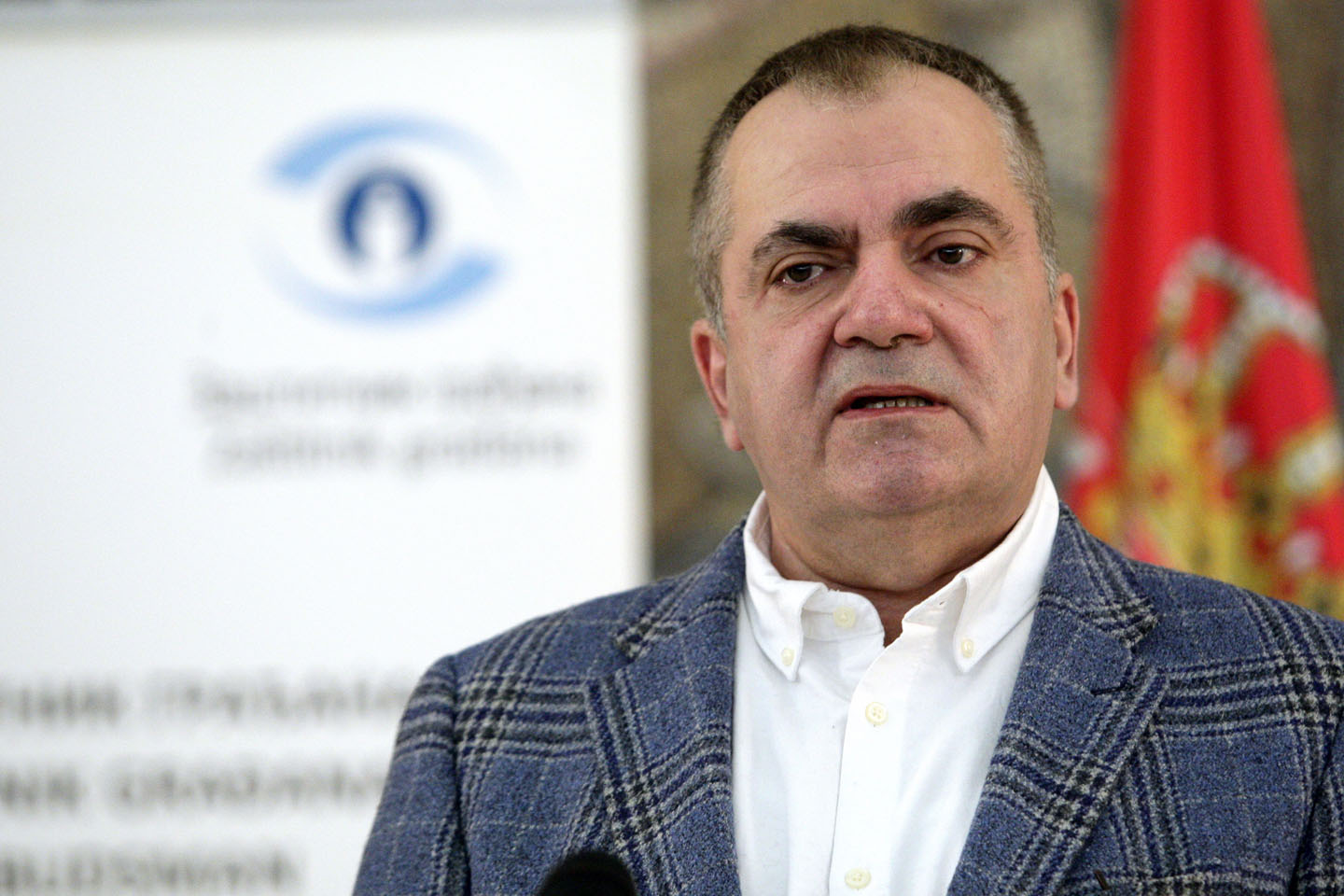
Phone numbers 064 876 85 05 and 011 2068 100 will be available 24/7 for reports and addresses to citizens, and the possibility of direct addresses at the premises of the Protector of Citizens is also provided.

NUNS demands an urgent investigation due to the threats sent to two Radar journalists who wrote about the Sky correspondence in which Aleksandar Vučić is mentioned. The association states that the threats also mention violence against children of journalists and warns of impunity

There is, literally, no difference between the one who claims it is day in the middle of the night, or the one who claims to be a giraffe, from the claims we read on billboards: that Vučić is working to unify Serbs and that Serbia is doing better and better day by day.

The pre-election arrests due to the alleged "overthrow of the state" testify to the regime's panic. The bad news for them is - they can't arrest the whole people who decided to defend themselves from progressive beatings and election theft

The ring that tightens around Ćaciland Student list is getting narrower. Because there are more and more spoiled people who see the false prophet for what he is: a street obscener who is fighting Serbia

The archive of the weekly Vreme includes all our digital editions, since the very beginning of our work. All issues can be downloaded in PDF format, by purchasing the digital edition, or you can read all available texts from the selected issue.
See all




