Musk officially became the first billionaire in history. Behind that incredible figure lies a much more complex story of speculative bubbles, tax loopholes and an economy that rewards promise more than real success - a story of "promise monetization" and an economy "gone mad".
When the media announced in October last year that it was personal property Ilona Maska exceeded the previously unimaginable 500 billion dollars, it seemed that techno-capitalism had reached its absolute limit. Half a trillion dollars was unreal enough as both a statistic and a metaphor. Only eight months later, that figure was doubled, and Musk (54) officially became the first billionaire in the history of mankind. That sum is written like this: 1.000.000.000.000.
The trigger for this jump was not a sudden boom in its factories or a tangible increase in production. It is the largest IPO in history, when SpaceX through an initial public offering (IPO) released 555,6 million shares to the market at a price of $135. With this move, around 75 billion dollars of fresh capital was collected, which is even three times more than the previous record set by the Saudi oil giant Saudi Aramco in 2019 (25,6 billion dollars), the media write.
With that, the total value of the SpaceX company reached as much as 1,77 trillion dollars, which launched it to the eighth place of the most valuable companies in the world. This means that SpaceX has increased its market value 45 times since 2020, when it was worth "only" 40 billion.
Photo: Unsplash/Sandra GabrielDollars
Richer than most countries
Following this IPO, Musk's personal fortune is now estimated at $1,11 trillion. He holds this capital through dominant stakes in two of his key companies: according to CNBC, his stake in rocket giant SpaceX is currently "heavy" at $866,5 billion. Although he owns 42 percent of the ownership, thanks to shares with special voting rights, he effectively controls as much as 85 percent of the company, which guarantees him complete control. His official functions testify to the level of power: Musk is also the founder, chief executive and technical director, as well as the chairman of the board of directors. When his stake in Tesla, worth around $355 billion, is added to that equation, it is clear that Musk has sovereignly pushed the boundaries of the global techno-economy.
In order to get a general idea of the size of this trillion dollar figure, it is enough to look at the data of the IMF and global statistics. Only twenty countries in the world have a gross domestic product higher than Musk's wealth, which today is in the GDP range of a highly developed Switzerland. Also, the combined value of the 50 richest sports clubs in the world, from Real Madrid and the Lakers to the Dallas Cowboys, together do not even make up a third of his personal wealth.
Let's look at it from the perspective of an employee in Serbia. According to RZS data, the average net salary in the Republic of Serbia amounts to 92.753 dinars, which is slightly more than 1,1 million dinars annually. From that absurd perspective, one million dollars to one Mask is worth as much as only 1,11 dinars to the average Serbian worker. When that same billionaire "splashes" one hundred million dollars on a luxury yacht, his wallet feels it the way a Serbian citizen would feel the cost of 110 dinars - which is less than the price of an ice cream on a stick.
Photo: AP Photo/Evan VucciElon Musk and Donald Trump
Myth economy versus economic reality
Elon Musk's real talent, as both his harshest critics and most loyal fans agree, is not engineering, but the ability to create myths and skills to "sell" the future to investors before it even arrives on the agenda. His wealth is not tangible money, but a mirror of speculative expectations and the current mood of the stock market. Loyalists call it pure visionary, while critics see it as a dangerous "promise monetization." However, in the real world, a red alarm has been lit, because this story testifies to an economy "gone mad", which is no longer based on real value, but on faith in promises and marketing.
Musk's SpaceX, in fact, did not go public as a profit machine with predictable cash flows. The company is now valued on the stock market at a price that is even 95 times (!) higher than its annual revenues (so-called Price-to-Sales ratio). Traditional economic parameters do not apply here, and bankers and financial experts try to justify this extreme valuation with the thesis that SpaceX is not an ordinary aerospace company, but a future monopolist in the field of orbital infrastructure for artificial intelligence. According to market analysts, the IPO was also a kind of "referendum" on Elon Musk's management vision.
Just days after that, SpaceX entered into a strategic agreement with Google to lease AI infrastructure. According to this agreement, Google will pay Musk's company as much as 920 million dollars per month until June 2029 for the needs of its AI projects. This massive financial deal provided a strong tailwind for the company ahead of its IPO.
Photo: Unsplash/SpaceXSpaceX
Change of strategic course
However, behind this shiny facade, a much more complex economic reality is hidden. SpaceX's financial stability is actually split between two of their biggest projects. While SpaceX's Starlink through its satellite network generates steady revenue, profits are eating into their core program - Starship. Due to the aggressive investment in this giant rocket of the new generation, in which more than 15 billion dollars have been invested, SpaceX continues to operate at a loss, so last year's operating loss of the company, according to a Reuters report, amounted to almost five billion dollars.
The future fate of Musk's company depends to a large extent on its breakthrough in the field of artificial intelligence, where a sudden turn in strategy is noticeable. The long-standing priority - settling Mars and conquering space - has been replaced by a more pragmatic, commercially oriented goal. Namely, SpaceX has joined forces with Musk's startup xAI with the goal of building a network of data centers powered by artificial intelligence beyond our planet. However, this maneuver carries with it a double risk: xAI is also 'burning cash' at an enormous rate without profit, while experts warn that orbital data centers are still technologically unfeasible at the moment.
Billionaires pay the minimum, the state at zero
The jump in Elon Musk's wealth has reopened the debate about the alarming dysfunctionality of modern techno-capitalism, not to mention the impact on politics and social movements of the techno-barons. Many warn of the systemic anomaly that ultra-billionaires in the US pay taxes at an incomparably lower rate than average workers. The mechanism behind this paradox is well known: the wealth of the richest people on the planet does not lie in the money in their bank accounts, but in the shares of their companies. In order to finance a luxurious life, buying yachts and villas, they do not sell those shares - because then they would have to pay a huge tax to the state. Instead, they go to the bank, pledge those same shares as collateral, and take out a loan at a ridiculously low interest rate. Since a loan is not a salary by law, they do not pay a single cent of tax on the millions they receive.
At the same time, their companies skilfully use legal loopholes to minimize tax obligations, so that the tax on profits measured in billions ends up being zero. While the system allows the most powerful to keep every cent, the entire burden of funding the state – from roads and hospitals to schools – rests on the backs of ordinary people, whose taxes are automatically deducted from every paycheck.
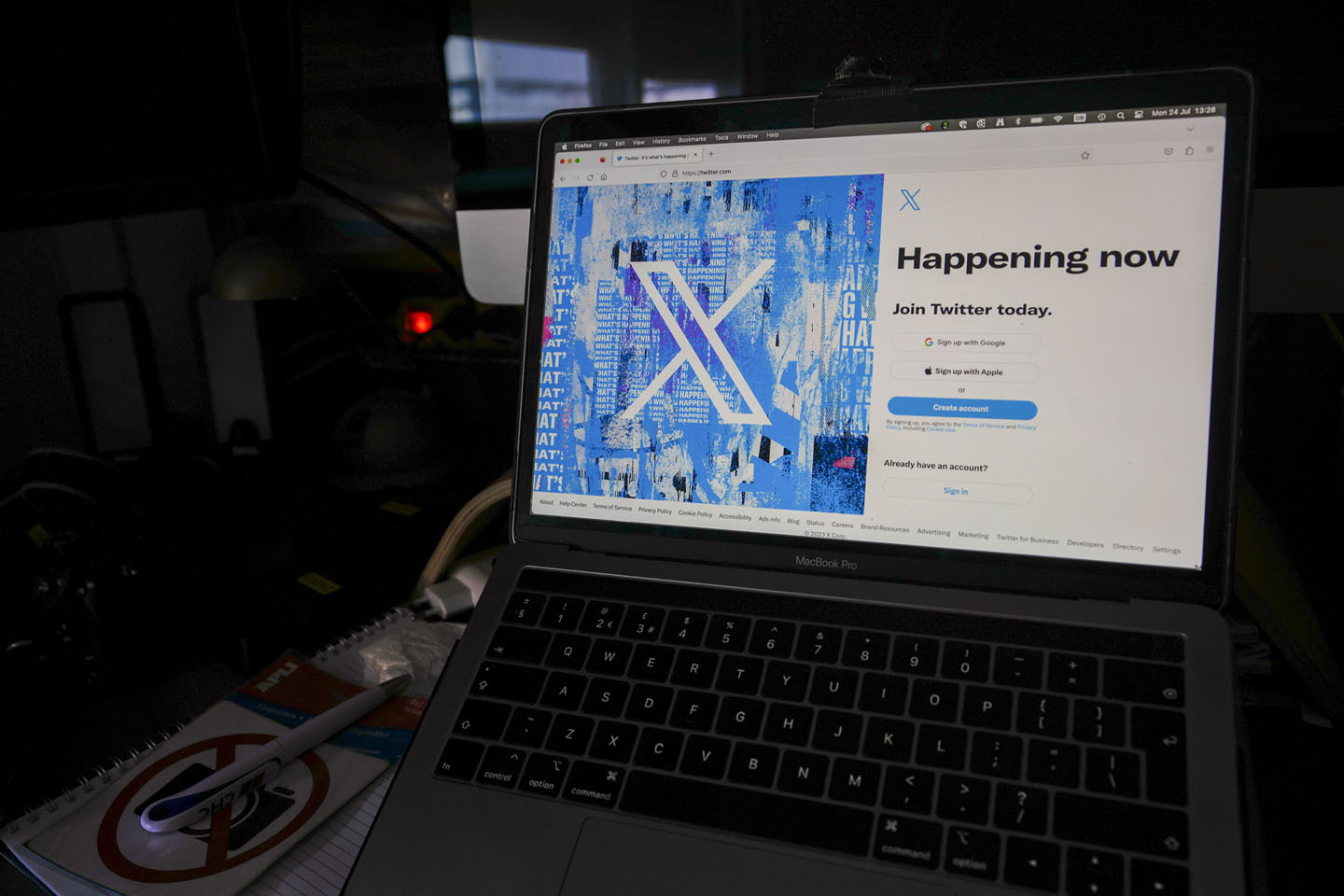
Photo: AP Photo/Darko VojinovićX Logo
Stock exchange queue
After Musk's company, a whole series of industry giants announced their IPO. According to CNN, OpenAI has already filed for an initial public offering of shares. The move came shortly after Anthropic also announced its own plans to go public. Experts estimate that this is a big test for the market itself, which will show the real appetite of investors for companies in the field of artificial intelligence.
Although the success of SpaceX on the stock market is a significant financial moment, it is also a mirror of a system that rewards the vision of the future far more than the tangible results of the present. As long as the market blindly believes this narrative, Elon Musk remains the untouchable ruler of global wealth.
The history of modern capitalism, however, reminds us that every speculative bubble sooner or later reaches a point where abstract promises must translate into real income. Otherwise, bubbles have a nasty habit of bursting.
What is happening in the country and the world, what is in the newspapers and how to pass the time?
Every Wednesday at noon In between arrives by email. It's a pretty solid newsletter, so sign up!
"Now they are talking about the threat from Russia and the beginning of preparations for war with Russia, which, in my opinion, is a kind of political schizophrenia," said Russian President Vladimir Putin
For the first time in almost two years, the opposition in Venezuela took to the streets across the country to demand elections by July 2027. The government organized its own march in the same square on the same day
France is preparing for Saturday's protests with a series of bans on gatherings and an increased police and military presence. The courts have already overturned one ban in Paris, and unions and students are calling for peaceful demonstrations
The richest man in the world responded with a threat to the news that Democrats are preparing investigations against him if they win the congressional elections. Musk said that whoever initiates a conflict with him should know that "they will find out who is actually pulling the strings."
A New Mexico court ordered Meta to pay $25 billion for misleading Facebook users about their privacy. State Prosecutor Raul Torres said that the verdict is a signal to the entire Silicon Valley.
There is, literally, no difference between the one who claims it is day in the middle of the night, or the one who claims to be a giraffe, from the claims we read on billboards: that Vučić is working to unify Serbs and that Serbia is doing better and better day by day.
The pre-election arrests due to the alleged "overthrow of the state" testify to the regime's panic. The bad news for them is - they can't arrest the whole people who decided to defend themselves from progressive beatings and election theft
The ring that tightens around Ćaciland Student list is getting narrower. Because there are more and more spoiled people who see the false prophet for what he is: a street obscener who is fighting Serbia
The archive of the weekly Vreme includes all our digital editions, since the very beginning of our work. All issues can be downloaded in PDF format, by purchasing the digital edition, or you can read all available texts from the selected issue.