
The World
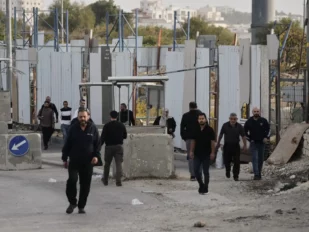
Israel begins demolitions in the West Bank
The Israeli human rights organization "Bethlehem" has condemned the plan for the "forced displacement of Palestinian residents" from a settlement in Hebron.

Mao shaped the army as a political school, and Xi Jinping turned it into a technological laboratory - but with the old message that the army must obey the party. It is a pillar of the regime, a guarantor of internal stability and the president's personal power. That is why the military pyramid is strictly centralized, and the top is regularly searched
Spectacular military parade in Tien Anmen Square the common man watched wide-eyed, taken aback by the precise, almost robotically coordinated movements of the soldiers amidst tons of state-of-the-art war technology. It was a catalog of weapons - missiles capable of hitting any point on the planet, digitized units and space systems.
Only one character watched over it all with a Mona Lisa smile and an expression that never gave away what he was really thinking. A huge portrait of Mao Zedong dominated the parade from the walls of the Forbidden City. It was as if the Great Helmsman was still present. Perhaps he is - not as a living leader, but as a figure that the government quotes as needed, side by side with Confucius. China moved away from him, but did not forget him.
POLITICAL POWER COMES FROM THE BARREL OF A GUN
Mao died on September 9, 1976. The news was announced only after 14 p.m. I was in Beijing and watched as life came to a standstill in the vast land. People were crying in the streets, and soldiers were also crying in front of the "Peking" hotel.
They wore ready-made white ribbons, tying them on the sleeves of washed, green blouses. Back then, there were no ranks in the army, only an unwritten hierarchy. Millions of soldiers marched in canvas sneakers while officers wore leather shoes. The number was impressive - about 4,3 million members. But the army was more of an ideological force than a technical one. "The party commands the gun", said Mao, and the soldiers learned from the Little Red Book that "political power springs from the barrel of the gun". Ideology was in the first place, and training was imbued with Marxism-Leninism and Mao's thought. Officers were primarily political cadres, and only then professional soldiers. Half a century later, it is a different country and a different army. Mao left China with a gross national income of $154 billion, while 60 percent of the population lived on less than one dollar a day. Today, the national income is close to 20 thousand billion dollars. The difference was clearly visible at the parade.
Its meaning was not a declaration of war, but a confirmation of the legitimacy of the party and its leaders, a demonstration of power in front of foreign rivals and a reminder that China is a power - modern, strong and ready to defend its interests. The invitation and schedule of foreign delegations revealed diplomatic messages: who is sitting in the front rows, who is on the sidelines, and who is missing.
Today's People's Liberation Army has about two million soldiers and half a million in reserve. It is still the largest in the world, but no longer peasant and poor, but professional and digitized. Students are the most desirable recruits, soldiers have contracts, salaries and the possibility of returning to civilian life. The army lives in a time when it has less ideology and more technology. Mao shaped the army as a political school, and Xi Jinping turned it into a technological laboratory - but with the old message that the army must obey the party. It is a pillar of the regime, a guarantor of internal stability and the president's personal authority. That is why the military pyramid is strictly centralized, and the top is regularly searched.

PUNCHES AT THE TOP OF THE ARMY
Corruption is a chronic disease of China. Back in Mao's time, it was said that certain commanders "would give their own daughter for two packs of cigarettes and a bottle of brandy." Today, the stakes are much higher. The army has almost unlimited resources, and the scientific and technological challenges are not insurmountable. But people at the top can fall - they are not immune to the temptations of wealth.
Since 2012, under Xi, some of the highest generals have been dismissed and convicted:
Xi Caihou (Xu Caihou) – vice president of the Central Military Commission, accused of rank trading, died before the verdict;
Guo Bosiang (Guo Boxiong) – also vice president, sentenced to life imprisonment;
Fang Fenghui – Chief of the General Staff, life imprisonment;
Zhang Yang (Zhang Yang) – political commissar, committed suicide during the investigation;
Gu Junshan – Deputy Chief of Logistics, death sentence commuted to life imprisonment;
Chen Qiang – Deputy Commander of the Missile Forces, life imprisonment;
Wei Fenghe – Minister of Defense, dismissed due to accusations of corruption;
Li Shangfu (Li Shongfu) – also Minister of Defense, removed and still under investigation.
According to Western sources, the convicted generals received individually between 12 and 100 million dollars, and the confiscated property of some was estimated at hundreds of millions of dollars.
The purges were necessary. First - to clean the army from the corruption that comes from the top. Second - that China could seriously project its global power. And thirdly - perhaps the most important - that Xi Jinping would personally consolidate control over the armed forces, the one that protects both the regime and its power.
Such a trend will certainly continue. In the Chinese system, purges are not only a fight against corruption – they are also a mechanism to prevent the creation of factions and too many independent generals.
"No one will be spared", Xi repeats, and it is not an empty word.
The big parade overshadowed those scandals, at least temporarily. But the main direction remains: whoever commands so much power must have clean hands.
Britain reckons that World War II began in 1939, when Germany invaded Poland. The USSR considers it since 1941, when German troops entered its territory. China saw the beginning of World War II in 1937 when Japan launched a massive offensive against China. Until 1945, Japanese fascism kept more than three million of its soldiers in China. About four million Chinese soldiers and as many as 20 million civilians died.
Throughout history, a Chinese soldier rarely crossed the border of his country. Since 1945, China has gone to war only twice: in Korea (1950–1953), where about 300 died, including the son of Mao Zedong, and in the border war with Vietnam in 1979, when about 30 soldiers lost their lives.
China likes to remind that since 1945, the US has had more than 100 major and about 200 minor military interventions in other countries.
The Israeli human rights organization "Bethlehem" has condemned the plan for the "forced displacement of Palestinian residents" from a settlement in Hebron.

The Ministry of the Interior has announced that it will hire 70.000 police officers, which will increase the security presence in French cities.
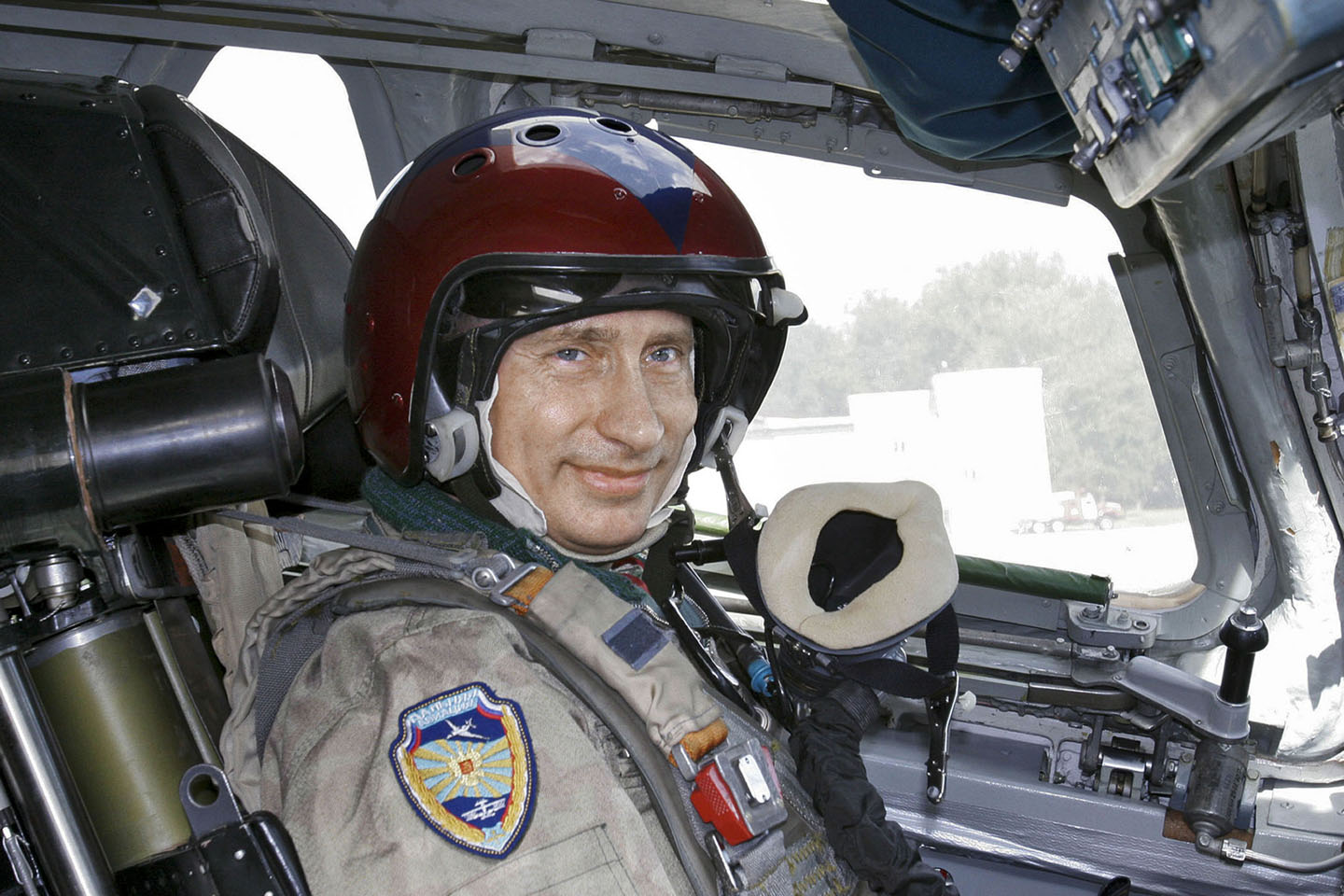
"Now they are talking about the threat from Russia and the beginning of preparations for war with Russia, which, in my opinion, is a kind of political schizophrenia," said Russian President Vladimir Putin

For the first time in almost two years, the opposition in Venezuela took to the streets across the country to demand elections by July 2027. The government organized its own march in the same square on the same day

France is preparing for Saturday's protests with a series of bans on gatherings and an increased police and military presence. The courts have already overturned one ban in Paris, and unions and students are calling for peaceful demonstrations

There is, literally, no difference between the one who claims it is day in the middle of the night, or the one who claims to be a giraffe, from the claims we read on billboards: that Vučić is working to unify Serbs and that Serbia is doing better and better day by day.

The pre-election arrests due to the alleged "overthrow of the state" testify to the regime's panic. The bad news for them is - they can't arrest the whole people who decided to defend themselves from progressive beatings and election theft

The ring that tightens around Ćaciland Student list is getting narrower. Because there are more and more spoiled people who see the false prophet for what he is: a street obscener who is fighting Serbia

The archive of the weekly Vreme includes all our digital editions, since the very beginning of our work. All issues can be downloaded in PDF format, by purchasing the digital edition, or you can read all available texts from the selected issue.
See all


Let's talk about what is really important and current - about flying vehicles! Are they parked in the air or on the ground? Will that parking lot also be zoned (my proposal: first zone up to 100 meters high, second zone - troposphere, third zone - stratosphere, free zone - everything from the moon onwards). Will we, who have a driving license for category B, automatically get a license for flying cars or will we have to take a pilot test? How will traffic officials regulate traffic and collect fines? By hanging from drones, or directly from helicopters


