

The World
Israel begins demolitions in the West Bank
The Israeli human rights organization "Bethlehem" has condemned the plan for the "forced displacement of Palestinian residents" from a settlement in Hebron.

Bullitt began to deal with the Bolshevik issue as soon as he came to the State Department. American President Woodrow Wilson and his associates wanted a liberal world order, which certainly meant a world governed by the rich and educated West. Unlike Wilson, who considered the Bolsheviks to be German spies who wanted to subjugate the Russians to the German will, Bullitt proposed establishing ties and dialogue with them, since he himself had enough imagination to fit conservatives, socialists, and communists comfortably into the international liberal paradigm. . To him, they were all liberals, or had the potential to be
William Bullitt was a fascinating example of a complex type of social man. Upper-class Philadelphian, supporter of the Bolshevik Revolution, rootless expatriate, disillusioned radical, feverish anti-Communist, and ultimately embittered exile from public life, he was a man whose creative energy and self-destructive impulses were in constant conflict.
Through the government positions he held - personal representative of Woodrow Wilson, Roosevelt's ambassador to Russia and France, advisor to Franklin Roosevelt - he played a leading role in defining America's relationship with Soviet Russia. He was the creator of the first chance to avoid the Cold War, but also the originator of the idea of a real Cold War that came true.
THE MISTAKE THAT DETERMINED HUMAN HISTORY
The first cold war between Russia and America began in November 1917, only to be transformed over time and today has reached its third phase, the beginnings of which we have the misfortune to witness. In order to understand the peculiarities of these "cold wars", lessons from Bullitt's career can help us a lot. Seeing the origins of the American-Russian conflict, which in various ways and forms has lasted for a century, with clear prospects of extending it for several decades to come, we can conclude that it was not at all inevitable and that it arose from wrong personal choices and individual prejudices.
In the troubled history of US-Soviet relations, some argued that these countries could be friends, while others argued that they were doomed to be enemies. A few held both positions, and Bullitt was one of those who were initially enthused by the promise of a Soviet revolution, then disappointed when it fell short of their expectations. He is important not because he has lost his political faith, a common enough experience, but because his political beliefs have had public significance.
Bullitt arrived in Paris for the peace negotiations as a Wilsonian idealist with progressive feelings. Like the president, he believed that the greedy British and French should not be allowed to impose a vindictive peace on Germany, and he saw the end of the war as a chance to end the imperialist strife that had caused it. The surrender of Germany and its allies in November 1918, however, did not bring peace to Europe. The civil war continued in Russia, where the Imperial armies, aided by Britain and France, sought to crush the new Bolshevik regime. Even earlier, in 1918, the Allies sent their troops to Russia, first to Arkhangelsk and Murmansk in the Arctic, and then to Soviet ports in the Far East.
When Wilson decided to join the ill-conceived and ultimately futile Allied intervention, sending as many as 13.000 American troops, Bullitt, who was opposed to it, told Wilson's chief adviser, Colonel House, that he was "heartbroken because I feel we are going to make one of the most tragic mistakes in human history." His aim was to contain, not to strangle, the revolution. "Economic disorganization and famine were the parents of Bolshevism," he explained, noting that if Central Europe was "allowed to dissolve into economic chaos and famine, no leader on the globe could prevent the establishment of a dictatorship of the proletariat with accompanying plunder and murders".
WHO WAS TO BLAME FOR THE WAR

American President Woodrow Wilson, who marked the history of the 20th century by the involvement of America in the Great War and its outcome by shaping the post-war world at the Versailles Peace Conference, without his will and knowledge arrived on Sigmund Freud's psychiatric couch because he firmly held the position of resolving the dispute regarding the Adriatic in favor of the newly created Kingdom of SHS and ignoring the proposal for an agreement with Lenin and the Bolsheviks. The first led to a split with his closest and indispensable advisor, Colonel William House, and the second with the young (28-year-old) and exceptionally gifted head of the Intelligence Department of the American delegation at the Versailles Peace Conference, William Bullitt, who would send Wilson to the sessions a few years later. at Freud's. Before that, Bullitt brought Lenin's offer to Wilson's table, which, if Wilson had accepted it, would have led to a very different world from the one that emerged later, including the one we live in today. And in the end, Mikhail Bulgakov will describe all of this in his extraordinary novel "The Master and Margarita".
Bullitt, as a young American journalist traveling in Europe, proved that Germany was behind Austria-Hungary's declaration of war on Serbia. During a visit to Budapest, Bullitt met with Prime Minister Stefan Tis and tried to find out who was to blame for the war. He used the interview with Tis two weeks later to bluff in an interview with the German Secretary of State, Gottlieb von Jagow, where he formulated the question in such a way that he insinuated that Jagow had seen the Austro-Hungarian note to Serbia before it was sent. Jagov denied that he had anything to do with the preparation of the note, but confirmed that he saw the note on the same day, shortly before it was sent to Serbia. "If someone knew if Germany knew in advance about the Austrian note to Serbia, they would know better how deliberately Germany got into this." Bullitt's interview gave an answer to this question.
WHO THE LIBERALS WERE

Bullitt began to deal with the Bolshevik issue as soon as he came to the State Department. Wilson formulated his war tactics as a liberal program. He renounced the "peace without victory" program, which at that moment was accepted by the Bolsheviks by negotiating a separate peace with Germany in Brest-Litovsk. The American president and his associates wanted a liberal world order, which certainly meant a world governed by the rich and educated West. Unlike Wilson, who considered the Bolsheviks to be German spies who wanted to subjugate the Russians to the German will, Bullitt proposed establishing ties and dialogue with them, since he himself had enough imagination to fit conservatives, socialists, and communists comfortably into the international liberal paradigm. . To him, they were all liberals, or had the potential to be.
Wilson's fourteen-point speech on January 8, 1918, took the opposite direction from what Bullitt had advised. Although Bullitt thought that Wilson was expressing sympathy for the Bolshevik government, Wilson was appealing to the Russian people over the heads of the Bolsheviks, as he had done to the German government and the German people. The "unhindered and unhindered opportunity for independent determination of their own political development and national policy", which the president proposed to the Russian people, was consistent with his previously expressed belief that the Bolsheviks were nothing more than German agents.
Wilson went so far as to secretly support General Kaledin in the south against the Bolsheviks, and this was by no means the last time. However, House and Wilson still considered recognizing the Bolsheviks in late January and early February, as negotiations in Brest-Litovsk had stalled and Raymond Robbins of the Red Cross had established good informal relations with the Bolsheviks in Moscow. House was also more practical than the president. He always felt the political aspects of every situation. His connection with young radicals and left-liberals kept the channel open for alternative voices.
The most important thing for the administration and the Allies was to keep Russia in the war. If German troops no longer had to fight Russian troops or garrisons in anticipation of an attack on their rear or flank, the German High Command could shift those troops to the western front.
Bullitt continued to persuade Wilson and House. "But it is obvious that no word could so effectively mark the president's address to uncompromising liberalism as an act of recognition of the Bolsheviks," he wrote to House.
In early March, Wilson decided not to oppose the Japanese invasion of Siberia, but also not to join it. Bullitt saw at Frank Polk's a telegram from Wilson that was to be sent to the Japanese that afternoon. Polk asked Bullitt to forget that he had seen the telegram, but Bullitt did not. He immediately alerted Colonel House, warning that America's moral standing would be irreversibly compromised unless America opposed the Japanese invasion. House was surprised by Wilson's decision. Bullitt wrote to Wilson: “If the United States consents to the invasion of Bolshevik-controlled territory by the Imperial Japanese Army, with the ostensible purpose of restoring order, the United States cannot object to the Imperial German Army using the same argument. Shall we make the world safe for Russian democracy by allowing the Allies to place Teraucci in Irkutsk, while Ludendorff establishes himself in Petrograd?” Reading Bullitt's memorandum, Wilson sensed political, if not military, disaster and immediately withdrew his consent to the Japanese invasion.
VERSAILLES PEACE CONFERENCE
Bullitt was able to capitalize on the good relations he had established with Wilson and proposed to address the note directly to the Bolshevik Soviet, in order to prevent the ratification of the Treaty of Brest-Litovsk.
Never has the future of the world depended on more than one man as it did with American President Woodrow Wilson at the Versailles Peace Conference in 1919. From January 18 to June 28, 1919, when the Treaty of Versailles was finally signed, 1500 meetings were held in 24 commissions. Paris lived as if it were the time of a repeated performance of the Congress of Vienna held a hundred years earlier - in 1815, between salons, tragedies and burlesque. Former allies played pranks on each other, and ambitious new actors did not shy away from any kind of surprise. Some, like the Slovak delegate Štefanek, were killed, while others, like the famous Polish musician Padarewski, who would become the first president of the restored Poland, were indispensable figures of social life.
In his book "Peacemakers", Lord Nicholson described the great procedural confusion at the meetings: "In the evening, the final revision of the Austrian border. I walked to Nito Street after lunch to inform Balfour. In the room was a very heavy tapestry over a portrait of a smiling Maria de' Medici, and the sound of the fountain could be heard from the garden. The fate of the Austro-Hungarian Empire will be decided in this room. Hungary will be torn apart by five extraordinary gentlemen with carelessness and irresponsibility. While the water falls on the lilies, while they watch it with interest, while Balfour murmurs and Lansing grumbles, while Pynchon laughs, Transylvania is reshaped. When Tardies and Lensing exchange insults like tennis balls, Hungary is cut in half by noon. Then they go to Czechoslovakia. The report of the Committee for Yugoslavia was adopted without changes. Afternoon tea and macarons were served.”
The American delegation, which arrived on the ship "George Washington", was the most numerous. It was dominated by experts for every issue that was important for a future peace agreement, from the breaking up and joining of states, the formation of new ones, their borders, economies, to the creation of the League of Nations as the forerunner of the United Nations. All of them worked under the leadership of Colonel House in a secret organization called "Inquiry", with the idea that thanks to the work of experts and experts, the best and most just peace can be reached. Wilson spectacularly sailed into the port of Brest on December 13, 1918, accompanied by the warship "Pennsylvania" and 28 other destroyers and stayed until February 14, 1919, to return again on March 14, 1919 and stay until the end of the conference.
BUILT IN MOSCOW
During Wilson's absence, Edward House led the American delegation and showed that, more than the president, he was inclined to compromise on a number of issues. Two great questions confronted the Allied statesmen in Paris: the fate of Germany and the future of the revolution that threatened to spread beyond Russia into central Europe. In order to better understand the situation in Russia and determine whether a peace settlement with the Bolsheviks was possible, House decided to send a special delegation to Moscow. Bullitt, at twenty-eight, was an ideal choice to lead such a mission: he was smart, imaginative, and young enough to be dismissed if the mission proved politically embarrassing.
Bullitt may have been less enthusiastic about Soviet communism than Lincoln Stephens, who followed him, but he was certainly positively impressed by it and confident in the stability of Lenin's regime, which most Allied officials at the time considered ephemeral. Bullitt was sympathetic to revolutionary efforts, but saw the Russian Revolution as an opportunity to incorporate the weak and insignificant Bolsheviks under Vladimir Lenin into the larger liberal world order. He spent a week in Russia, meeting for a long time with Lenin, Chicherin and Litvinov, and returned to Paris with great excitement, with a peace proposal from the Soviet Foreign Ministry to the Allies, who were then fighting the Bolsheviks with a blockade and invasion troops.
Bullitt, together with the journalist Lincoln Stefans and with the mediation of the Swedish communist Karl Kilbom, conveyed Lenin's offer to conclude an immediate armistice by April 10 with the recognition of Soviet Russia, and the Bolshevik leader in return was ready to recognize the non-communist governments that had been created in the Baltic states, Poland, Romania, Bessarabia, Armenia, Azerbaijan, Murmansk and other territories, reducing communist rule only to the territory of Ivan the Terrible. This meant that the Bolsheviks would give up, at least temporarily, all of the Urals, Siberia, the Caucasus, Finland, the Baltic states, parts of White Russia and most of Ukraine. In return, allied troops would be withdrawn and aid to the "whites" would be cut off. The Soviets would admit responsibility for the Tsar's debts.
He was equally convinced, as were later historians, that the terms of the proposal he made were extremely generous to the Allies, offering the possibility of a permanent balance between East and West. Imperfect as it was, this offer was, in the words of George F. Kennan, who later served as Bullitt's deputy in the Moscow embassy, "the most favorable opportunity that has yet been, or will ever be, offered to the Western powers to extricate themselves from the useless involvement in the military intervention in Russia and for creating an acceptable relationship with the Soviet regime".
But the proposal was officially ignored and Bullitt personally humiliated. The American president refused this offer and to see Bullitt. The consequences of that decision were enormous, because they forced the Bolsheviks to establish their rule in all these territories. A disheartened Bullitt sent an insolent letter to Wilson, telling him that the efforts of European conservatives to restore the old order were playing into the hands of the revolutionaries: “During the past year, the peoples of Europe have been looking for a better way to live for the common good of all. They did not find any guidance in Paris... The nations are turning to Moscow; but the impulses that drive them are far from theoretical communism... Six months ago, all the peoples of Europe expected you to fulfill their hopes. They now believe that you cannot do it. Therefore, they turn to Lenin." He resigned from his position and in the same letter wrote to Wilson that "it is the duty of the United States Government to refuse to sign this unjust treaty, to refuse to guarantee its solutions by joining the League of Nations."
Bullitt believed that every nation contained elements of imperialism, liberalism and socialism. If the elements of liberalism and moderate socialism could be encouraged to take power in all the belligerent nations, the war would soon be over. In fact, for Bullitt, revolutionary socialist ideology drew alienated masses from imperialist, reactionary dictatorships and from failed liberal democracies. The revolutionary socialists, especially the Bolsheviks in Russia, represented in Bullitt's eyes a position of political strength.
Bullitt claimed that liberal countries had to do the same, either to crush the Bolsheviks or to "introduce" them to liberal democracy. They had to prevent the union of the imperialist right with the revolutionary socialist left, or, as he feared, liberal democracy would stand alone in its defeat. Under the banner of progressivism and international liberalism, the United States could use its military power, not for material and personal interests, but rather "to justify the principles of peace and justice in the world." The US could have gone to war to ensure a liberal international order.
RECONSTRUCTION OF THE SOVIET UNION
For the Soviets, the transformation of Russia into an industrial and military power had exhausted and frustrated the old ideological elite. As the horrors of the Civil War faded into the past, the Bolsheviks, Mensheviks and Socialist Revolutionaries turned their attention to reconstruction. Lenin's new economic policy set the economy on the right track, but at an ideological cost, while consolidating Bolshevism. The policy call for a mix of public and private development guaranteed a certain influence of capitalist forces. Peasants, as they transformed from peasants to farmers, controlled the food chain while providing most of the investment capital. How long could this policy last without losing its revolutionary fervor?
The reactionary forces within the country and the "capitalist environment" did not scare the party leadership. The foreign policy establishment made significant progress during this period. This crisis-ridden era determined how foreign policy would be used to advance national interests and support the Marxist revolution. Foreign policy was a search for allies in an extremely hostile world.
Foreign Minister Georgy Chicherin made his most significant contribution by signing a treaty with Germany in 1922, which helped break the isolation of the great powers. However, the United States did not yet want to recognize the Soviet government, while many European nations did business with the Soviets only reluctantly. On the eastern border, as the Chinese Communists promised an extension of the world revolution, the Japanese remained a definite threat in their expansion into China.
The Russian Revolution and the Allied intervention that followed began a real and deep enmity between the United States and Russia. For the Soviets, American intervention in their civil war contradicted their efforts to defeat monarchists and liberal exploiters and marked American actions as imperialist, anti-Soviet, and anti-socialist.
The Israeli human rights organization "Bethlehem" has condemned the plan for the "forced displacement of Palestinian residents" from a settlement in Hebron.

The Ministry of the Interior has announced that it will hire 70.000 police officers, which will increase the security presence in French cities.
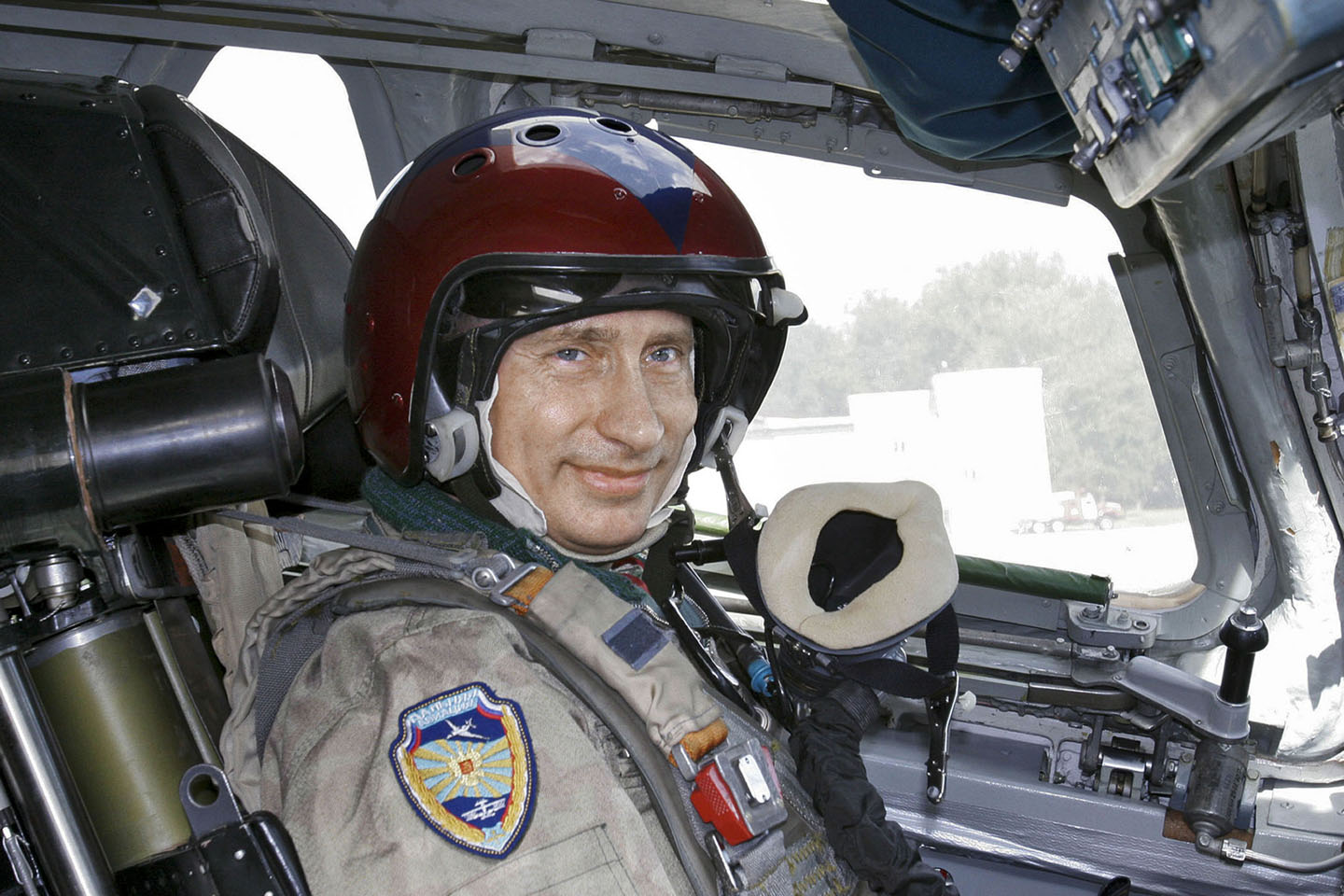
"Now they are talking about the threat from Russia and the beginning of preparations for war with Russia, which, in my opinion, is a kind of political schizophrenia," said Russian President Vladimir Putin

For the first time in almost two years, the opposition in Venezuela took to the streets across the country to demand elections by July 2027. The government organized its own march in the same square on the same day

France is preparing for Saturday's protests with a series of bans on gatherings and an increased police and military presence. The courts have already overturned one ban in Paris, and unions and students are calling for peaceful demonstrations

There is, literally, no difference between the one who claims it is day in the middle of the night, or the one who claims to be a giraffe, from the claims we read on billboards: that Vučić is working to unify Serbs and that Serbia is doing better and better day by day.

The pre-election arrests due to the alleged "overthrow of the state" testify to the regime's panic. The bad news for them is - they can't arrest the whole people who decided to defend themselves from progressive beatings and election theft

The ring that tightens around Ćaciland Student list is getting narrower. Because there are more and more spoiled people who see the false prophet for what he is: a street obscener who is fighting Serbia

The archive of the weekly Vreme includes all our digital editions, since the very beginning of our work. All issues can be downloaded in PDF format, by purchasing the digital edition, or you can read all available texts from the selected issue.
See all




