
The World
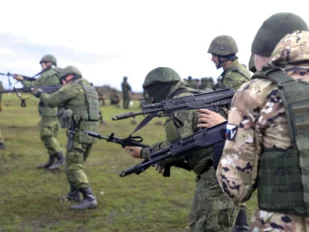
Data leak: More than 400.000 Russians killed in war in Ukraine
Largest ever leak of Russian casualty data shows more than 400.000 Russians killed in Ukraine war
 photo: stevan ristic
The second invitation in two years to the Koktebel Jazz Party, a festival that was held for the seventeenth time in a small town in the east of Crimea, Koktebel, the reporters of "Vremen" decided to turn into a little adventure: we traveled on the newly established Belgrade-Krasnodar airline to then drove by car to Koktebelj and other places in Crimea
"No one has ever come to the festival through Krasnodar," Kristina Ljah from the Center for International Projects of the news agency "Russia of the North", one of the organizers of the jazz festival in Koktebel, will tell us. Two days before our meeting, in the dead of night just before four in the morning at the end of August, an Air Serbia plane landed in Krasnodar. It seemed to take a long time to taxi until parking, and the bus ride from the runway to the international terminal seemed even longer.
The airport building is small, and when you exit it, you have the impression that you have exited the former railway station on Sava Square in Belgrade. Roundabout in front, large parking lot inside the circle together with a taxi rank. Residential buildings are not more than 300 to 400 meters from the airport. Maybe that's why it took so long for the plane to approach the airport building. Stevan and I follow the signs, we try to get to the rentakar agency, we spin on the sidewalk and the roundabout, we don't understand. If it wasn't for a stewardess unlocking the Turkish Airlines office, we wouldn't have realized that we had to enter the building again, to Terminal 1, which serves domestic flights, and look for the agency there.
We take everything out of our pockets again, the luggage is scanned again, we go through the metal detectors again, and when we start taking off our belts again, we are told that there is no need for it after all.
A tired young man is waiting for us at the car rental agency stand. It is already four in the morning, and Igor did not sleep waiting for us. And then we meet the Russian bureaucracy: it took a full 45 minutes to fill out the huge forms for the car, for the credit card, for each driver individually. Three papers for everyone, even though I had already sent them all by email earlier. At that moment we are still not aware of it, but the wait is something that will follow us for the next five days. There is one benefit in all this - we paid for a Volkswagen Polo, and they gave us a bigger, more comfortable and stronger Hyundai i25, known in Russia as Creta, for the same money.
ROAD TO KOKTEBELLI
Around five o'clock, we finally leave the airport and drive through the northern part of Krasnodar in order to get on the road to the Crimean bridge. We are driving through the capital of one of the nine provinces of the Russian Federation called Krasnodar Territory, unofficially Kubanj, after the river of the same name that flows through the lowland between the Black Sea and the Sea of Azov. Krasnodar has about 880.000 inhabitants, Sochi, where the Winter Olympics were held in 2014, has half as many inhabitants, while the most important Russian Black Sea port Novorossiysk has about 270.000 inhabitants. Krasnodar is sprawling, spacious, with wide boulevards and very lively for such an early morning. Incongruous with so many people on the streets is that not a single restaurant is open. The only gas stations open are the ones we're desperately looking for a coffee.
Without coffee, we hit a road that is wider than our standards and quite straight and level. The limit is sometimes 90 kilometers per hour, but mostly it is 70. Like everyone else, we drive faster than the speed limit. The vehicle fleet is better than in Serbia. Mostly Japanese and Korean vehicles are driven, followed by Renault and Volkswagen. There are also many Lada models, many of which we have not seen before. It is rare to come across a vehicle older than 15 years, maybe a Lada Riva. Every few kilometers on the road, a third, middle lane appears, where it is possible to overtake a truck or bus or someone driving according to the rules. As it appears, it disappears, and then vehicles from the opposite direction have their own median lane. And so alternately. However, the 370-kilometer journey from Krasnodar to Koktebel in Crimea took longer than planned.
The environment is fertile. Plains dotted with canals and the rows of trees that follow them. Along the road, harvested fields with huge bales of straw, ripe sunflowers, corn, huge plantations of fruits and vegetables. From time to time, on both sides of the road, large branded stalls with the words "Cuban Fruits and Vegetables" can be seen. The settlements we pass through are surrounded by greenery, the houses are similar to each other, square with a ground floor, a first floor and an attic. All have facades, and most have tin roofs.
In terms of infrastructure, villages and towns are more urbanized than ours in Vojvodina. There are car dealerships, several banks, fast food chains. It seems that quite a number of the population does not engage in agriculture. We stop at some kind of motel, it's early, but we reckon they at least make coffee. A woman is cleaning the garden where the chairs are set up on tables and I guess explains to us that the place is not working. Indeed, at one entrance, the door is additionally blocked from the inside with a metal bar. In the parking lot, several well-groomed old-timers - all Volgas and Muscovites. A little further, a wooden building with large windows in which there is a bakery. Next to it is a bench on which a man is sleeping, and next to him is a stall with fruits and vegetables. In the bakery, which looks completely improvised, they brew several types of coffee. It is staffed by a dark-skinned young man who has probably never seen foreigners before.
There are a lot of tourists in that part of Russia, but not foreigners. That's why it's logical that no one speaks foreign languages - some have no one to go with, and those who can afford a holiday abroad mostly go to resorts that are adapted to Russian tourists. For the rest of our trip, it will remain fascinating to us that no one ever asked us where we were from. Probably, seventy years of communism has unlearned the population from asking any questions.
CRIMEAN BRIDGE
An hour later, we cross the Crimean Bridge, a little more than 18 kilometers long, which Vladimir Putin officially opened driving a truck in May of last year. We continue on the partially built highway that should connect Sevastopol in the west of Crimea with Kerch in the east and further all the way to Krasnodar. The new route of the highway has been installed, and although there are fully constructed sections, traffic only takes place on one half of the road lanes. We speculate that it will wait until the complete highway is built, which will be ceremonially opened by Vladimir Vladimirovich driving a chopper accompanied by Fonza and Surgeon, the leader of the Serbian and Russian biker group "Night Wolves".
In the afternoon, we arrive at the hotel in Koktebel, where the final preparations are being made for the jazz festival, which starts in two days. Koktebelj has not changed compared to last year, even those few hundred meters from the road to the hotel are not asphalted, but driven over broken concrete slabs (see text "Music against sanctions", "Vreme" 1445). As we have a free day the next day, we plan to go to Yalta and Sevastopol.
ROAD TO YALTA
We leave at half past seven in the morning. Soon solid roads through the lowlands of eastern Crimea turn into winding and steep caravan routes covered with patched asphalt. And nature is changing. Volcanic mountains on the coast of the Black Sea separate the Mediterranean climate from the continental climate in the interior of the peninsula. There are more karsts, but also more vineyards.
Even the settlements do not look as fertile and rich as in the Kuban area. Along the coast, there are campsites that don't seem organized. In the town of Morskoe, a huge dilapidated resort towered over the cliff above the road. It is reminiscent of the devastated JNA resort in Kupari near Dubrovnik, with the fact that there were no armed conflicts in this part of Crimea during the 2014 crisis.
A few tens of kilometers later, we reach Alushta, a coastal town through which the longest trolleybus line in the world, Simferopol-Yalta, passes, more than 100 kilometers. It really seems unusual to ride behind a trolleybus on a road that winds through the mountains. It's even weirder that they don't drive too slow at all.
Before entering Yalta, the landscape has already completely changed: everything is green, there are coniferous trees and olive groves, the vegetation is flourishing in contrast to the scorched brown grass on the undulating terrain of eastern Crimea. The mountains around Yalta are even higher, so they prevent the moist air from the Black Sea from penetrating deeper into the land. That is why Yalta has a subtropical climate.
THE SPIRIT OF NIKOLAY KRASNOV

Yalta is a bit reminiscent of Rijeka: it's all in the hills, only with much more greenery. The city is completely oriented towards tourism. It even has its own gondola that connects the coast with one of the many viewpoints on the surrounding mountains. Admittedly, the gondola looks more like a phone booth, I doubt more than two people can fit in it.
On the western side of the promenade, which starts on a hill, there is a monument to Maxim Gorky. Down on the waterfront, a complete tourist offer: from sugar foam to electric scooters. They even have scooters for rent with fat and wide tires, like the kind of choppers for Fonza and the Surgeon.
There is also a monument to the famous Nikolai Krasnov, who was the city architect of Yalta from 1888 to 1899. This Russian architect settled in Belgrade after the October Revolution, where he left a deep mark on Serbian and Yugoslav architecture; among other things, he managed the reconstruction of Njegoš's covenant church in Lovćen. Krasnov also designed a summer house within the imperial court in the village of Livadija, today almost in the city center of Yalta. The famous conference of the three most powerful statesmen at the end of the Second World War, Roosevelt, Churchill and Stalin, was held in that castle in February 1944. Roosevelt proposed that the three meet somewhere in the Mediterranean, but Stalin complained of poor health, so he suggested Yalta. In fact, it is suspected that Stalin was afraid of air travel, so the old and sick Roosevelt crossed the Atlantic to join the conference just two months before his death. That's why Stalin did him a special honor - Roosevelt was the formal host of the meeting, so in the photos the American president is sitting in the middle. Even a few streets in Yalta were given names in English and these names have remained to this day.
There is a huge crowd in the Livadia complex to enter the castle. We estimate that we will have to settle for a walk in the park if we want to reach Sevastopol.
SEVASTOPOL
Sevastopol is the largest city in Crimea, with an estimated population of 340.000, of which 30.000 are Russian officers and soldiers with their families. This hero city was built on settlements from the seventh century BC. When the Russians conquered Crimea in the 18th century, the city was rebuilt and named after Prince Grigory Potemkin.

Although it was destroyed several times, the last time in the Second World War when it was under German siege for more than a year, the central city core has preserved the outlines of the 19th century architecture. Elegant boulevards arc down towards the sea, following the line of the hill on which the city was built in 1783. On the main cape of the city, which is the entrance to a large bay with numerous smaller bays suitable for stationary fleets, there is a monument erected on a rock in the sea, ten meters from the shore , in memory of the sunken Russian flotilla in the Crimean War of 1853–1856. Many sunbathe on the beautifully decorated quay, and swim at the foot of the monument.

Two hundred meters away from the shore is a monumental monument to the defenders of Sevastopol in 1941-1942. Next to it, the names of all ten Soviet hero cities are carved on stone blocks. During our entire trip, we saw at least a dozen cars with Ukrainian license plates. Obviously there is some communication, someone is probably visiting relatives. In a great documentary by Ukrainian director Valery Mansky Relatives the main interlocutors are Valery's mother and two aunts. While the mother doesn't want to comment much on the Russian-Ukrainian conflicts because of the peace in the house, the aunt who lives in Kiev almost completely supports the Maidan movement, while the aunt who stayed in Crimea is completely pro-Russian.
UKRAINIAN SITUATION
The return to Koktebelj two days later took a long time, again on the highway under construction. Some sections are worked on until deep into the night. In Koktebel, we met a Ukrainian waitress. She is twenty years old, she is from Zaporizhia, her name is Anastasia. She is traveling over the summer, she ran out of money, so the day before she started working at
cafe. I ask her if she has problems because she is Ukrainian. He says no, then looks away, thinks a little, then looks at me again with big eyes and says: "It happens once in a hundred situations."
The next morning, our hostess Kristina welcomes us and introduces us to agency journalists Paola from Italy, Chien Kim from South Korea and Jelena Rodriguez from Cuba. There is also my old acquaintance from last year Davor Hrvoj, editor of "Croatian jazz portal" and journalist of "Novi list" from Rijeka. "Where are you in Nashville?" he asks me excitedly. I tell him that Stevan went to that festival. We are going to the first press conference held by the general director of the agency "Northern Russia" and the founder of the jazz festival in Koktebel, Dmitry Kiselyev, and the program director of the festival, Mikhail Ikonikov. One of the Russian journalists asks them why they keep bringing jazz bands from the USA, Great Britain, Germany, France, why they don't sometimes invite a Serbian band. Kiseljev says that quality is their priority and passes the question to Ikonikov, who says that he accepts the remark and will consider inviting musicians from the Balkans in the future.
Let Vasil Hadžimanov and Branko Marković get ready.
Writing about the jazz festival in Crimea and avoiding political and propaganda hints is really not easy. But it is still possible to report on that event without mentioning a single performer, the festival atmosphere and almost anything related to music, a detailed search of the Russian media on the non-English language website the day after the opening of the Koktebel Jazz Party showed. And there was something to write about.
To begin with, 50 tons of different modern stage, lighting and sound equipment were delivered from all over the Russian Federation for over twenty performers, some from Russia, some from Germany, France and the United States of America. All of them had impeccable sound and stage and light support during the three festival days, from August 23 to 25, at the Koktebelj jazz party.
According to the organizers, around 25.000 visitors were expected. The visit certainly did not fail, but that number seems exaggerated. Jazz lovers were placed on chairs on the ground floor, towels and sunbeds on the beach next to him, and on the VIP terrace where journalists had no access: there political officials and representatives of sponsors chatted without paying much attention to the events on stage.
The star of the first evening was the famous jazz trumpeter and composer, winner of six Grammy Awards, Randy Brecker. During his career he has performed with Frank Sinatra, Bruce Springsteen, Frank Zappa and many others - an entire display of the festival could take up listing his successful jazz collaborations. Randy Breaker's furious performance was accompanied by the moody SG Big Band of Sergey Golovnya, the artistic director of the festival. Before Breaker, Dave Jaden Band from Los Angeles, Russian Guru Groove Foundation, led by the extraordinary Tatyana Shamanin, and the KIMM Quartet of Alexey Kuznetsov, a veteran jazz guitarist, performed. The breaks between performances were filled with jazz standards in three hands by pianists Oleg Starikov (his left hand was injured and in a cast) and Alexey Becker.
On the second night, an agile and musically literate audience of all generations had the opportunity to see Nils Walker's German Quintet and the Russian Billys Band (they won the audience award for the evening in a later vote). Then the Sergei Vasilyev Ensemble with guests, singer Sharon Clarke and trumpeter Ted Wilson, inspired interpretations of standards, especially the no. Avalon i The Lady's In Love With You, warmed up the audience well for the anticipated performance of Julia Chicherina and her band.
Singer, composer, actress and poet Yulia Chicherina is a big star in Russia. She is the great-granddaughter of People's Commissar of Foreign Affairs Georgi Chicherin and is politically active: she strongly supports Kremlin policies, often performs at state events and visits the Dombas region, where she happily poses with volunteers, including those from Serbia.
Since Julia Chicherina's greatest hits are in the MTV pop-rock manner, her hits performed at the festival were given their jazz version thanks to the ubiquitous Sergei Golovnya on sax and flute; he played long passages at the beginning and end of each song. It seems they didn't spend too much time rehearsing though. The band's guitarist Mihail Chubatov showed Golovnji who's boss by ending each song with mostly irrational half-solos. The biggest ovations followed the hits Žara and Tu-lu-la. However, since the concert ended after about forty minutes, the audience, dissatisfied with the length of the concert, began to shout angrily: "Give Chicherin!"
"Vremena" reporters missed the last night of the festival due to flight conditions. That's why this review is shorter for a report on the performances of the Danilo Kremer Trio, the French electro-funk group Lamuzgueula, the International Band of Yakov Okun with the support of blues guitarist Selvin Birchwood and, of course, Sergej Golovnya on saxophone.
Largest ever leak of Russian casualty data shows more than 400.000 Russians killed in Ukraine war

At least 11 people died in two chain collisions on the Trakia highway in Bulgaria. 86 vehicles were involved, and around 50 people were injured

The global race in the development of artificial intelligence has boosted Chinese exports. Increasing dependence on foreign markets is straining Beijing's relations with its trading partners
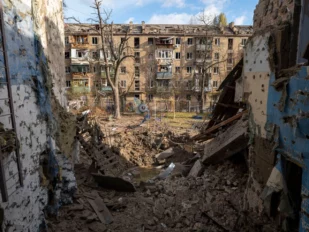
New negotiations between Ukraine, the USA and Russia are planned for November 10 and 11 in Abu Dhabi. This is the first meeting in this format after nine months

A serious accident occurred on Monday at a steel factory near Izmir, when an explosion claimed at least 17 lives. According to the first information of the local authorities, the accident was preceded by the fall of the crane and damage to the gas pipeline

At the moment when the institutions of the Republic are destroyed, when Vučić's octopus is still alive, when people are disgusted by the injustice and the stench left behind by the Essenes regime, we have, as Machiavelli said, only civic virtue as the fuel with which we can return to the beginning

The four independent members of REM are an example of perseverance and civic responsibility. Rodoljub Šabić even, upon leaving the premises of REM, after the sentencing of the Informer, experienced that the Essenes insulted him, hit him with their hands and feet. But that too will soon be over

Vučić pardoned the batterers and Dijana Hrkalović. The election winners should abolish the sultan's power that allows one man to run afoul of the entire judicial system

Time explores: The construction of the St. Sava Temple
Did the money paid by the Government to SPC end up in Moscow through Alta Bank? subscribeThe archive of the weekly Vreme includes all our digital editions, since the very beginning of our work. All issues can be downloaded in PDF format, by purchasing the digital edition, or you can read all available texts from the selected issue.
See all



