Student protests were held in Skopje on Monday, May 18 of Albanian nationality, and the reason was that they are not able to pass judicial exam in Albanian.
Media in North Macedonia they reported that at the same time as the protest, the government there announced that there would be a possibility for the bar exam to be taken in the Albanian language.
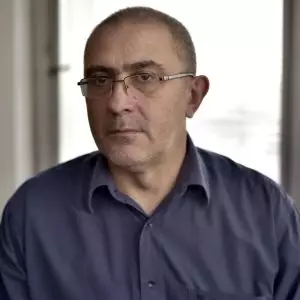
Journalist and analyst from North Macedonia, Aleksandar Srbinovski, described the genesis of the problem for "Vreme", recalling that a group of Albanian students previously took to the streets on April 6 with the same request.
"At the time, our Ministry of Justice clearly said that this was not possible, because the current law does not provide for it, with the assessment that political interests were already visible behind the protests. Unfortunately, that warning was not taken seriously enough, because something much more serious happened on May 18," says Srbinovski.
Without the flag of North Macedonia
He points out that the second protest was completely different from the first.
"There was no Macedonian flag at the rally, only Albanian flags, flags of Albania and the EU, banners written only in Albanian and English. Part of the demonstrators openly chanted 'KLA.' Kosovo Liberation Army is a paramilitary formation responsible for the armed conflict that our country survived and whose consequences we still feel today," says Srbinosvki.
It is particularly worrying, he emphasizes, that the protest was attended by people who arrived by bus from Kosova and from Albania.
"It's no longer an internal student issue, it's a coordinated political pressure that crosses our borders and anyone who seriously follows the geopolitics of the region must clearly see that," assesses Srbinovski.
He states that during the protest on Monday in front of the Ministry of Justice, there was a physical incident between Albanian demonstrators and a Macedonian citizen.
The police detained three people and since then have been continuously monitoring the situation with increased presence.
"Our security institutions showed exceptional poise and professionalism at a very sensitive moment, and that should be emphasized," says Srbinovski.
Changing the law without parliamentary debate
He also points out that he should be direct when talking about who is behind those events.
"DUI - Democratic Union for Integration - the largest Albanian opposition party, which many analysts directly link to the structure of the former KLA, organized these protests, but not out of concern for students, but out of pure opposition calculation. VLEN, a coalition of Albanian parties that is a partner in the ruling coalition, instead of remaining firmly with the coalition partners, took advantage of the situation and jumped on the wave that DUI launched. ZNAM, a smaller party in the coalition whose Minister of Justice Igor Filkov defended to the end legal position and that was a positive and the main correct move in the whole story", explains Srbinovski.
He emphasizes that as a person who follows geopolitics, he is most concerned about the reaction of VLEN.
He states that the Vice-President of the Government of North Macedonia, Bekim Sali, on the same day as the protest was held, May 18, announced from the floor of the parliament that the bar exam and all related exams in the future will be taken in the Albanian language.
He adds that VLEN went a step further, announcing the preparation of legal solutions that would make all professional exams and licenses in Macedonia available in Albanian.
"All this within just a few hours of the protest, without a parliamentary debate, without the opinion of the Venice Commission, without consultation with partners. Anyone who understands how politics works, knows what actually happened here: the coalition partner forced a change in state policy using street pressure organized by the opposition. This is not accidental and it is not spontaneous," points out Srbinovski.
What is important for Serbia to understand
This is where we come to what Srbinovski thinks "is the most important thing for you in the friendly country of Serbia to understand."
"Macedonia is a full member NATO of the alliance and our allies are following very carefully everything that happens here. When I follow the geopolitical picture of the region, I clearly see the following - our alliance will not allow any country that is not a member of the NATO alliance to destabilize Macedonia, interfere in our internal political processes or try to instrumentalize ethnic tensions for their own interests. This is not empty rhetoric. It is a concrete reality that must be reckoned with. "Macedonia is a sovereign state protected by the auspices of the Alliance, and any such attempt may be recognized as direct interference in the affairs of a NATO member," says Srbinovski.
He reminds that the Ohrid Agreement from 2001 guarantees linguistic rights to the Albanian community and that no one in North Macedonia questions these rights.
"But the Ohrid Agreement is not a blank check for circumventing the law under the pressure of the streets, organized and coordinated partly outside our borders. Anyone who does not understand that, does not understand Macedonia or the region we live in," concludes Srbinovski.
Real journalism costs money, and we will not be bought by tycoons and corporations. Support us with a one-time or monthly donation. The time for it is now!