Only 2,5 percent of the total amount of water on Earth is fresh water, but most of it is frozen or located deep below the surface, so only a small part of it is available in rivers and lakes. Exactly that one water it is used for daily life needs and industry.
According to the report Republic Institute for Statistics, in Serbia in 2024 a total of 5166 million cubic meters of water was used, while the percentage of households connected to the water supply network is 88 percent.
At first glance, Serbia is not doing badly. According to the World Population Review website on quality drinking water for the year 2026, our country is in thirty-third place with a quality index of 81 out of 100. According to the same report, Germany, Great Britain, Italy, Finland, Greece and Switzerland have the cleanest water, while Chad has the worst drinking water in the world.

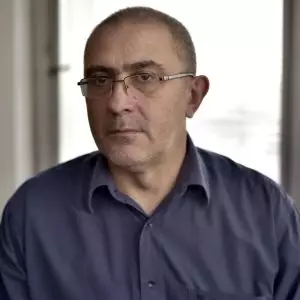
Photo: Zoran DedicBojan Simišić says that the problem in Vojvodina is partly geological, because arsenic often occurs in underground water.
Among the countries in the Balkans, it is ranked best Montenegro with an index of 95,2, while it stands the worst Northern Macedonia with an index of 69,4.
However, the average water quality score does not show the whole picture. In some parts of Serbia, the quality of tap water is not questioned, while in other places citizens have been struggling with this problem for years and buy bottled water.
The problem is prevention.
Bojan Simisic from the organization "Eco Guard" tells "Vreme" that the problem does not always have to be in the current malfunction of the drinking water, but in the absence of serious prevention, which the state does not deal with sufficiently.
He explains that a distinction must be made between water from city waterworks and the state of rivers and other watercourses. When it comes to rivers, the problem is much more visible, he says.
Water from Zrenjanin since 2004 waterworks it was officially banned for use due to the danger to human health. Last year, the Provincial Secretariat for Health repealed the ban on the use of water from the city's water supply. Nevertheless, even today, many citizens do not dare to drink water from the tap, because earlier there were claims that the water was correct, which later turned out to be incorrect.
As Milan Lukić from Zrenjan told "Vreme" last year, after the water purification plant was put into trial operation: "It was a little strange at first. You draw water at the cistern, it turns white, it's no longer yellow. You wash yourself, and the water has no color. The water is no longer yellow."
Source: FoNet/Executive groupWater treatment plant in Zrenjan
Arsenic in water
Simišić says that in Vojvodina the problem is partly geological, because it often occurs in underground waters arsen. However, this does not mean that the problem cannot be solved, but that serious water treatment systems are needed. He adds that the problem with that water is not only that it is not drinkable.
"People write to us that they can't bathe children with that water, because numerous dermatological problems can occur. Drinking water can be bought in a bottle, but you can't buy tens of liters of water every day for people to bathe," says Simišić.
It is at the very top in terms of poor water quality Kula. According to the latest available data from the "Batut" Institute, the water in Kula has "combined defects" - 47,6 percent physical and chemical and 9,4 percent microbiological.
The worst situation is in the towns of Ruski Krstur and Kruščić, where the water has an extremely unpleasant smell due to the increased amount of arsenic and has been prohibited for drinking for more than 15 years.
Pakovraće-Požega: Tunnels that are constantly closing
Although he is the current president of Serbia Aleksandar Vučić back in 2019, he said that the construction of the water factory for these two places will start "immediately", only this year, immediately after the local elections, a contract worth 287 million dinars was signed with the Ministry of Public Investments, headed by Darko Glisic, for the reconstruction of the first 14,3 kilometers of the water supply network.
Bojan Simišić from "Eco straža" says that the poor state of water in Vojvodina does not end with drinking water. Rivers and canals are also polluted, he adds. "In Vojvodina, river watercourses are polluted due to industrial and municipal waste. Not only that Danube, but also the Danube-Tisa-Danube canal. These are flowing landfills," concludes Simišić.
Real journalism costs money, and we will not be bought by tycoons and corporations. Support us with a one-time or monthly donation. The time for it is now!