The fact that the limit of the students' moral pretension is concentrated in procedural slogans is not bad historical taste, but impotence against the hegemonic epochal consciousness, which in Europe is deprived of a social alternative. In this unfavorable context, perhaps too much was expected from the generational breakthrough of students. In the protest, the unregulated insatiability of the government was strongly marked, but not the insatiability of gaining profit. Although they are closely intertwined, this second stigma is not found in student slogans. The moral compass has shifted to the right, towards procedure. Students are not responsible for that. In the world, the pendulum has shifted to the right
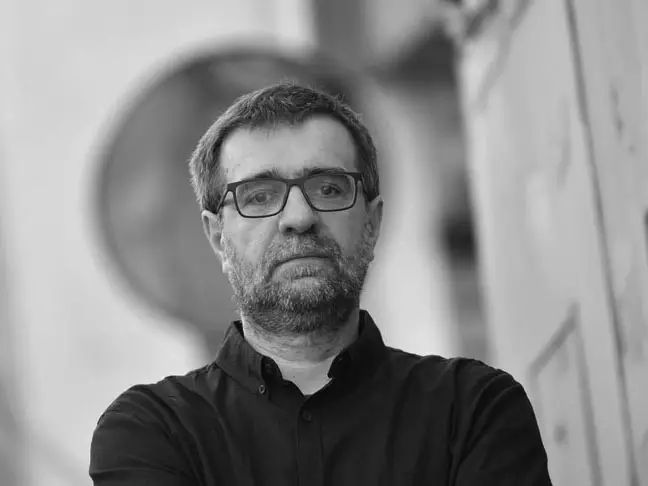
...Todor Kuljic
Character is changing. student protest, it is less and less student, and more and more civil. The protest is not threatened by politics but by generational ephemeris. The balance of power is also changing. The resistance does not weaken, but its generational component weakens. It strengthens the violence of the regime, but also weakens the non-violence of the protest actors. Plenums and non-violent performances are extinguished, and fights spread in the streets. Does the government lightly impose its own culture on the resistance or does it learn from the resistance? Everyone is mobilizing the masses in the streets. The Caesarist leader is trying to strengthen the plebiscite base. Buses and sandwiches. On the other hand, the resistance is slowly losing its authentic generational character. Weak, eruptively manifested combination of new experiences and expectations of young people... There is less and less student resistance, and more and more civil resistance. If there is a change, it will be a change of political parties. Not social, not generational. Why?
The peak of criticism of the protest was, admittedly, directed from the very beginning against corruption, political, state and party, and not systemic economic. The government is primarily to blame, not the tycoons and investors. It did not go beyond the political sources of evil. The ceiling of resistance was political. Plenums did not question the laws based on private interests, but, on the contrary, the disputed violation of these laws centered around party corruption. In other words, the students saw corruption more as a moral rather than a metamoral systemic problem.
"DON'T TRUST ANYONE IN AUTHORITY"
In the protest, the degree of exceeding the morally permissible is economically low, and procedurally high. Perhaps also because the protest was the result of various dissatisfactions. It was more of a community of problems and less of a community of solutions. Probably also because, in the appearance of universal permissibility, today there is no charm of the forbidden fruit that would more provocatively integrate the group into the protest. Everything is under the attack of permitted criticism from the president of the state to the patriarch. There is no verbal tort or risk that adds morality to identity in resistance. The regime responds banally, with conspiracy theories, warns of enemies from outside. The height of the regime's cynicism is the new assessment that the Novi Sad tragedy is also a diversion of the colored revolution. Society is deeply divided, and networks are creating a digital civil war. Networks and media are commissioners of hate. The opposition less than the regime because they are weaker. Is non-progressive instability and repressive tolerance at work?
Only partially and to the extent that the students in the protest are less and less visible, which testifies to the erosion of generationalism. And about the limitations of the protest step forward despite the fact that the resistance does not falter. Older newcomers are accepted more and more easily, there is no original anti-gerontocratic habitus of young people. The student identity in the resistance is emphasized differently. The generational "Don't trust anyone over thirty" was replaced by the political "Don't trust anyone from the government". In the impressionable student phase (between the ages of 17 and 25) one often feels disappointment and delusion of the old. Identity is created in resistance. The result of this resistance is not only the long destabilization of the regime. The normalization of right-wing extremism in Serbia has been stopped. The protest is the strongest blow to Sešeljism so far. Is it a little?
The street has become an institution, a public space of undisguised engagement. Resistance and anger, but also accompanying hooligans. A new subcultural generation is recognized in the visual symbols of protest and in carnivalization. New irony and wit. But it is only a formal distance from the elders, because there is no substantive, economic one. It is an intergenerational thing, because it only tries to bring the chaotic experiences of the participants into step with a symbolic ritual. Making resistance active means, first of all, homogenizing expectations.
YOUNG AND OLD
The resistances of various generations (heroic, political, cultural) are radical to varying degrees. Subcultural performative resistance is conspicuous among students because it is not about overcoming normalized social differences. The middle-class ideology that pervades this resistance is honest capitalism. Because there is no forbidden fruit in neoliberal repressive tolerance, there is no new beginning or new values in the student resistance. The resistance to corruption is strong but not economically radical, so it is not an authentic generational new beginning. The tragic event in Novi Sad was not epochal enough to give a new ideological color to the protest. He was provocative and operationally active, but not ideologically radical.
And yet, despite the absence of an authentic new beginning, an important breakthrough in the region is the anti-nationalism of the protests. It's not a small thing. It is less important here that newly arrived citizens and various disaffected converts are diluting the generational breakthrough. There is always that in mass riots. The exclusivity of the experience is not only in its long duration, but also in breaking the ethnomoralism of the elders. Although the effect of the student protest is a deepening division between the authorities and the citizens, there is no anti-gerontocratic resistance in it. Accepting the social vision of the elderly is anti-generational. The plenums, admittedly, did not allow the presence of professors when making decisions, but the old and the young were mixed on the street.
Resistance to social differences remained in the background of the protests, not only because the left is weak today, but because the negative assessment of the regime united various class dissatisfactions. The desired vision of society remained undeveloped. Students did not abandon the social vision of the previous mass generation. Honest capitalism was first brought to Serbia by the restorative political generation from 1989, and it was supplemented by the next one from 2000. To topple the communists, the rest will be easy. The dream of owning a middle-class store quickly disappeared, tycoons and brutal privatization arrived. Despite the disillusionment with the honesty of renewed capitalism, the vision of a new alternative social economy did not break through. Because anti-corruption occupied the charm of morality while the economy was understood as amoral. Capitalism is a necessity, outside of it there is no vision of the future or the possible.
What is it, there it is. But there is no true generational breakthrough where current teleology is not problematized. The new normal of capitalism is the rest of your life. It's not ideal, but it's realistic. Forget the ideal. Take it realistically as a great opportunity in a time of great risk. That's why it's not capitalism that's wrong, but its corrupt version.
A WORLD DEPRIVED OF SOCIAL ALTERNATIVES
Student slogans show the discursive strongholds and limits of their hope. Not the power of the regime but the power of the neoliberal production of meaning. It is not unrealistic that students are not capable of exceeding it. The fact that the limit of the students' moral pretension is concentrated in procedural slogans is not bad historical taste, but impotence against the hegemonic epochal consciousness, which in Europe is deprived of a social alternative. In this unfavorable context, perhaps too much was expected from the generational breakthrough of students. In the protest, the unregulated insatiability of the government was strongly marked, but not the insatiability of gaining profit. Although they are closely intertwined, this second stigma is not found in student slogans. The moral compass has shifted to the right, towards procedure. Students are not responsible for that. In the world, the pendulum has shifted to the right.
If students are epochally helpless, aren't those who warn them moralists? "Leave anti-capitalism, we need to overthrow the corrupt government." Although harsh, this admonition rings quite realistic in a world devoid of social alternatives. Students are not responsible for their own amputee's different future. There is no alternative Berkeley, Berlin and Sorbonne like in 1968. The amputation of the alternative is global, so Serbia has been deprived of an authentic new social beginning for generations. Although young people consider their own expectations important, their future does not exceed the present of their elders. There is no social opposition of sons to fathers. The fall of the canopy was a tragic event, but not a historical turning point.
In the student ranks, there is no coincidence and cumulative reinforcement of the historical turning point and the formative era of development, there are no conflicting values and no epoch-making supranational historical event. Profit is not a sin for them, nor is the church backward. It all revolves around the narrow antithesis between justice and corruption within a normalized capitalism that is not inherently dishonest. In the new sense of peers, what is still unrealized is also capitalism. The social new did not jump out of the tracks of the old. This unsurpassed limit of social criticism is not enough for a generational breakthrough. Which, of course, doesn't mean that the student resistance isn't an important effort of another kind.
What is happening in the country and the world, what is in the newspapers and how to pass the time?
Every Wednesday at noon In between arrives by email. It's a pretty solid newsletter, so sign up!
"3 Nuts Seeds", "List your favorite 3 flavors", "THREE toy storage systems"... Are well-known brands in Serbia discreetly telling customers to circle the number three on the ballot on October 25?
This media experiment on live people actually violates ethical norms. Hardly any social psychologist would be licensed or have the conscience to conduct it on subjects, regardless of their consent with compensation. This is being done to us without our consent and for nothing
Young people are preparing, they are organized, they don't stop working and learning, they seem energetic and almost invincible. Among the elders there are doubts and fears despite their wishes, concerns accompanied by references to earlier experiences, as if it were not obvious that these student protests were organized and led better than any so far
There is, literally, no difference between the one who claims it is day in the middle of the night, or the one who claims to be a giraffe, from the claims we read on billboards: that Vučić is working to unify Serbs and that Serbia is doing better and better day by day.
The pre-election arrests due to the alleged "overthrow of the state" testify to the regime's panic. The bad news for them is - they can't arrest the whole people who decided to defend themselves from progressive beatings and election theft
The ring that tightens around Ćaciland Student list is getting narrower. Because there are more and more spoiled people who see the false prophet for what he is: a street obscener who is fighting Serbia
The archive of the weekly Vreme includes all our digital editions, since the very beginning of our work. All issues can be downloaded in PDF format, by purchasing the digital edition, or you can read all available texts from the selected issue.