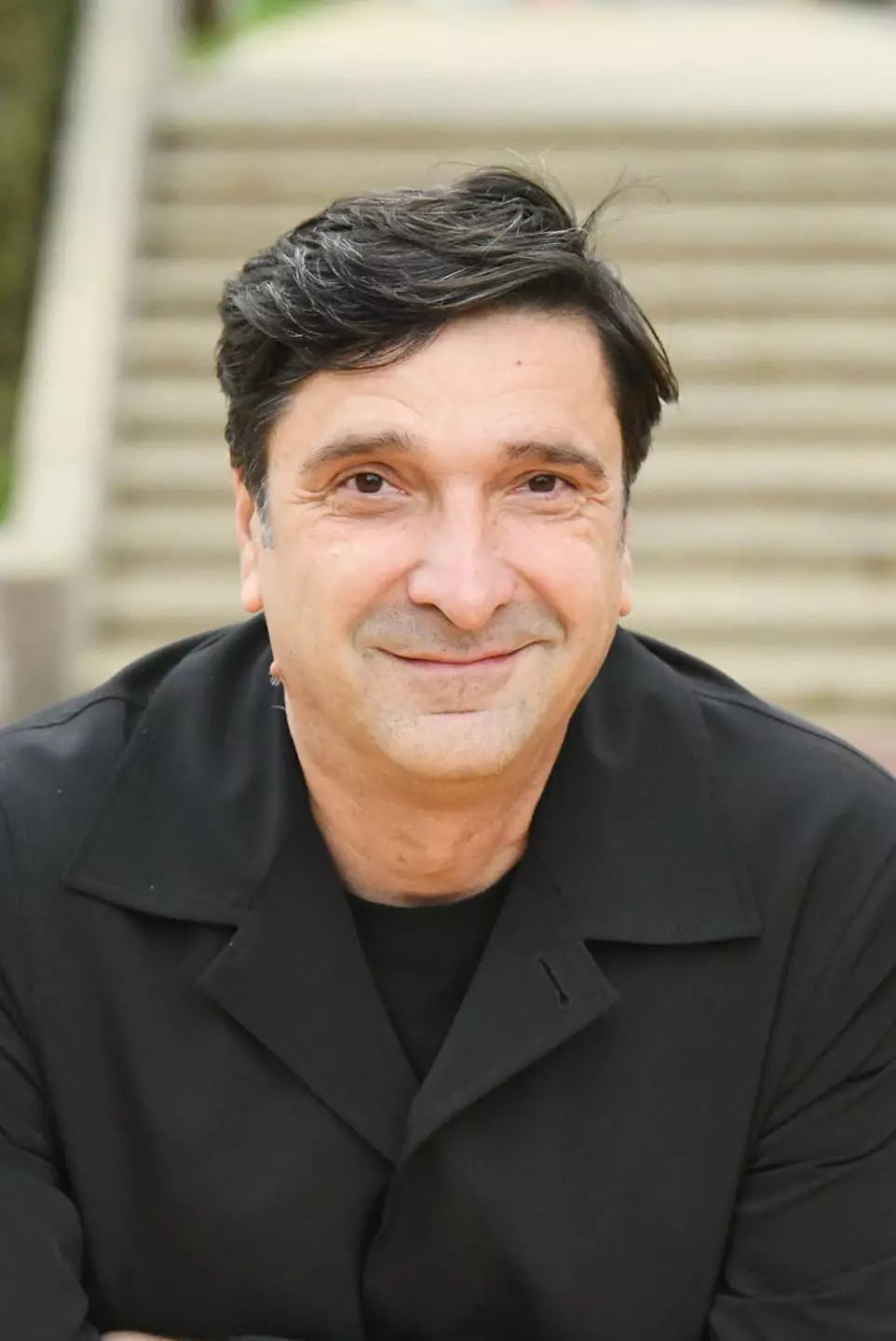
...Velimir Petrovic
"We shape our buildings, and then they shape us." These words of Winston Churchill were quoted by John Roberts, Chief Justice of the US Supreme Court, in a separate opinion regarding the dispute over the construction of a new ballroom in the White House complex. On August 31, 2026, the US Supreme Court ruled on this legal dispute. That decision opened up a question that at first glance has little to do with environmental protection: what is the connection between Donald Trump, the construction of a ballroom and the right of citizens to control the actions of the government?
The connection is more immediate than it seems at first glance. Environmental problems around the world often boil down to the same question: How can citizens and organizations influence public authorities to obey laws, protect the environment, and preserve common cultural assets? One of the most important ways is to initiate administrative and judicial proceedings to control the work of public bodies - whether it is the president, the government, the ministry or another body that has public powers. The goal of these procedures is not only the protection of individual or collective rights and interests, but also the prevention of arbitrary actions by the authorities. That is where the courts should intervene.
WHAT IS THE BACKGROUND OF THE SLOW MOTION??
The White House is not only the official residence of the President of the United States of America. It is one of the most recognizable symbols of the American state. Unlike the monumental palaces of European monarchies, the White House was not conceived as a symbol of the ruler, but as the seat of an institution whose power rests on the citizens. This departure from the monarchical tradition is one of the foundations of the American political identity.
As President Theodore Roosevelt said back in 1902, "the dignified simplicity of its architecture is an expression of the character of the time in which it was built and is in keeping with the purpose it is intended to serve. It is well to preserve such buildings as historical monuments which keep alive our sense of continuity with the nation's past."
In October 2025, President Trump's administration began a project to replace the East Wing of the White House. The first phase of the project included the demolition of the existing building, which was completed in December of the same year. After that, the construction of the new East Wing began, with an underground military facility and an above-ground ballroom.
The National Trust for Historic Preservation filed a lawsuit in federal court asking for a temporary halt to the work. The courts temporarily prohibited the continuation of work on the construction of the ballroom. The government then asked the US Supreme Court to temporarily suspend the ban while further proceedings are pending. With this decision, the Supreme Court accepted that request, so construction can continue. However, the court did not decide whether the project was legal or whether the president had the authority to demolish the East Wing and build a new building without express approval from Congress.
Although this case is not about classic pollution or destruction of nature, it raises the same question that arises in many environmental disputes: who can ask the court to review whether the government is acting in accordance with the law?
WHO CAN ASK FOR PROTECTION BEFORE THE COURT?
This question, only apparently technical, is extremely important. Does a certain person have the capacity to participate in the procedure in which he challenges certain actions of the state that he considers to be illegal, that is, can he be a prosecutor?
Simply put, it is not enough that someone disagrees with the government's decision. The plaintiff must show that the decision really, personally and directly affected him, that is, that there is a relevant legal connection, and that the court decision could protect his legal interest. This rule has an important role. In a system of separation of powers, courts should act as courts and should not decide every political disagreement or be a place to settle general social and ideological disputes. Their role is to protect specific rights and interests when there is an actual injury or the risk of it occurring. That is why the right to access the court is not completely unlimited.
This rule becomes especially important when the damage affects the environment, public space or cultural property, as values that belong to everyone, but cannot go to court on their own. Then the question arises as to who can protect them. These can be citizens who live near the endangered area or use it regularly, but also organizations whose members have a direct connection with that area or are designated by statute to deal with, for example, environmental protection.
In a famous Swiss case before the European Court of Human Rights, which related to the consequences of climate change, the proceedings were initiated by "KlimaSeniorinnen Schweiz", an association of elderly women living in the Alps. The court accepted that an association can demand the protection of its members from the consequences of climate change, although individual applications from members outside the association were not accepted in the same way. In Serbia, a similar approach was applied in the case of the construction of the gondola on Kalemegdan, when the Administrative Court accepted that the organization RERI could seek the protection of cultural property and the environment, and in the case of the Sava Embankment, citizens who live in the vicinity of the embankment and for whom its damage could directly threaten safety, property and flood protection showed a direct connection with the project.
In the case of the White House, that role has been taken on by the National Trust for Historic Preservation and Trustee Alison Hougland.
WHAT HAPPENED IN THE WHITE HOUSE CASE?
The Supreme Court has preliminarily concluded that the National Fund probably does not have a sufficiently specific and immediate connection with the project to require protection in federal court.
The court did not deal with the question of whether the demolition of part of the White House and the construction of a new hall are legal, but focused exclusively on the formal legal question of whether the plaintiff can file a lawsuit. Although he did not rule on the legality of the construction, it is almost certain that it is not in accordance with the law, which even the conservative judges spoke about. Federal law prohibits the construction of a building or other structure on a federal park or public land in Washington without express authorization from Congress. Congress gave no such authorization for this project. Therefore, the construction works are not in accordance with the law.
What was the subject of the court's decision was the question of whether Fund member Alison Hougland proved a personal and sufficiently specific injury. She stated that she regularly visits the surroundings of the White House and that the new building, due to its height, scope and appearance, would cause aesthetic, cultural and historical damage. However, according to the majority, such displeasure constituted only "offense, disagreement, or revulsion," and not an injury that would have allowed her to initiate proceedings in federal court.
This decision contradicts the previous decisions of the court, such as Lujan v. Defenders of Wildlife. The Supreme Court then stated that a person's desire to see a certain animal that is an endangered species, such as e.g. a crocodile, even for purely aesthetic reasons, can be the basis for a person to acquire the capacity to participate in court proceedings.
In another case, Friends of the Earth v. Laidlaw, the court accepted the right of citizens to initiate proceedings because, due to the pollution of the river, they stopped fishing, swimming, camping and organizing excursions in the place they used before. Their connection with the endangered space was immediate and based on the actual use of the river. The court created a certain paradox here, where "a person's desire to see a crocodile" is the basis for access to the court, while "a person's desire to see the White House" is not - even when it comes to a person whose professional and personal life has been connected with the protection of historical architecture for decades.
Although the court did not decide on the question of the legality of the construction, it decided on the question of who can dispute the legality of the construction in court proceedings and took the position that almost no one can.
FROM THE WHITE HOUSE TO THE SAVA DAM
In the case of the Sava embankment in Belgrade, a similar legal question was raised before the court, where a group of citizens from the New Belgrade blocks asked the Administrative Court to temporarily stop the work while the proceedings are ongoing. The court found their connection to the case in that they live in close proximity to the embankment and that its damage could threaten their safety, homes, environment and flood protection. It was not about people who opposed the project only in principle, but about citizens who could concretely feel its consequences. That is why the Administrative Court, by its decision of April 27, 2026, temporarily postponed the execution of the works, assessing that the damage caused by their continuation would be difficult to remove later.
These two cases show how important the question of who can claim judicial protection is. In the case of the Sava embankment, the court recognized the immediate connection of citizens with the space and the possible danger to their safety and property. In the case of the White House, the majority of the US Supreme Court considered that the professional, personal and aesthetic interest of the architectural historian was not specific enough.
That's why the previous case is not important just because of the White House. From rich America to poorer Serbia, when we protect the public interest, the environment or cultural assets, we face the same fundamental question: who can come to their protection when the government threatens them? The answer to that question depends on whether the laws will really be applied, whether justice will be available and whether the government will be under real control. The right to access the court cannot belong to everyone, but its rules must not be set in such a way that nature, public spaces and cultural assets remain without someone to defend them. If no one can represent their interests, injuries can go without legal redress, justice for public goods becomes unattainable, and government remains virtually without real control.
The author is a project manager at "Yukom"
Real journalism costs money, and we will not be bought by tycoons and corporations. Support us with a one-time or monthly donation. The time for it is now!