Prevention Agency corruption is, by law, among the main guardians of integrity in Serbia. However, it was established to put the Anti-Corruption Council in a bind. It never fulfilled its function.
Examples of how the Agency functions are the ways in which director Dejan Damnjanović was elected in 2023, then the relationship between the director and the Council of the Agency, as well as the consent of the Council of the Agency to the director to simultaneously perform the function of director of the Agency and representative of state capital in Yugoslav river shipping.
It is no longer enough to ask how much corruption is present in Serbia, but the Agency for the Prevention of Corruption, i.e. its director and the Council of the Agency, should be put under scrutiny.
INTERESTS AND RELATIONSHIPS
The collapse of the integrity of the Agency for the Prevention of Corruption began before Dejan Damnjanović was elected as the director of the Agency on February 27, 2023. However, it should be known that he has been in the Agency since its establishment, in various positions - from the head of the Department of Registers, through the head of the office of the director Tanja Babić, to the assistant director of the Agency during the directorship of Dragan Sikimić.
BIRODI (Bureau for Social Research) on December 28, 2022, requested the cancellation of the interview with the candidates for the director of the Agency due to the conflict of interest of two members of the commissions appointed by the Judicial Academy with the task of preselection of candidates and forming a list of candidates for the director of the Agency which Ministry of Justice submitted to the National Assembly, from which the deputies elect the director of the Agency.
It was about Marko Jocić, judge of the Court of Appeal in Belgrade, and Ljubivoj Đorđević, public prosecutor in the First Basic Prosecutor's Office - they simultaneously had the status of public officials. Thus, as candidates for the director of the Agency, which takes care of the implementation of the Law on Prevention of Corruption in the Part of Public Officials, including judges and public prosecutors, the public prosecutor and judge found themselves in violation of the Law on Prevention of Corruption in the Part of Conflict of Interest.
It should be added that the competition was conducted under the radar of the public. That is, only five candidates applied for it, among whom were the then director Dragan Sikimić and his deputy Dejan Damnjanović, a duo during which, from 2017 to 2025, Serbia fell by eight points on Transparency International's Corruption Perception Index, i.e. by 39 places and reached the 116th place out of 182 countries. Damnjanović was elected as the director and thus the question of who controls the director of the Agency is open.
Namely, we come to Steve Bajić and Tamara Mišić, who entered the contest for the member of the Council of the Agency from the position of employees of the Agency. After the pre-selection of candidates, they were elected as members of the Council by the decision of the deputies. Thus, members of the Council become previously employed in the Agency, whose function is to supervise the current and potentially future director.
The same situation is repeated in 2026. Stevo Bajić and Tamara Mišić were re-elected as members of the Council of the Agency. They were joined by Predrag Knežević, previously employed at the Agency, which resulted in a two-thirds majority of Council members who were previously employed at the Agency and who can return to the Agency after the end of their mandate. From the point of view of Article 40 of the Law on Prevention of Corruption, the newly established two-thirds majority leads to blocking the work of the Council when decisions are made about the director.
This is supported by the Agency's response, which shows that the Council did not determine a possible conflict of interest between the director and its members, who were previously or may be employed again in the Agency, which did not apply Article 40 of the Law on Prevention of Corruption. Such practice is confirmed by the Council's decision signed by Stevo Bajić, which gave Damnjanović permission to, in addition to the position of director of the Agency, also hold a public office in the Yugoslav River Shipping Company, with the explanation that there is no relationship of dependence, superiority and control between those functions.
It is indicative that the Council members did not notice that the Director of the Agency supervises public officials from among the members of the Government of the Republic of Serbia and the relevant Ministry of Economy who appointed him to a position in the Yugoslav River Shipping Company and that the Director thus entered into a conflict of interest, as defined in Articles 40 and 41 of the Law on Prevention of Corruption.
All this was the reason that on August 18, 2026 BIRODI requested the dismissal of director Dejan Damnjanović and members of the Council, who are considered to have enabled the director to perform two public functions in parallel, contrary to the Law on Prevention of Corruption. The National Assembly, more precisely, the Parliamentary Committee for Justice, State Administration and Local Self-Government was obliged to initiate the procedure for the removal of the director and members of the Council who gave their consent to the two public functions.
This is not the first request of this kind. The parliamentary committee, led by Uglješa Mrdić as the chairman of the committee, in May of last year rejected the initiative of the then deputy Tijana Perić Diligenski that, on the same basis, the deputies of the National Assembly should replace Damnjanović.
Damnjanović earned the protection of SNS MPs by his inaction when it comes to the election process, primarily the violation of official campaigns and the abuse of public resources, as evidenced by the reports of the ODIHR observation mission, but also for his failure to respond to systemic violations of Article 40 paragraph 1 of the Law on Prevention of Corruption Outside the Election Campaign by the President of the Republic, who uses his public office to raise the rating of the party of which he is only a member. The report on what the President of the Republic did during the last local elections was submitted to the Agency, which did not react.
CANOPY AND AUTHORITIES
The agency remained silent in the case of "Nadstrešnica" until almost when it started to check the property of Goran Vesić. The tragedy at the railway station in Novi Sad opened up a question that remained in the background, and that is - what could the Agency for the Prevention of Corruption have done in this case. Namely, the Law on the Prevention of Corruption gives the Agency the authority to initiate proceedings for violations of the Law, decide on conflicts of interest, check the property and income of public officials, but also to investigate the state of corruption and analyze the risks of corruption. It is precisely the last authorization that is particularly significant for the "Canopy" case.
The Agency's legal obligation was to determine, upon learning about the "Canopy" case, and to indicate to the public, as well as to the competent state authorities, how the Ministry of Construction, Transport and Infrastructure and the Railway Infrastructure of Serbia developed and implemented integrity plans and whether their poor development and/or implementation led to omissions that could (in)discretely affect the processes and procedures of the reconstruction of the Novi Sad Railway Station.
Namely, in this way, the Agency could open the question of the integrity of the entire process of reconstruction of the Railway Station, as well as address the Commission of Inquiry and request its reports, all with the aim of making its own case. Such an analysis was supposed to provide information on who made the decisions, under what conditions the works were contracted, how contractors and subcontractors were chosen, how costs and contract changes were controlled, who performed supervision, what was the responsibility of public officials and whether there were private interests that could influence the performance of public functions.
Furthermore, the Agency could check whether the public officials who participated in the decision had business, ownership or other private interests connected to the companies involved in the project. She could check their reports on assets and income, as well as data on legal entities related to officials and their family members when there are legal conditions for it. In particular, she could examine conflicts of interest. This does not mean to claim in advance that a conflict of interest existed, but to check whether a public official participated in making a decision in a situation where his private interest could influence, appear to influence or is connected to the performance of a public function. The independent verification of such circumstances is one of the basic functions of the anti-corruption body.
The agency also did not have to wait for the final conclusion of criminal proceedings to analyze the system's corruption risks. Individual criminal responsibility and institutional integrity are not the same issue. The Prosecutor's Office investigates the existence of a criminal offense, and the Agency determines whether the decision-making method and institutional procedures create room for corruption. And then to recommend measures to eliminate those risks.
The tragedy was all the more reason for the institution in charge of preventing corruption to offer the public its own answer to the question of whether the system in which the project was implemented had functioning integrity mechanisms or whether it contained corruption risks that remained without institutional control. That is why the role of the Agency in the "Canopy" case could be summarized in one question that is broader than the criminal responsibility of the individual - whether corruption risks, conflicts of interest, non-transparency of decision-making or weaknesses in institutional control could affect the way in which the reconstruction of the railway station was contracted, financed, carried out, supervised and controlled. That was a question for an institution that has the task of preventing corruption in its name.
The Serbian Progressive Party came to power, among other things, by blatantly abusing 24 reports of the Council for the fight against corruption, and it owes its survival in power to the "passive" Agency for the Prevention of Corruption, whose leaders are allowed to break the law and Serbia's decline on all international lists that measure what is being done in the field of the fight against corruption. Thus, Serbia has become a society in which the fight against corruption is carried out, because Serbia has chosen the path of corrupt growth, a path that is short-sighted and serves to legitimize personal power. Graphically, on one side, Verica Barać and the Council for the fight against corruption, and on the other, Dejan Damnjanović and the Agency for the Prevention of Corruption.
The new amendments to the law did not resolve the issue of conflict of interest in the selection of the Council and directors in the part of the competition commissions, i.e. the regulation under which conditions employees from the Agency can be members of the Council. It's not all about laws, but laws show intentions.
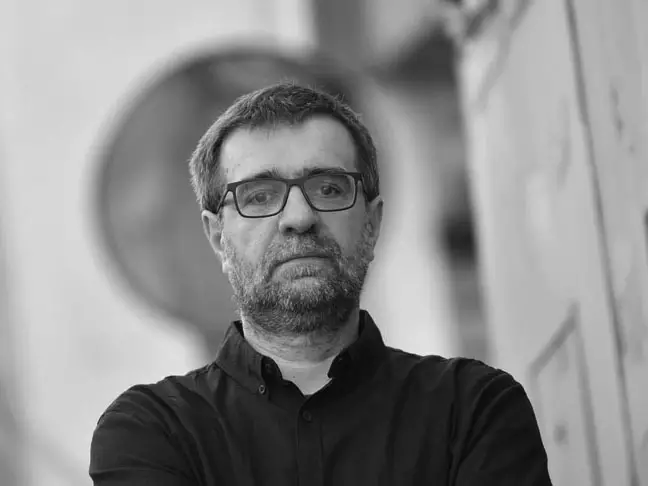
Zoran Gavrilović is the executive editor of BIRODI
Real journalism costs money, and we will not be bought by tycoons and corporations. Support us with a one-time or monthly donation. The time for it is now!