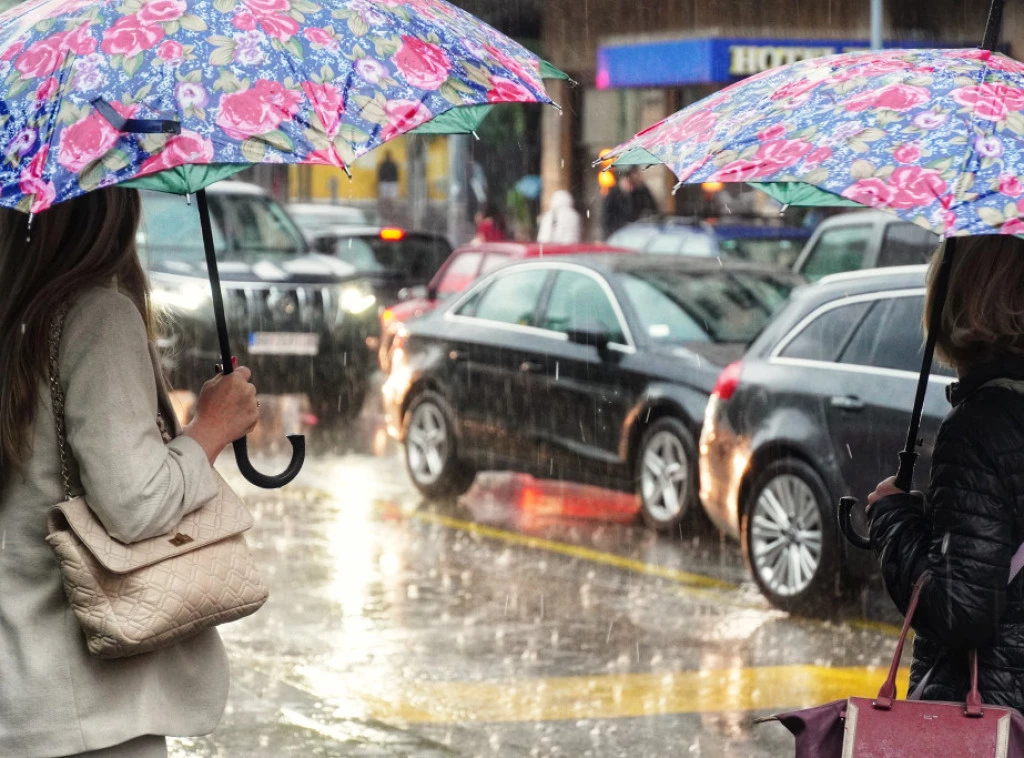
A vacation on the North or Baltic Sea, a child's birthday in the garden or a city party on the street? In the past weeks in Germany, it was mostly hindered by showers and storms, writes Deutsche Welle.
In contrast, in the Balkans, Turkey, Italy or Spain, temperatures reached 50 degrees Celsius, which was followed by droughts, forest fires and heat warnings.
However, it is interesting that an unusual heat wave was also recorded in the north of Europe in July. Not far from the Arctic Circle, there have been 13 consecutive days of extreme heat - "a precedent since weather records were kept," writes the German Meteorological Service (DWD).
How "normal" has this summer been so far?
Looking only at temperatures in Germany, both June and July were actually warmer than usual.
Meteorologist Martin Good of the German public service ARD gives the example of the island of Sylt: there was a lot of rain, but temperatures were around 19 degrees - warmer than the average for the period 1961 to 1990.
That time frame, which was still relatively little affected by global warming, is considered the international reference period. It was also warmer than usual in many other parts of Germany.
A lot of gray, a lot of rain
Despite slightly higher temperatures, there was an autumn atmosphere: Germany experienced significantly above-average precipitation in July 2025.
On average, 114 liters of rain fell per square meter – almost twice as much as in the reference period 1961–1990.
The sun also appeared less often - only 189 hours instead of the usual 211. Instead, gray skies dominated, which was quite gloomy during the school holidays.
"Omega-vis" remains stuck
One of the reasons are the two high pressure areas that almost surround Germany, so the rainy weather remains "trapped" - experts call it Omega-vis, because its shape resembles the Greek letter omega.
However, Martin Good emphasizes that July and August in the German valleys are among the rainiest months of the year. And the rain certainly brought relief, because the spring was very dry.
The fact that the rainy July in Germany is perceived as if it was not a summer month at all, according to meteorologist Good, has to do with the fact that the previous summers were "abnormally" warm, almost Mediterranean: "Frankfurt then had a climate like Marseille."
Climate change is affecting the weather – it's as clear as day this summer – especially due to the large differences across Europe. That impression is probably clouded precisely because of a lot of rain and little sun.
"Because, what you can't see in your own backyard, as well as not happening - so global warming is not with us at the moment. But actually everything fits perfectly into the bigger picture," claims Good.
Climate change favors extremes
Heavy rains in Germany, forest fires in the south - these big differences have existed for years. The Max Planck Institute for Meteorology researched the so-called North Atlantic Oscillation (NAO). The NAO is an atmospheric circulation that affects the weather in Europe, and there are positive and negative NAO phases that affect the weather differently.
Global warming is causing stronger and more extreme phases of the NAO, causing more extreme weather events in Europe.
For people in the Mediterranean area, this means more heat waves, says Kuan Lu of the institute. This increases the risk to health, especially for older people who cannot cool down enough during several days of heat.
The consequences for Germany are usually heavy rains, which especially burden urban areas covered with asphalt. The European Environmental Protection Agency also points out that such events will become more intense and frequent due to climate change, and are already causing damages in the billions of euros.
The rainy days may soon be behind us: Omega-vis is moving eastward and will soon give way to the Azores Dome. She should bring high temperatures to Germany.
"In three weeks, probably no one will remember rainy July," says meteorologist Good.
Big summer discount on "Vreme"! Just click here, choose a subscription and support the editorial staff in their independent work.