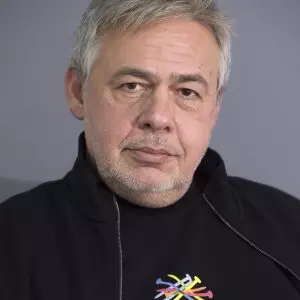
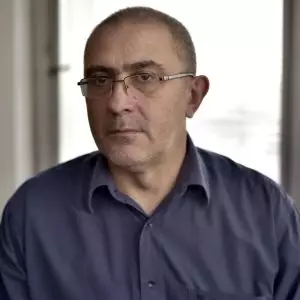
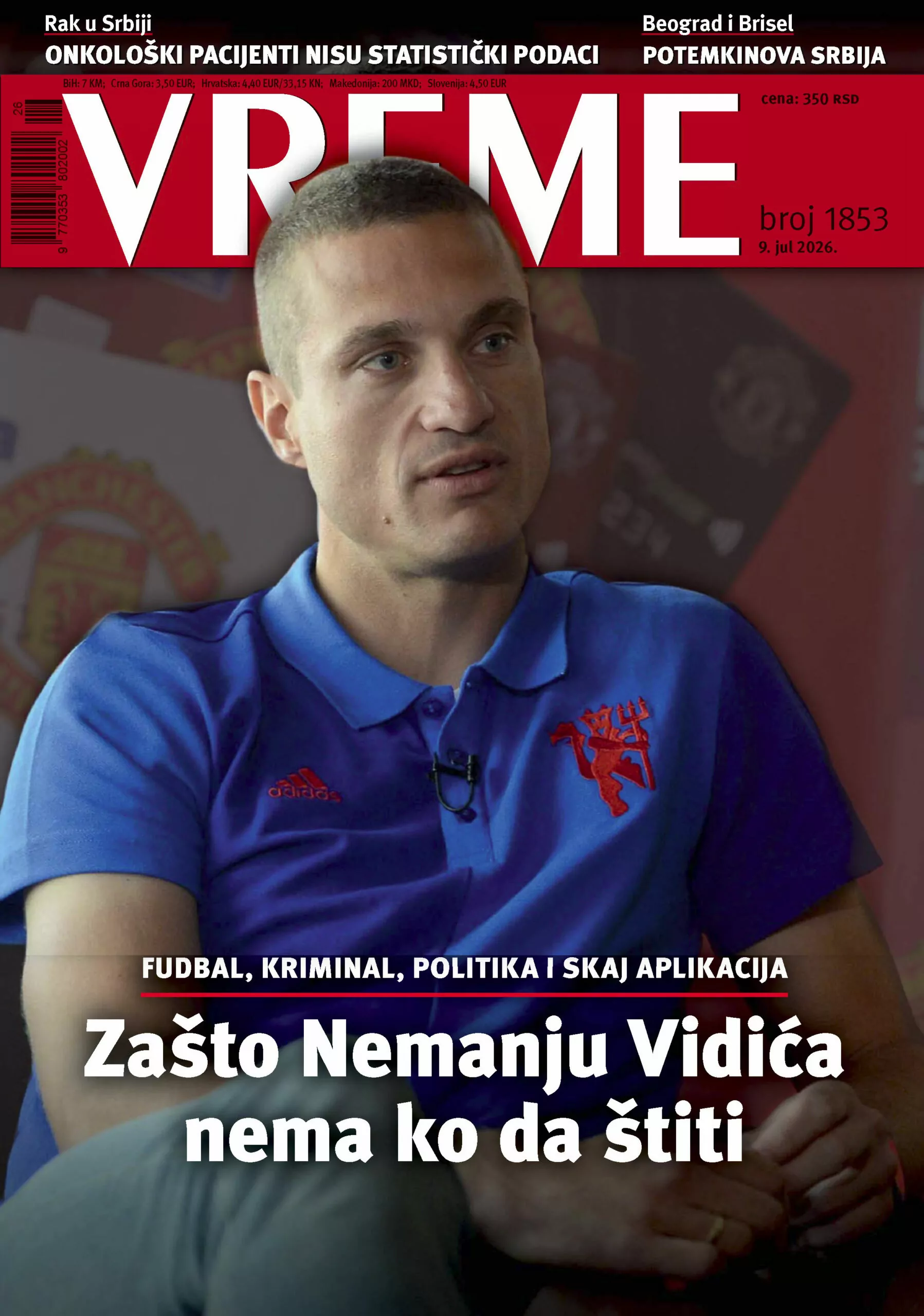
While numerous football associations in recent days, after successful performances at World Cup, reap the fruits of good work and organization, u Football Association of Serbia another strictly controlled election for executive bodies is being conducted, all with self-praise and re-election of officials, as if it were a very successful organization and rarely capable personnel. But what is the situation in our football and who are the people who lead the associations and clubs, their organized silence on the occasion of Crik's discovery that the former president of the FSS Slaviša Kokeza, in cooperation with local and Italian criminals, was preparing the beating of Nemanja Vidić - crowing, as he called it in deciphered sky messages.

photo: strahinja aćimović / tanjugWHEREVER WE PLAY - WE WILL LOSE, BUT THAT'S WHY WE WILL HAVE A NATIONAL STADIUM: A. Vučić
THE CONSEQUENCES "PAJSER BRIGADE"
Ever since Aleksandar Vučić got the opportunity to appoint more prominent members of his "payser brigade" to important positions, the dismantling of institutions began. This is how the Football Association of Serbia, which was not considered an exemplary organization even before the progressives came to power, experienced a collapse after it was handed over to one of the biggest "pissers" from the leader's close circle.
Not only did Slaviša Kokeza ride FSS, but the progressives were assigned to leading positions until the last inter-municipal football association. All this, of course, with the assistance of "eternal football officials", mostly former football players and coaches, who behaved courteously and condescendingly even towards the "softer" authorities. Football in Serbia began to decline with the breakup of Yugoslavia and has not yet recovered from the criminalization and devastation of the 1990s.
There were bright moments because football, despite all the bad that surrounds it, is deeply rooted, so numerous talents continue to emerge and promising generations are formed. The broken system, however, is not able to properly direct, gather and protect them, so we have become a kind of champions in squandering and trivializing gifted youth.
photo: ap…France,…
THE NORWEGIAN MIRACLE IS NOT A CHANCE
During the World Cup, we realized that many non-football nations became football nations thanks to long-term systemic work, each in accordance with their capabilities and objective circumstances - some reached the gifted ones through the mass and pedagogical approach, while others gathered their diaspora in an organized manner. Generally, they had a plan and devotedly implemented it.
Twenty years ago, the Norwegian Sports Association determined sports organizations and coaches how to work with children, all with the goal of their safety and joy. Children's football development is based on mass and play and socializing, through which children develop a love for sports and socialize. Until the age of 13, they compete in local leagues, without keeping scores and tables. All children practice multiple sports and thereby acquire a wider base of movements before narrow specialization - until the age of 15, Erling Holland practiced handball, athletics and Nordic skiing alongside football. Talented children are not separated from the rest until the age of 13 or 14, in order to develop in a healthy environment, and all selections from the age of 10 to 19 train according to an identical model.
And that's not all: six years ago, the Football Association of Norway signed a contract with the "TransferRoom" platform and decided to completely eliminate the role of international mediators and agents, so that today about 75 percent of Norwegian transfers are made directly between clubs, without the influence of managers, families and already controversial figures inherent in football. This led to the complete financial viability of domestic clubs; Norwegians make up 90 percent of the playing staff, and the average age of teams in the Norwegian league is about 22 years old. In addition, wealthy Norway could afford the construction of 500 artificial turf soccer fields across the country and the opening of 30 top soccer academies.
It's not just football that has prospered following the implementation of this unique strategy: at the last Winter Olympics, Norway won the most medals.
THERE ARE OTHER GOOD EXAMPLES
When Dragan Stojković came to the position of selector six years ago, he was challenged, among other things, by the fact that he gained coaching experience in Japan. Later, Pixie revealed his flaws, but the fact that he played and worked in Japan is a great reference for him, because that country has become a football power, and for us a superpower. This, of course, did not happen by chance, but as a result of a clear and thorough plan.
Since the nineties of the last century, the Japanese have been building a system that includes schools, universities and football clubs, and in 1993 a professional football league (J League) was founded. It goes without saying that when it comes to Japan, advanced technology is used to track the development of each talent. 30 years ago, they set out to win the World Cup by 2050 and they are on the right track - the World Cup in America is their eighth consecutive World Cup in which they participated, and there they easily passed the group and then were equal rivals to Brazil in the round of 16 and, with a little luck, they could do more than a narrow defeat (2:1).
photo: ap…England…
DIASPORA TALENTS
On the other hand, the small and poor Cape Verde Islands had a different strategy: they set out to collect their compatriots in the diaspora, primarily in Portugal, under whose administration they were until independence in 1975. Football has always been popular on those islands, but the talents went to Europe and many played for the national teams, mostly in the younger categories. It has been years since the emissaries of the football association started the action of bringing those talents to the motherland, and many began to respond, so that, here, they would reach the moment to first qualify for the World Cup, and then to draw with the European champions Spain, Uruguay and Saudi Arabia, and finally to beat the current world champions Argentina in the round of 16 and honorably end their performance on the world stage.
The Serbian national team felt the strength of the Cape Verde Islands in a friendly match before the World Cup and was convincingly defeated (3:0). The local football public was amazed, although aware of the modest reach of our team, not knowing that behind the success of this small country with about half a million inhabitants is the serious and honest approach of some dedicated and honest sports workers. They managed to convince some young people that, even though they have citizenship and some kind of perspective in Portugal, Spain or Holland, to perform for the country from which they or their parents come.
The case of Bosnia and Herzegovina is similar. Although it is a dysfunctional state, burdened by near-term horrors of war and mined by the politicians of two constituent nations, which also applies to sports, coach Sergej Berbarez and some FSBiH officials managed to attract young talents, most of whom were born in exile and in the meantime played for the young national teams of the USA, Germany, and Switzerland, to wear the "dragons" jersey.
In Serbia, unfortunately, there is no will to adopt and implement a systemic reorganization of football, and the diaspora, unfortunately, is not willing to send its talented children to the mud here. We can only hope that in the near future the one who was the target of the progressive "praisers" will get the opportunity to lead the FSS in a better direction and implement some of the good practices around the world.
photo: ap…and Argentina
Only the strongest survive.
Before the start of the World Cup, on the Fifa ranking, the national team Argentina was first, Spain second, France third, and England fourth, and big bookmakers promoted these four teams as the main favorites - first Spain, followed by France, England and Argentina. And so it would be: in the semi-finals of the 23rd World Cup, France and Spain, as well as England and Argentina met, and when this article appears on the newsstands on Thursday morning, it will be known whether the French have reached the third consecutive final or the Spanish have managed to reach the second in history, that is, whether the Argentines will defend their title on July 19 in New Jersey or whether the English will reach the final after 60 years.
France still seems the most powerful and almost routinely defeated an excellent Moroccan team in the quarterfinals (2:0). Coach Didier Deschamps managed to combine youth and experience, and the squad made up of big stars radiates harmony and it is clear that all the players - from Kylian Mbappe to the young star Michael Ulysses - are focused on a higher goal. They recorded all the victories (six), scored 16, and conceded only two goals, both in the group stage, and they really seem invincible.
But a bad day can always happen, especially if the Spanish national team is on the other side. Many will say about this semi-final pair that the final is before the final and that the winner of this duel is the future world champion. The Spaniards are not as convincing as the French, but after the "tricolor" they are most assuredly going through the elimination phase. They struggled in the quarterfinals against the Belgians, but dominated most of the game and deservedly won 2:1.
The English national team is even less convincing, but thanks to captain Harry Kane and Jude Bellingham, they got through, both in the round of 16 against Congo (2:1), and in the round of 16 against hosts Mexico (3:2), and especially in the quarterfinal against Norway (2:1). The Argentinians also made it through the elimination phase and the biggest shout was that they were privileged and that with the help of the judges they managed to beat Egypt in the round of 16 (3:2) and Switzerland in the quarterfinals (3:1). But all complaints and name-calling fall in front of football wizard Lionel Messi, who is certainly the most responsible for the placement of the "gauchos" in the semi-finals and the chance to defend the title from Qatar.
All in all, on Saturday, the defeated teams from the semi-final matches will play in Miami for third place, while the winners will compete in the grand final on Sunday (July 19) in New Jersey, so in the next issue of our weekly we will bring down the complete impressions from the 23rd World Cup.
Real journalism costs money, and we will not be bought by tycoons and corporations. Support us with a one-time or monthly donation. The time for it is now!