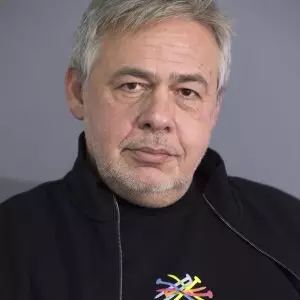
"Women who belonged to the first generations of Australian doctors, women-writers, women who were the bearers of emancipatory and transformative tendencies in Australian society, arrived at the Thessaloniki front. This story has never been told until now"
Belgrade premiere of the feature film documentary filmKajmakchalan (By Far Kaymakcalan, 2024) was held on Wednesday, October 1, as part of the film festival "To meet the March Festival". Film directed by Boris Trbić and Dragan Gavrilović, based on the idea and book of military historian Bojan Pajić Our forgotten volunteers, talks about incredible circumstances, little known in world history, when around 1500 Australians and New Zealanders, mostly women, and the Australian army found themselves on the Thessaloniki front fighting side by side with the Serbian army against a militarily superior enemy (see "Vreme" April 23, 2025).
Through the testimonies of a group of descendants of Australian veterans, as well as through the interpretations of eminent Australian and Serbian historians World War I., Kajmakchalan takes you on a journey through Australia, Serbia, Macedonia and Greece, to the Thessaloniki front, exploring the little-known alliance between Australians and Serbs, the motives and unusual fates of the main actors, among whom are the most famous Australian writer of the first half of the twentieth century, Stella Miles Franklin, the doctor who managed the hospital on Ostrov, Mary De Geris, the daughter of the famous Sydney magnate, Olive King, who earned the rank of sergeant in the Serbian army, and others.
The film will be shown in cinemas in Kragujevac, Novi Sad, Podgorica, Trebinje and Bijeljina in the coming weeks. On this occasion, we spoke with one of the film's directors Kajmakchalan Boris Trbić, who teaches film studies at Swinburne University in Melbourne.
"WEATHER" The premiereKajmakcalanashe was at the Melbourne Documentary Film Festival in July this year. What could be seen then, when, after the screening of the film, the descendants of the participants who testify about them in the film came on stage, are violent emotional reactions, both on stage and in the audience. What is that in?Kaymakchalanwhich so struck the proverbially busy and strong Australians?
BORIS TRBIČ: A week after the premiere you mention, in competition with 120 films at this festival Kajmakchalan was declared a finalist in two categories of the competition program: for the audience award and the award for the best feature-length documentary film produced in Melbourne, which is another indicator of how this film affected the public. I think that Australians first of all reacted emotionally to the story of silence and oblivion, of heroism and marginalization of volunteers who helped the army of a distant nation when it was most difficult. Of course, one of the most important elements in our film, which I emphasized in the conversation with the audience after the screening of the film, is that the majority of those volunteers were women.
In your previous filmsThe case of MaccabeesiWaiting for Handkedirected by Goran Radovanović, Where were you a co-writer?, you dealt with history and prohibitions in contemporary society. What was most important to you when you decided to publish the book?Our forgotten volunteersTurn Bojan Pajić into a documentary film?
I am interested in silences, whether they are politically generated silences, such as the one about the public debate in Novi Sad's Arena cinema, or the silence that surrounds our compatriots living in the Velika Hoča enclave. But unlike the films that Goran directed, and on which I worked as a screenwriter, here, in cooperation with Dragan Gavrilović, I insisted on an expository approach, Voiceover narration and the almost educational character of the film designed as a historical documentary. This story has never been told before, and it was necessary not only to engage the viewers emotionally, but above all to acquaint them with the most important historical information.
...A scene from the movie "Kajmakchalan"
Yet, emotionality could not be avoided in the film. The way in which descendants, especially those of Australian women who participated in military operations with the Serbian army, they talk about them and keep their memories of them, is it shocking. Can we imagine today how these women ended up on the battlefield thousands of miles from home and where they came from?
That is one of the key reasons why Dragan and I immediately agreed to work on the film. Women who belonged to the first generations of Australian doctors, women-writers, women who were carriers of emancipatory and transformative tendencies in Australian society, but who could not work in clinics in big cities, who could not work in operating theaters or publish prose works and compete in competition for literary prizes with men, arrived in Mladenovac, Vrnjačka Banja, on Thessaloniki front. There, with the people who came from rural areas and from patriarchal families and with the army that suffered indescribable losses, they got the opportunity to show courage but also to respond to professional challenges. They drove ambulances, saved lives in operating rooms, but also brought x-ray machines to Serbian doctors and paramedics in tent hospitals. At the same time, they managed to write some very interesting testimonies, like Stella Miles Franklin, about daily life with Serbs. Olive King said that the meeting with those people changed her forever, and Stella Miles Franklin said that each of the volunteers felt happy, privileged, finding themselves in the hospital at the foot of Kaymakchalan.
What is the interest in showing the filmKajmakchalanin Australia, and what kind in Serbia??
My colleagues, lecturers at the film school, students and filmmakers interested in documentary film are interested in the screening and the trip Kamyakchalana. A considerable number of Australians who had never been to Serbia worked on the film, especially in post-production. We have ensured, through various channels, the screening of the film in all major cities of Australia (historical conferences, Serbian community, festivals), and we are currently in negotiations with the historical institute in London where the film could also be shown. The Melbourne agent with whom we established communication will start negotiations with television channels and platforms at the end of the year, because there is interest. We expect the film to be shown on Australian television next year. Apart from the cities where screenings have already been scheduled, there is interest in about twenty other cities and smaller towns, which, we hope, is just the beginning. There are positive signs from the talks that, with the help of the Australian Embassy, we have started with RTS and which our executive producer Bojan Pajić is bringing to an end. Therefore, there is interest on both sides.
Times are what they are.. What is your artistic response to such challenges? Are you preparing something new??
The world seems chaotic, sad and worrying, but that is nothing new. I hope as many people as possible will see it Kajmakchalan, because by putting the traumatic events of the past in the context of the present time, we can project a kind of future based on good examples and common values. I also expect that Goran Radovanović's film will Lubarda: A raven fell on your house., on which I worked as a co-writer, will soon be completed. I've been working on a camera project for a long time and I hope to continue to write and film stories about people that little is known about. Working with the descendants of Australian war veterans has convinced me that these stories are the best answer to the challenges that bad times bring.
What is happening in the country and the world, what is in the newspapers and how to pass the time?
Every Wednesday at noon In between arrives by email. It's a pretty solid newsletter, so sign up!
I thought I grabbed a great email address. Then the namesake's orders started pouring in, from breast lift patches to Cuban cancer elixirs. It turns out that there are a lot of us with other people's lives in our inbox
"We live in space, on a planet that moves at enormous speed, like a spaceship, on which everything is connected, so the future of humanity depends on the survival of bees, forests and rivers. Biology has transformed into ecology."
Single The dawn will cry. 300.000 copies were sold and Kovač became an irrevocable star of SFRY. And then he refused to sing under Pavelić's picture and gave his son a gun
FSS announced that the statutory deadline for submitting candidacies as part of the election process has expired, but that no candidate has applied for the mentioned positions
Vučić pardoned the batterers and Dijana Hrkalović. The election winners should abolish the sultan's power that allows one man to run afoul of the entire judicial system
Davor Matura's ALTA empire is the transplanted heart of the corrupt regime of Aleksandar Vučić, who was defeated in the October 25 elections. From ALTA Bank, roads lead directly to the top of the progressive government.
Things are unfolding at an astonishing speed, as astonishing as the speed with which Vucic conceded a convincing defeat. Impatience is understandable, but misplaced
The archive of the weekly Vreme includes all our digital editions, since the very beginning of our work. All issues can be downloaded in PDF format, by purchasing the digital edition, or you can read all available texts from the selected issue.