roland-orcik-photo-by-bereczki-1024×683...
Is it the end??
I've had enough.
I say no.
— Milan Mladenovic
"Manuscripts do not burn", as we can read in The Master and Margarita Bulgakov. Of course, it doesn't just apply to masterpieces, unfortunately, either Maine Kampf it will never go away. Especially in the age of the Internet, we can see that nothing is left without a trace, absolute prohibition is impossible. And maybe not everything should disappear, the perspective from which we look at books and manuscripts is important. That is precisely why critical thinking, negation of unconditional loyalty, questioning of values dictated from above is a creative game without limits. Bans and repression are constructs of every civilization, Freud argued in his essay Discomfort in culture, why do we consider them immutable?
All this has become very relevant in today's Hungarian culture. The Hungarian government recently passed a "child protection" law, according to which children under the age of 18 must not be told about various types of sexuality, LGBT is officially associated with pedophilia. And recently they introduced fines to those bookstores that did not separate youth books with LGBT protagonists on their shelves. If it turns out that any book (whether it is for youth or for adults) depicts sexual behavior outside the regime's framework, then those books must be wrapped in transparent cellophane. Buyers of those books have to ask bookstore workers to remove the cellophane so they can flip through them.
Will this ban lead to the disappearance of the LGBT minority in Hungary? Manuscripts do not burn. But we see that in Orban's Hungary they don't burn books, there is no "crystal night". This is what distinguishes historical fascism from post-fascism: biopolitical manipulation, the mechanism of blackmail is in vogue, not executions. Of course, the more we talk about LGBT issues, the less we talk about inflation, the collapse of healthcare, the chaotic education system, the sale of fertile land to domestic and foreign investors who don't care about protecting the environment, the reasons for negative demographics, etc. Divide et impera: if people are divided by their sexual identity, they will not unite in the fight against an undemocratic government. Just as equality and freedom are just slogans for some, nationalism is not a goal for Orban either, but a screen that hides pathological rapacity.
Similar bans took place recently in Serbia, in the culture of Vojvodina Hungarians. Laszlo Vegel warned after the removal of Milosevic that the leading Hungarian party (Union of Vojvodina Hungarians) should not feudalize state institutions, should allow civilian, professional control, that democracy is unthinkable without the rule of law. Thus Vegel immediately became an enemy of the Union of Vojvodina Hungarians, as the party gradually took over all institutions in Vojvodina. The same applies to journalist and writer Đerđe Serbhorvat; and he became persona non grata in his native region after his criticism.
The "long nineties" determine the never completely free culture of Hungarians in Vojvodina. Anyone who speaks against the government is marginalized. In art, you can be avant-garde, you can experiment to your heart's content, you can talk about global problems, about Trump, Putin and other arsonists, only about local garbage. The artist or writer who accepts the rules of the game gets support, gets leading positions, but at the same time loses autonomy, because they put a muzzle on his mouth. The depoliticization of artists and the private sphere is a conscious strategy of the paranoid government.
The Croatian-Serbian writer Mirko Kovač - who was attacked in Belgrade because he publicly opposed the war and Milošević's bluster - wrote back in 1984 that a time of awe of local dictators was coming: "If democratization remains basically only reduction of violence dominance, it will greatly favor the strengthening of local rulers. They will, to the extent of their intelligence, terrorize entire provinces. Little leaders and local dictators will bring order, prepare Registers and list what is ripe for extermination! But there will no longer be anything to forbid, because there will be grave pain." (European rot)
Those pocket dictators are present in Vojvodina in the field of culture. Writer Ildiko Lovaš is also a prominent member of the party of the Union of Vojvodina Hungarians. Serbian readers may know her from her recently published book When God kicks you in the stomach (trans. Maria Tóth Ignjatović, Fabrika knjiga, Bg, 2022). As a writer, she is worthy of attention, especially her novel The Spanish Bride, translated into Serbian. But as a politician she is an immature person for democratic politics.
In 2021, the Vojvodina Salaško Theater was banned by the Association of Vojvodina Hungarians because, according to party spokesman Jene Hajnal, their performance was "obscene". After that, the troupe could only play in their art colony, in Kavil, all other villages refused to host them. It's about a show Kazimir and Karolina freak show. The author of the work is Eden von Horvath, and the comedy focuses on the rise of Nazism in Europe. Regardless of the quality of the play, censorship is unacceptable. The key member of the party, Ildiko Lovaš, did not say a word against the suspension, and her passivity is a deep agreement. Of course, she would say that there is no ban, because Jene Hajnal "only" demanded that the theater troupe withdraw its performance. This is exactly what the strategy of post-totalitarianism consists of: existential blackmail is enough to create loyalty and polity.
There are many cases where the responsibility of Lovaševa cannot be denied, although we will not find a directive with her signature, but various committees through which she acts incognito. In 2015, writer Erika Bence wrote a review of a weaker novel by Ildiko Lovaš Small pebble (2014). This was followed by the change of culture editor in the daily newspaper "Magyar Szó" (long ago occupied by SVM): former editor and writer Ferenc Kontra still has no promotions in Vojvodina, his books are published only in Hungary.
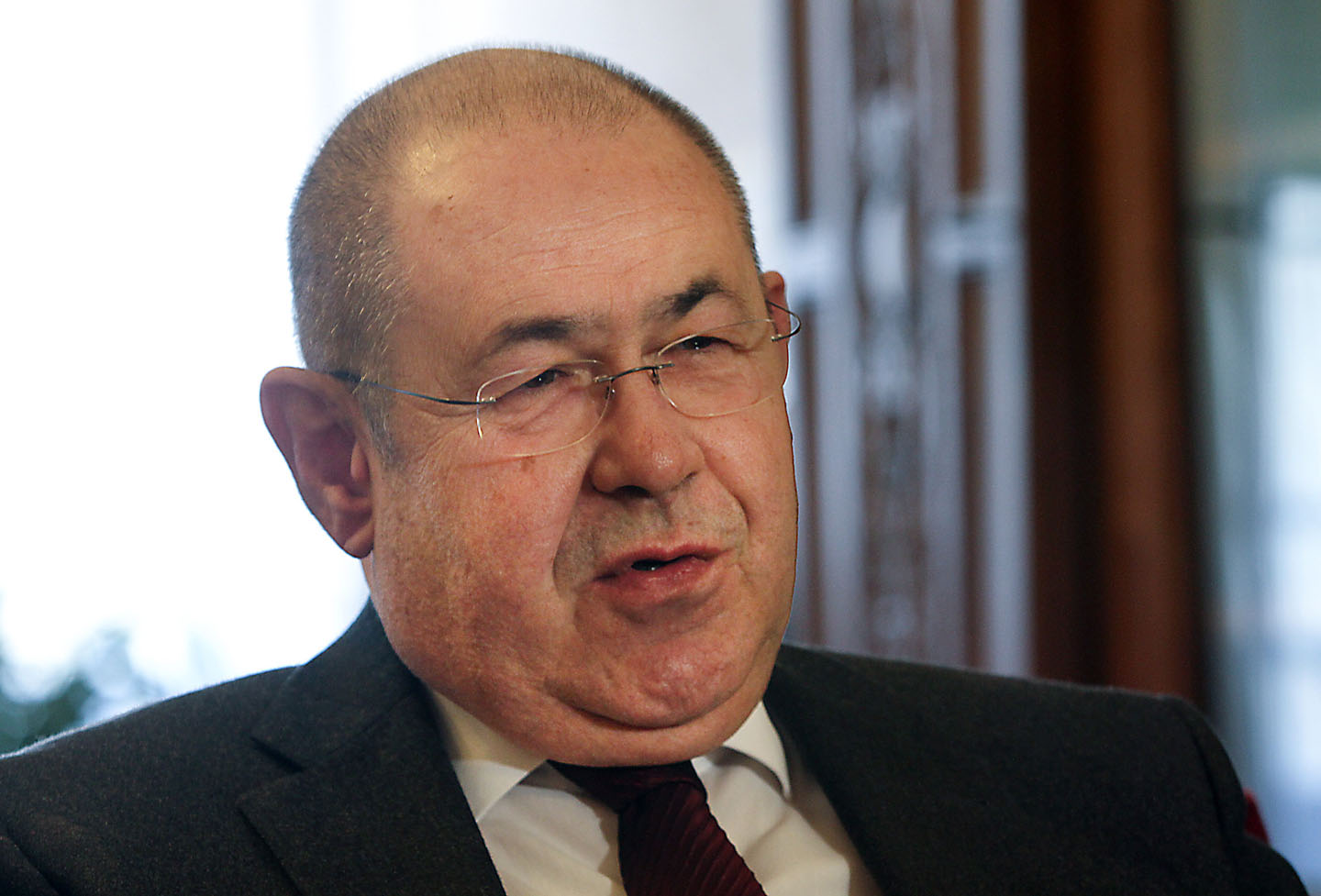
This year, the Novi Sad publishing house Forum experienced similar censorship. According to the directive of the Executive Committee of the National Council of Hungarians (all loyal members of the party of the Union of Vojvodina Hungarians), they banned the publication of six books (authors: Atila Balaž, Ana Terek, Ištvan Ladanji, Peter Božik, Veronika Darida, Zoltan Devavari). Some books were already ready for printing. What was the reason? According to the statement of the president of the party Istvan Pastor (whose wife is Lovaš), those writers who no longer live in Vojvodina but publish their books in Vojvodina, say and write negative things about life in Vojvodina, and this is the reason for the mass emigration of Hungarians from Vojvodina. According to research from 2011, 70.000 thousand Hungarians are less in Vojvodina. And the leading party does not see the reason for this in the discriminatory policy it has been leading for decades, in the miserable standard, in the atmosphere of fear, in the Palanic violence, which is why many choose to emigrate. No, the fault is always others, namely those who criticize the narcissistic ruling elite.
Let's imagine now that the Serbian government bans the printing of the works of Dučić, Crnjanski, Rastko Petrović, Kiš, Pekić because they criticized the Serbian (or Yugoslav) government and lived in exile. The Union of Vojvodina Hungarians is doing exactly that: the ghettoization of culture serves the dry orgasm of total control.
Last year, I publicly criticized their politics and institutional violence Ildiko Lovaš in the show "Észverés" (Mozgodrk, the editor of the show is Čaba Presburger, who was dismissed from the position of editor-in-chief of the newspaper "Magyar Szó" by that party due to disobedience). After that, I disclosed the case of Ildiko Lovaš in connection with the literary award of the Novi Sad magazine "Híd". She disbanded the previous committee, appointed her own people (among them a relative), and lo and behold, the new committee awarded the prize to Ildiko Lovaš for her weaker novel. When God kicks you in the stomach. The result of my "spitting": the director of the Forum in Novi Sad informed me that although we had an agreement to publish my next novel together with the publisher in Budapest (Kalligram), that puj-pike is no longer valid.
What can be done? To quote Kovač again: "Abolishing bans, strengthening democratic positions, introducing a culture of dialogue, the freedom of the individual to express his opinion publicly, that is the only way to cut the branch on which obscurantists and dogmatists are sitting." The public is an alternative to unlimited tyranny.” At the beginning of the year, Vojvodina philosopher Mark Loshonc sent an open letter to the Union of Vojvodina Hungarians for dialogue on problems in the opposition newspaper. Of course, they didn't answer him. What kind of government is afraid of dialogue? But the autonomous spirit cannot be silenced. But even autonomy is not possible without trying to dialogue with others, otherwise we close ourselves in a vicious circle of our own ideological preconceptions. And that is a palanquin cake, on which prohibitions are just the icing of tyranny.
The author is a writer from Szeged, born in Becej