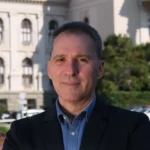
What is so spectacular in the biography of the new artistic director of Drama of the National Theater, Zoran Stefanović, who sat down in the "comfortable armchair in the House of Wonders". It is necessary to read carefully, it is possible to find some untruths
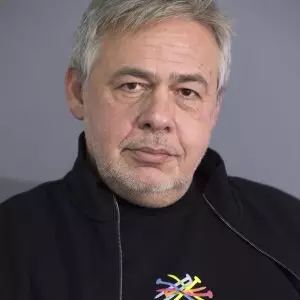
Zoran Stefanovic the new artistic director of Drama National Theatre he became someone who is talked about without getting to do anything in the workplace entrusted to him.
Namely, on the website of the National Theater in the News section on January 20, a new member of the house was promoted with the text "Artistic Director of Drama of the National Theater in Belgrade took office on Epiphany, in memory of Branislav Nušić". The text includes introductory information, biography and Zoran Stefanović's first statement which also has the title "Comfortable Armchair in the House of Wonders", which we have already written about.
Those in the know say that a more voluminous (close to 10.000 characters) and more pretentious presentation has never been published on the National Theater website.
Plus, careful readers of all of that discovered some inaccuracies, we'll talk about that a little later.
What has never been seen in this text about the director who took office on Epiphany to continue where Branislav Nušić, the most famous director in the history of the National Theatre, left off, is best quoted.
Introductory information
In the introductory information, it is written that "Zoran Stefanović, born in 1969, is a playwright and screenwriter translated into several languages, a producer, publisher, culturologist, art historian and theorist, one of the world's pioneers of digital culture. He is a dramatist with a graduate degree and a doctoral student in the theory of art, culture and media. Among other things, he is the president of the Association of Playwrights of Serbia and the International Cultural Network Project Rastko."
In the next paragraph, it is emphasized that "Stefanović is somewhat different from the previous directors of the NP drama in this era, because he also has international experience as a producer, manager and scientist. Since the mid-90s, he has held a dozen major positions in regional and international frameworks, including emergency situations and reforms. He is one of the most prolific actors of Serbian culture and art of the post-Yugoslav period and has left an international mark in a dozen areas of culture and art, as well as in a couple of niches in the humanities. He received about fifty domestic and world awards and recognitions, including some major ones for the dramatic arts: Belgrade's Golden Medal for Screenplay, 'Josip Kulundžić' Award, 'Branislav Nušić' Award, 'Miodrag Đukić' Award, 'Jakov Orfelin's Wake' and others."
It was especially pointed out that "Stefanović went public on Epiphany, January 19, the day of the death of Branislav Nušić, director of the National Theater, but also the first president of the Association of Yugoslav Playwrights, which existed from 1929 to the early 1950s, when Tito's regime shut down the UJDA, only to be restored in 1976 as the Association of Playwrights of Serbia (UDPS). According to tradition, the president of the UDPS and artistic The director of the National Theater is laying wreaths at the New Cemetery and at the monument to Nušić next to the National Theater. This year, instead of two, it will be one person."
At the end of the introduction, there is a passport indicating Stefanović's qualifications for the position to which he was appointed: "Stefanović's activities for decades have been connected with the National Theater, especially in culture and science. Also, in cooperation with the National Theater, he was a publisher-producer from 2008 who, through the "Rastko Project" portal, presented digital editions of "Theatrical News" to world Serbs, Slavists, translators, the diaspora and the widest audience, then dramas on in English by Dušan Kovačević, Bora Stanković, Vida Ognjenović, Veljko Radović, Siniša Kovačević and Nebojša Romčević, as well as selected plays by Željko Hubač in Serbian, English, German and Bulgarian."
Hubač: I didn't know about the translations of my plays
"A careless reader of this 'text' might think that Kiza (Zoran Stefanović's nickname) personally translated my plays into four world languages and promoted them all over the world. I have no knowledge of that, but if he did, there was no need to bother, because the translations of my plays are published on my website, they were done by some serious translators with experience, and are available to anyone who searches the Internet, including Kiza."
Photo: FoNet/Milica VučkovićŽeljko Hubač
The few colleagues I met abroad and some of whom I worked with during my professional career did not tell me anything about Kiza's promotion of my drama selections in the world. They must also be poorly informed. What will you do, everyone cooperates with themselves available and equal. We can't all be epochal," wrote Željko Hubač.
And now - the biography of Zoran Stefanović
In the second part of Zoran Stefanović's presentation on the National Theater website, his biography follows. We also cite it because it is rare in local practice in scope and detail.
At the beginning, it is indicated that it was created "based on the data of the manuscript of Dr. Jelena Perić's book." It is not specified which book it is about, nor who its author is.
"Schooling"
He was born in 1969 in Loznica, Serbia. He attended the Valjevo Grammar School (philology and social studies) and the Loznica Grammar School (journalism). From the first attempt, he was accepted to dramaturgy at the Faculty of Dramatic Art of the University of Arts in Belgrade, where he graduated in 1994: dramaturgy with prof. Slobodan Selenić and screenwriting by prof. Zivojin Pavlović. He is a doctoral student, about to defend his doctoral thesis in the field of theory of art, culture and media. He attended postgraduate studies at the Faculty of Dramatic Arts and at the Interdisciplinary Studies of the University of Arts in Belgrade.
As a scholarship recipient of the American government, he studied in the United States in 1990, where he studied the American model of stage production, cultural management, Hollywood screenwriting and theater dramaturgy there. As a result of this, he introduced the new wave of American screenwriting and dramaturgical pedagogy and theory, especially the era from Sid Field to Robert McKee, into domestic practice through textbooks and projects at the Belgrade University of Applied Sciences.
He is further educated through courses and modules, including distance learning programs in the field of dramatic arts: University of Pennsylvania, Massachusetts Institute of Technology, Jordan Peterson Academy, etc. He speaks and writes English fluently, uses all Slavic and major Romance languages.
Drama and theater work
He is the author of a dozen full-length dramas translated into several languages and about twenty larger film and television scripts, half of which were realized in the documentary sphere and are among the most broadcast and most watched works of our recent television documentaries ("The Lives of Costa Hackman", etc.), while two films and a TV series are currently being prepared for feature production.
Slobodan Selenić, Vladimir Stamenković, Milorad Pavić, Radomir Putnik, Dubravka Knežević, Ilija Bakić, Boško Suvajdžić, Sofija Trenčovska, Mimoza Rajl, Dejan Ajdačić and dozens of other scholars and critics from several countries wrote about his plays and scenarios.
His play "The Slavic Orpheus: A Ritual Case" (1992) combined anthropological theater with science fiction and Artaud's theater of cruelty. In some reviews, it is considered to be the symbolic beginning of post-Yugoslav dramaturgy and theater in Macedonia and Serbia, thanks to which the writer is classified as one of the key Serbian and Slavic playwrights of the era, as in the Italian encyclopedia D'Agostini. The play by the Strumica Theater was included in the official selection of the Belgrade International Theater Festival (BITEF) in 1992, so the writer Stefanović at the age of twenty-two and the director Trenčovski at the age of twenty-one were the youngest authors in the history of the festival (the visit was not realized due to United Nations sanctions against Yugoslavia). Radio Belgrade's radio drama version was nominated for the Prix Europa in Berlin.
His dramas are different in genres and styles. "Island Story", the world's first story about Corto Maltese that was specially written for the theater, tells the story of the failed communist revolution, and was played immediately before the Eighth Session in 1987 in Valjevo. "Weekend with Maria Broz: a play for the stillborn" tells the story of Serbia in late Titoism as an open madhouse. The anthology duo-drama "The Jump about the Cosmic Egg" is a mystical response to Samuel Beckett, told through anti-Beckettian means. "The Prince Will Not Return" is subtitled "a play with a thesis, singing and fencing for the youth" about the Serbian divisions during the time of Rastek Nemanjić. "Waltz for Olga: a folk tale and a bloody party" shows the last days of the Romanov imperial family and explains the hidden essence of the tragic Slavic history.
As a publisher, editor and organizer, Stefanović participated in the publication of over 600 plays in several European, American and Asian countries, which led to dozens of premieres. In the Serbian language, it was within the printed and digital venture "One Hundred Dramas to the End of the Century" (Književna reč magazine, 1994-2000), the digital library "Contemporary Serbian Drama" at the Rastko Project (since 1997), the printed and digital edition of "Contemporary Serbian Drama" of the Association of Playwrights of Serbia (since 1998), the reissue of "Dramatic Heritage" of the Museum of Theater Arts of Serbia (1997), and now capital edition "Koturn" which will start in 2026. As a scientist, researcher and encyclopedist, he made a lasting contribution; he is currently working on the "Biographical Dictionary of Serbian Drama" as the first undertaking of its kind, and as an editor and publisher on the expanded edition of the "Lexicon of Drama and Theater" by Raško V. Jovanović and Dejan Jaćimović.
As an editor, editor, manager, editorial board member or publisher, in this decade he participates in the publication of the collected or selected works of several Serbian doyens of culture and science. In terms of dramatic arts, there are over a hundred volumes of works by Branislav Nušić, avant-garde and neo-avant-garde playwrights, Dušan Stojanović, Petr Volk, Raško V. Jovanović, Radomir Putnik, Jovan Joce Jovanović, Milan Jelic, Bojana Andrić, Miloš Nikolić, Miladin Ševarlić, Božidar Zečević, Aleksandar Đaja, Stojan Srdić, Vladimir Đurić Đura and others. Foreign authors include, among others, Steven Pressfield and Nikita Mikhalkov.
He is one of the authors of the reforms that introduce the culture of film, drama, theater, artistic animation and comics into the Serbian school system.
Digital culture
In almost four decades of activity, Stefanović has produced an extensive international work in a dozen areas of culture and art, as well as in several niches of the humanities, but he is best known in world culture for being one of the world's pioneers of cybernetic culture and digitization in culture.
He was the main founder of BBS Pegaz (since 1994), then the electronic library and today the cultural network "Projekat Rastko" (1997), the separate magazine "Kyberneticka reč" (in Književna reča, 1998), "Project Gutenberg Europe" and "Distributed proofreaders Europe" (2004), and as one of the founders of Wikipedia in Serbian and related languages (2003), as well as several other capital projects.
Social and humanitarian work
As a high school student in the mid-1980s, he began to engage in social activism for democratic and national rights. In the fall of 1990, as a student, he participated in the restoration of the democratic system in Serbia and the founding of the first parties. He was active in the protests for media freedom at the Faculty of Dramatic Arts in March 1991 and 1992. In the election crisis in Serbia in 1996/1997. he was one of the expert managers for the "Together" Coalition, when he put into practice one of the world's first methodologies of political activism on the Internet, and he also set up part of the methodology for peaceful and non-violent political activism on the streets.
He refused the position of a high-ranking official in the government of the Federal Republic of Yugoslavia after October 5, 2000, because after the NATO aggression against the FRY, he was engaged in humanitarian work and the protection of cultural heritage in Kosovo and Metohija (especially in the period 1999-2004).
He was the main manager of the international campaign to acquire the seal of Prince Strojimir, the oldest evidence of Serbian statehood from the 9th century, in cooperation between the professional and governmental sectors in 2006."
There is no need to comment on it, the quoted biography of Zoran Stefanović is very telling to anyone who reads it.
Notice
Note: The photo we are publishing is taken from the website of the National Theater and we are not responsible for the fact that it shows an alcoholic drink and a brand of sour water.
What is happening in the country and the world, what is in the newspapers and how to pass the time?
Every Wednesday at noon In between arrives by email. It's a pretty solid newsletter, so sign up!
The term of office of the director of the library "Stevan Sremac" expired seven years ago, and the other cultural institutions in Nis are headed by acting directors or directors whose terms have expired.
The transfer of employees without reason, and the purchase of Čedomir Antić's book due to interest support, are the new reasons given by the Free Union of the National Library of Serbia for the resignation of manager Jasmine Ninkov
The civil movement Bravo from Novi Sad is demanding a report on the spending of money at the Opera of the Serbian National Theater, and "Nis moj grad" indicates that the contracts for the International Film Festival were signed after the work was completed.
Selaković, Bokan, Ristić and Delić are at the top of the list of leading people in culture whose resignations are being sought. And Selaković is the only minister against whom the entire profession for which he is in charge rose up
Part of the National Museum of Serbia, the Archaeological Museum of Djerdapa is getting a new permanent exhibition with more than 1.100 exhibits that bear witness to the changes in the cultural landscape of that region.
Aleksandar Vučić does not constitute reality with his language, but an illusion, the only thing is that now he will no longer be able to impose the illusion on police batons and paid beaters. He showed this at the constitutive session of the National Assembly
On Tuesday, November 17, the constitution of the National Assembly begins, in which the Student List has an absolute majority. Why is this day historic for Serbia?
Aleksandar Vučić would like Serbia to be grateful to him for not turning the election defeat into violence. Before that, he would have to explain what the preparations for election night were for, first of all in Pionirski Park
The archive of the weekly Vreme includes all our digital editions, since the very beginning of our work. All issues can be downloaded in PDF format, by purchasing the digital edition, or you can read all available texts from the selected issue.