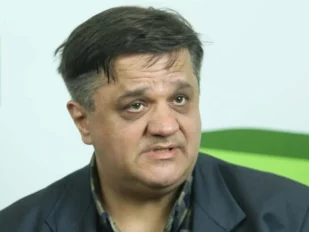
The President of Serbia, Aleksandar Vučić, will attend today, together with the Prime Ministers of North Macedonia and Albania, a meeting with the heads of state and government of the EU member states in Brussels. It would have been ordinary news if two days before the meeting the leaders of these three countries, gathered around the Open Balkans initiative, had not announced that they would consider together whether they would go to Brussels.
On the basis of that brief announcement, it was possible to conclude that they are seriously considering and that there is a possibility that they will not appear in Brussels. The impression that the open Balkans may not really want to leave was further reinforced by the tweet of the Albanian Prime Minister, Edi Rama. With an emoticon that is supposed to represent jet vomit, Rama says that the entire European Union has been kidnapped by Bulgaria, and that the Western Balkans could hear one more "no, sorry" at the summit.
That Vučić does not really feel like going to Brussels at the moment, he said in the middle of the month, during the GLOBSEC Forum in Bratislava. "We will be the only ones who will not make any progress in June, I am thinking about going to the summit in June."
Coincidentally or not, on "D-day" when it will be announced at 12 o'clock whether he will appear in Brussels, EU ambassador to Serbia Emanuele Giofre says in an author's text for Kurir that on the eve of the gathering in Brussels it is important to repeat that European integration is not Sisyphus' work and that the EU does not place new obstacles in front of Serbia.
The "uncertainty" of whether he will or not, ended a day later when a statement was published on the website of the Presidency of Serbia saying that he will go anyway. It was decided after "detailed and comprehensive consultation". It is further said that it will be "another constructive contribution" to the European integration of these three countries.
The decision to leave after all is not surprising. It was clear from the beginning that none of the three leaders, especially the Serbian president who is "trying hard" to prove that he is not a Russian man in Europe, has no interest in not going to such a meeting. However, this is the first time that the Open Balkans, otherwise widely promoted as an economic initiative, is taking on the contours of joint political action towards the European Union.
Although they received a clear message from the United States of America in Ohrid, which, unlike the EU, supports the Open Balkans, that the Open Balkans should be an exclusively economic initiative, it seems that in the future we could expect a politically unified bloc towards Brussels from the Balkan trio.
If that happens, then it seems to make sense why the European Union, like the rest of the countries in the region, they have skepticism towards the Open Balkans as Rama and Vučić's attempt to bypass European standards for the sake of small political and economic gains on the domestic ground.
Read daily news, analysis, commentary and interviews at www.vreme.com