Photo: Tanjug / Jadranka Ilić Aleksandar Vučić at the presentation of a new package of economic measures, among which is the Regulation on Limiting Margins
Layoffs and resignations, millions of losses, closing of shops, late payments, borrowing from banks. All these are indirect consequences of Vučić's trade margins, which were presented to the relevant minister by traders of smaller domestic chains at a meeting closed to the public, "Vreme" learns.
"Vreme" was the first to discover that in Serbia followed by a wave of massive store closures of large retail chains, who said they could not withstand the government's regulation on limiting margins. Dozens have already been closed, and a new wave of lockdowns is yet to come.
The burden of this regulation has also hit domestic retail chains, which are otherwise having a hard time doing business and do not have branches and hinterlands in other countries, so they too will have to close, some permanently, and share layoffs.
One after another, domestic retail chains appeared, which operate locally and are not part of large foreign conglomerates.
"For three hours, they explained to the minister the catastrophic effects of the decree: millions of losses, shop closures, late payments, borrowing from banks, layoffs," says a "Vremena" source. "Domestic traders said that they have survived sanctions and war, bombing and corona, but that this regulation is pushing them into bankruptcy."
Topic for Tanjug: Portal about prices
However, when Jagoda Lazarevic spoke for the pro-government agency about this meeting, nothing was heard. She told Tanjug that traders were actually only presented with a specific platform where they could see product prices.
"It is something that is very useful, and it will be especially so when the database is publicly available and will be able to be used by all our citizens," said Lazarevic.
Speaking about the Regulation on Limiting Trade Margins, Lazarevic only mentioned that its implementation has entered its third month, and that new trade chains are subject to market inspection control.
"The minister released a statement to the media that a portal with prices was presented at the meeting, which did happen and lasted 20 minutes at the end of the meeting," explains our source.
Suppliers are the only ones in the black
Lazarevic timidly let slip that the ministry appealed to traders for a dialogue with suppliers, because a number of them are willing to lower prices, so that it would eventually reflect that we have even greater reductions than the ones we have.
Actually, it is about the part of the meeting in which the traders explained to the minister that this regulation favors the suppliers, because they got a reduction in the cost at the expense of the traders. It was very embarrassing when the minister started justifying herself that she is not a mercenary of any company, that she does not protect big capital and tycoons, that she expected suppliers to lower prices, which they did not do, adds the editorial source.
"Vreme" sent questions to the Ministry of Trade, about what was discussed at the meeting with traders in the Chamber of Commerce, how long it lasted in total and how much was proportionally discussed about the portal with prices, and how much about the problem with the Regulation. However, the answers did not arrive until the conclusion of this text.
The general director of IDEA resigned
Domestic retailers are only the tip of the iceberg of the collapse in stores.
In the midst of all the chaos, there is also the resignation of Lazar Marković, general manager of the IDEA chain of stores. IDEA company confirmed this information for "Vreme".
"Lazar Marković made the decision to continue his career outside the company. He made this decision for private reasons," they answered.
The company did not clarify whether the decision had anything to do with the Government's regulation on margins.
"Management mistakes or strong competition are not responsible for the collapse, but the political will of Serbian President Aleksandar Vučić," the newspaper writes.
What is happening in the country and the world, what is in the newspapers and how to pass the time?
Every Wednesday at noon In between arrives by email. It's a pretty solid newsletter, so sign up!
Five days before the elections, Siniša Mali said that an agreement had been signed regarding the sale of NIS. The MOL immediately denied it, and Malog's office told "Vreme" that "everything is clear".
Siniša Mali claims that the Hungarian MOL signed the contract on the sale of NIS. What does the identity card of this Hungarian giant say? What kind of company is MOL?
The Hungarian company MOL has signed an agreement to take over the majority Russian share in the Serbian Oil Industry, Siniša Mali told Bloomberg. What kind of customer is MOL?
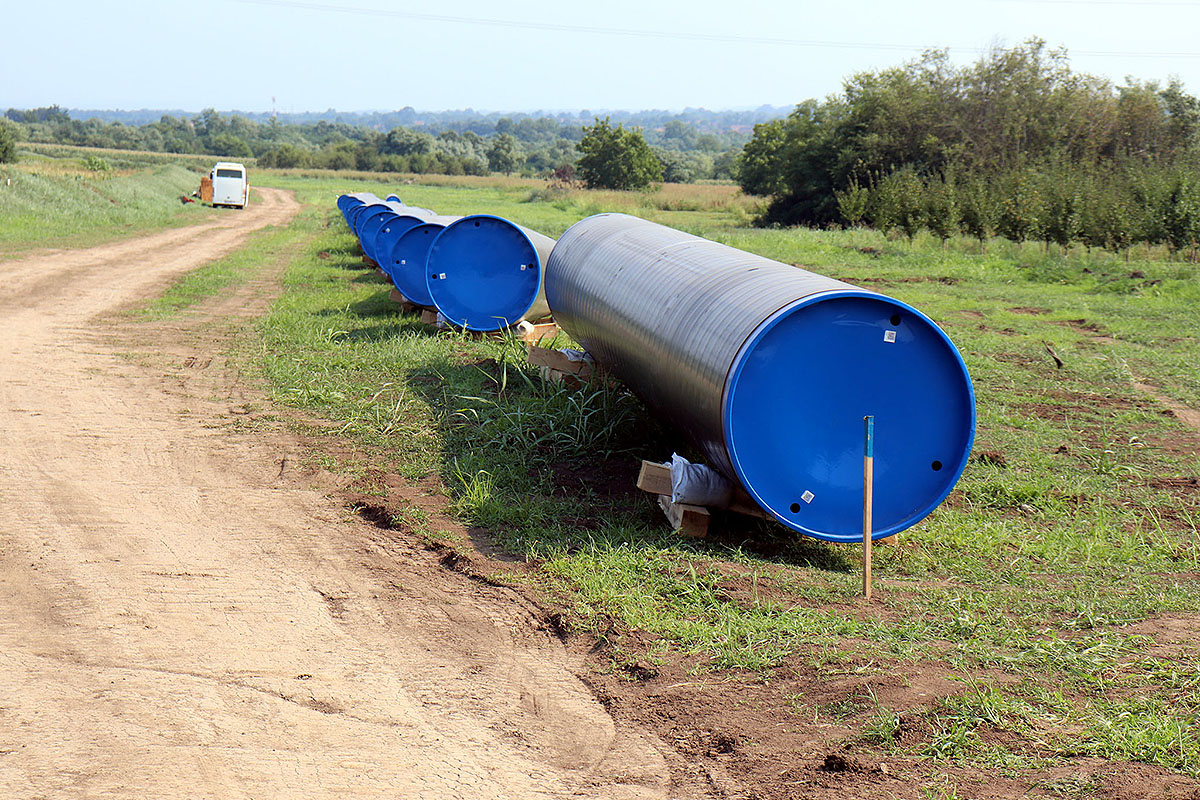
The first pipes through which American gas should flow have arrived in Serbia. The whole project dragged on for years, only to suddenly heat up with an accelerated process this year. The EU is not enthusiastic about the American partners for Serbia either
Highly qualified workers are also leaving EPS in increasing numbers, while problems are piling up in the company: profits were partly achieved thanks to the postponement of necessary investments, while the production of coal and electricity fell
There is, literally, no difference between the one who claims it is day in the middle of the night, or the one who claims to be a giraffe, from the claims we read on billboards: that Vučić is working to unify Serbs and that Serbia is doing better and better day by day.
The pre-election arrests due to the alleged "overthrow of the state" testify to the regime's panic. The bad news for them is - they can't arrest the whole people who decided to defend themselves from progressive beatings and election theft
The ring that tightens around Ćaciland Student list is getting narrower. Because there are more and more spoiled people who see the false prophet for what he is: a street obscener who is fighting Serbia
The archive of the weekly Vreme includes all our digital editions, since the very beginning of our work. All issues can be downloaded in PDF format, by purchasing the digital edition, or you can read all available texts from the selected issue.