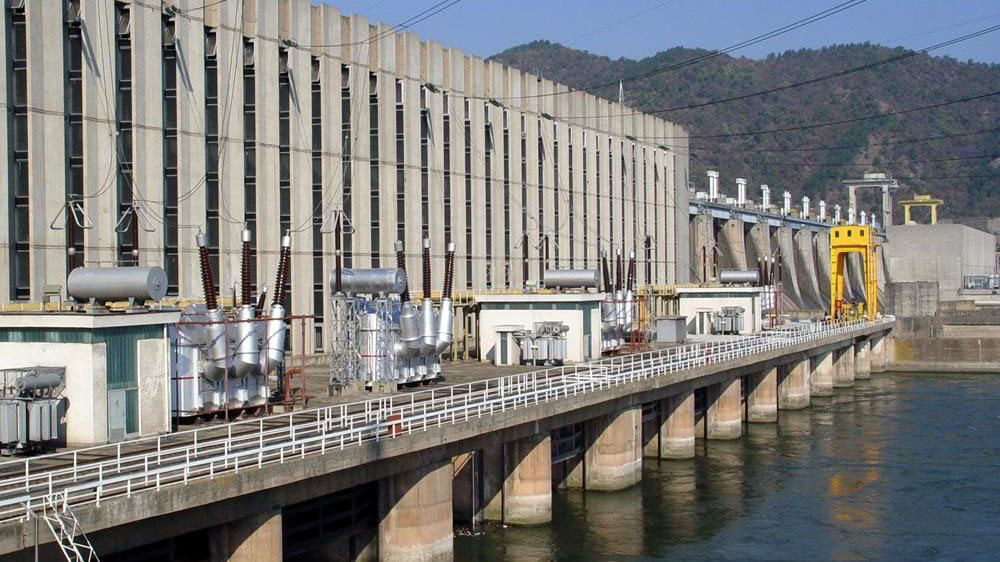
Embassy of the United States of America in Serbia published a public call for expressions of interest to participate in the Reversible construction project hydropower plants (RHE) Đerdap 3, thus taking a new step towards the realization of one of the largest energy projects in Southeastern Europe.
The possibility for the American embassy to issue such an invitation was opened by an interstate agreement. While part of the public reacts violently to the news, part of the experts single out the good ideas of such a project.
Kapor: A necessary project, but not at the cost of bypassing procedures
Energy expert Miodrag Kapor believes that this is a project of exceptional importance for Serbia, but warns that the public does not yet have enough information to be able to assess all its consequences.
"The project is important, with large investments, but also unknowns that we have so that we can say with certainty what is behind it. With what we know, the embassy invites American companies to get involved in a strategic project not only for Serbia, but also for the region, since it has the potential to represent a base power plant for electricity," Kapor told "Vreme".
He reminds that the American involvement is a consequence of the already signed strategic agreement between the two countries.
"Certainly, Serbia needs such a project, certainly the role of the United States is welcome to possibly act as a mediator between Serbia and Romania, because Romania's consent is also needed, and it is a member of the NATO alliance and a close associate of the United States. The US is certainly welcome to help here, as well as American technology and expertise," says Kapor.
Two years ago, Romania warned that the construction of Djerdap 3 must not jeopardize the stability of the existing joint hydroelectric power plants Djerdap 1 and Djerdap 2. Then the Romanian Minister of Energy, Sebastian Burduža, said that Bucharest would not support a solution that could negatively affect the existing system on the Danube.
That is why talks are ongoing between the competent ministries of the two countries and joint commissions that assess the hydrological and ecological consequences of the project.
In addition to the international dimension, the project has been raising questions for years about the possible impact on the environment, as well as the method of financing and the selection of contractors.
Corruption as a problem
The manner in which the project is implemented may open up serious political and institutional issues, Kapor believes.
"The problem is that the US with the current administration is deeply entering into a strategic conflict with the European Union and that so-called transactional relationship between the White House and other governments has elements that cause serious doubts. That is why the European Union with its procedures is an obstacle to this kind of policy making," he says.
The biggest unknown is whether the project will be developed through transparent procedures or through bilateral agreements.
"If this has the potential to end with a bilateral agreement between the two parties, it opens up many more unknowns and potentially negative things than positive ones. It is unlikely that Serbia could effectively work out an agreement with Romania without certain American mediation, but agreements that go beyond the procedures established by the European Commission certainly distance Serbia from the European Union and open increased space for potential corruption," Kapor believes.
He warns that the problem is not American involvement per se, but the way decisions are made.
"Corruption usually leads to inadequate professionalism. The practice of the current American administration is to include organizations, individuals and companies that neglect the usual procedures through their personal connections and nepotism," Kapor assesses.
Violent reactions on social networks
The American embassy's announcement also caused numerous reactions on social networks, where discussions were opened on whether it is a legitimate strategic partnership or an additional expansion of American influence on key infrastructure projects in Serbia.
Political analyst Saša Paunović assessed that it is problematic that the embassy of a foreign country practically assumes the role of mediator in a project of national importance.
"For the first time in history, I hear that an embassy is taking over the work of the state of Serbia. The AMERICAN EMBASSY has published a public invitation for Đerdap 3. AMERICAN EMBASSY. According to the interstate agreement," wrote Paunović on Facebook.
Similar views appeared among other users of social networks. Some say that Serbia is becoming an "American colony", while others warn that strategic resources are gradually being placed under the control of foreign companies and that important infrastructure jobs are increasingly contracted through interstate agreements, instead of through open international tenders.
What does the invitation say?
As eKapija reports, interested companies have until June 25 to submit letters of intent to the Ministry of Mining and Energy. The goal of the procedure is the selection of strategic partners for the preparation of technical documentation, financing and construction of the future power plant.
American companies can apply for the call.
The call for expressions of interest represents the first stage of selection, and the process is led by a special Working Group of the Government of Serbia. The selection of partners is carried out on the basis of the Law on Public Procurement and the interstate energy agreement between Serbia and the United States.
This move represents the formal beginning of the involvement of leading American engineering and financial companies in the project, the value of which is estimated at more than two and a half billion euros.
The path to American engagement
US participation in the Djerdap 3 project has been in the works for several years. The American construction giant Bechtel showed interest in the project as early as 2021, while in 2022 it took over the preparation of technical studies.
A key step was taken with the signing of the Interstate Energy Agreement between Serbia and the USA in Washington in 2024. The agreement entered into force in March of this year, which created a legal basis for Serbia to officially invite American companies to join the project through the US Embassy.
Power plant worth 2,6 billion euros
The planned reversible hydroelectric power plant Đerdap 3 is conceived as a hybrid reversible pump-storage plant on the 1007th kilometer of the Danube, in the territory of the municipality of Golubac.
The projected capacity of the power plant is 2.400 megawatts, with the possibility of integrating an additional 400 megawatts from renewable energy sources, primarily wind and solar. With an estimated value of around 2,63 billion euros and planned completion by 2038, Đerdap 3 is among the largest energy projects in the region.
Energy experts have been pointing out for years that such a plant could play a key role in balancing Serbia's power system, especially with the growing share of renewable energy sources whose production depends on weather conditions.
Who will finally apply for the call and under what conditions strategic partners will be chosen, is currently unknown. It is certain that Đerdap 3, in addition to energy and economic issues, will also open a wider discussion about Serbia's geopolitical positioning, its relationship with the European Union and the role of major powers in the development of domestic infrastructure.
Source: Vreme/eKapija
Real journalism costs money, and we will not be bought by tycoons and corporations. Support us with a one-time or monthly donation. The time for it is now!