Bojana Radojević, director of the Retail Department of the NIS company, stated that the Oil Industry of Serbia was ready to welcome her American sanctions.
"We have sufficient quantities of stocks, and the company also made an effort to secure sufficient quantities of crude oil, which is extremely important for us for further production," Radojević told Tanjug.
American sanctions on NIS entered into force
She told the citizens that there is no reason to panic and no need to waste time waiting in lines.
"For us, sales are taking place as in regular mode. There are no restrictions when we talk about the quantities they can take over, so there is no need to create stocks, because the supply will really be regular in the coming period as well," she added.
Will there be fuel?
But what will happen when the supplies run out?
With the entry into force of American sanctions against the majority Russian Oil Industry of Serbia,the problems that were thought to have remained in the nineties are beginning for the citizens of Serbia. The first is a possible shortage of oil since it will not be able to be transported through the Janaf pipeline.
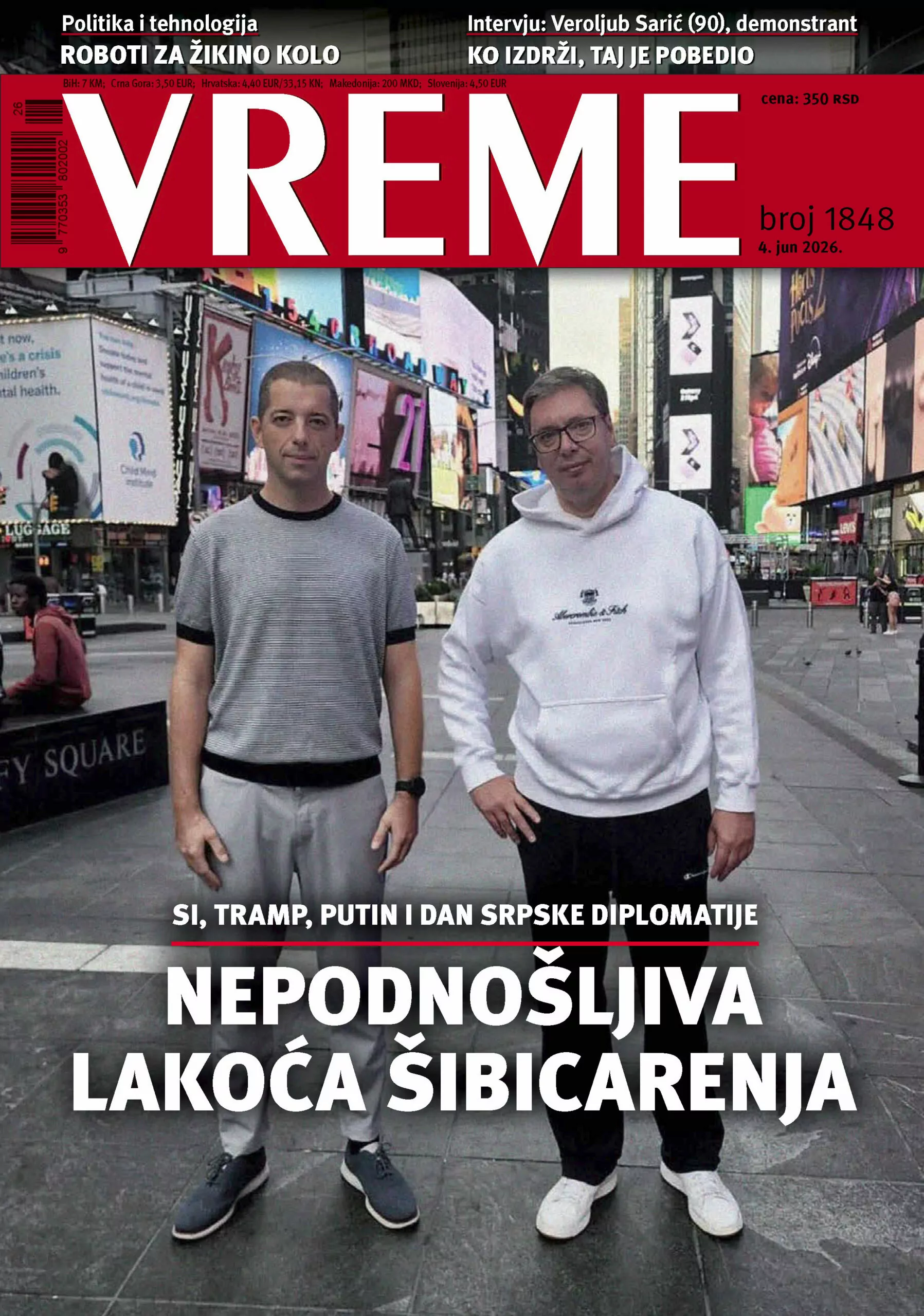
As in the new issue of "Vremena" (on newsstands from Thursday, October 9) written by Miša Brkić, Belgrade apparently turned to a "creative" solution - the construction of a "shadow fleet" that should bring oil from Hungary by river.
Sanctions to NIS: Serbia prepared a "shadow fleet"?
Namely, in domestic business circles, unusual phenomena on the market of transport services are noticeable these days. Two powerful people, close to the regime, are rapidly registering river tankers for oil transportation with the competent regulator, he writes.
"A well-informed insider claims that it is a large fleet of ships (and barges) that is supposed to transport crude oil on the Danube from the warehouse of the MOL company in Hungary to the refinery of the Oil Industry of Serbia in Pancevo. Something like the Russian shadow fleet with which Putin avoids Western sanctions and exports oil to customers around the world," Brkić writes.
When are shortages possible?
There will be no major supply problems in the next few months, and an agreement will be reached as soon as possible, writes Nova.rs.
Officially, however, there is no explanation as to how, after the American sanctions come into force, they will replace the energy supplies that were placed on the market by NIS.
Fuel will most likely go up in price, and with fuel, other products too.
Account blocking
When the possibility of paying with foreign payment cards (Master card, Visa) ceases, payment at gas stations will be possible with the domestic "Dina" card, cash, as well as with the "IPS show" method.
"Unhindered payment transactions in dinars are ensured for wholesale as well, and payment cards of corporate customers function smoothly," said NIS.
It is almost certain that the accounts of NIS in foreign banks will be blocked and the only question is how Poštanska štedionica will be set up, which will also find itself in an awkward situation. Although the Russians expect continued cooperation with it, Serbian President Aleksandar Vučić said that everyone who cooperates with the NIS is taking a lot of risk. No company will work with a sanctioned person.
"The fines for that are enormous. It has already been announced to the NIS, that there will be no cooperation when the sanctions come into force. We are dealing with harsh measures and the termination of cooperation is a matter of days," said Vučić.
Will we have heating?
As consumers in Serbia are largely heated through heating plants, the problem could arise this heating season as well. Because most heating plants use fuel oil as the basic raw material for heating, which is a petroleum derivative.
"At the moment, the supply of all energy sources is in order. There are liquid and solid fuels that practically cannot be stored in full format, but only as much as the actual storage space allows. Of course, the situation with the Oil Industry of Serbia is being carefully monitored because it supplies fuel oil and heating oil, so we will see what will happen in the future," said Dejan Stojanović, director of the business association "Heating of Serbia".
Will there be fuel for the planes?
Air traffic has been functioning smoothly since this morning, but the question is what will happen to the fuel. Two companies were registered for the purchase of aviation fuel even before the NIS sanctions came into force. One of them is "Flystar Flight Support", a subsidiary of the parent company Menzies from Great Britain, writes Blic.
Until now, NIS was the only company in Serbia that supplies aviation fuel in our country. However, since the announcement of the sanctions, airlines have more options in order not to repeat the situation when the Hungarian low-cost airline Viz Air decided not to refuel NIS. Instead, they refueled in Budapest or Timisoara, and passengers had to return from one route by bus.
What about wages for employees
How to pay salaries for more than 5.000 employees in that company is also under a big question mark. Since the sanctions were first announced, wages have been paid one month in advance.
This October, "Vreme" celebrates and honors - as much as 35 percent discount for our 35th birthday! Valid for semi-annual and annual subscriptions. Subscribe now!