

News
Research: N1 devoted two and a half times more time to Pride than RTS
At the same time, the participants of the walk were three times more represented among RTS interlocutors

A six-year-old child drowned in the "Konak" hotel on Zlatibor last night. By order of the Basic Public Prosecutor's Office from Užice, a 48-hour detention was ordered for the owner of the company that was involved in the maintenance of the swimming pool. It is suspected that there were lapses in the maintenance of the pool
A six-year-old child from Belgrade drowned last night in the pool of the "Konak" hotel in Zlatibor, broadcast by RTS.
By order Basic Public Prosecutor's Office from Užice, a detention of 48 hours was ordered for the owner of the company that was involved in the maintenance of the swimming pool in the "Konak" hotel in Zlatibor.
The suspect was taken into custody on a warrant for a serious crime against public safety.
It is suspected that there was an oversight in the maintenance of the pool where a child from Belgrade drowned last night around 21:XNUMX p.m., who was accompanied by his grandmother.
The investigation is ongoing.
A few misconceptions about drowning
Earlier this summer, the City Institute for Public Health warned citizens that in most cases, drowning does not look like what we imagine, and that there are many misconceptions among the population that put themselves and their children at risk when it comes to enjoying the water. transmissions H1.
One of the biggest misconceptions is that drowning takes a long time. A drowning person will struggle for air for about 20 to 60 seconds. After that, she will no longer be able to maintain herself above the surface of the water.
When it is below the surface this time becomes even shorter. Drowning can take several minutes, but can happen in 30 seconds or less.
Another misconception is that drowning is noisy and the person will attract attention, but in reality this rarely happens. A person who is drowning will have a very hard time breathing, which means they are unable to call for help. A drowning person's head will alternately move above and below the surface of the water before complete submersion, making it difficult to breathe or speak.
How to recognize someone in trouble?
Some of the signs are outstretched arms, the body moves vertically up and down, with the face close to or below the surface of the water, and the person does not kick or move, this may be a sign of drowning.
It is also a misconception that children are safe in a pool or shallow water. In order for a child to drown, the depth of the water does not have to be great - babies and small children can drown even in water only a few centimeters deep. Almost all child drownings, including those in shallow water, occurred in the absence of active adult supervision.
If you are in the water with your child, always be by his side, make sure that the child is always "within reach".
"You should always jump into the water to save someone" is another misconception if someone is drowning. In fact, it is recommended to throw him something to help him stay afloat (like a lifebuoy and the like) or give him a hand if you are close. Jumping into the water can pose a risk to you if a panicked person pulls you along.
If the person is unconscious, then by all means get in the water, but know that even experienced swimmers can have a hard time getting someone out of the water, so always get someone else to help you.
Source: RTS, N1
At the same time, the participants of the walk were three times more represented among RTS interlocutors

PIO Fund has warned pensioners about new fraud attempts to sign declarations about the purchase of certain products, for which the monetary compensation is suspended from their pension
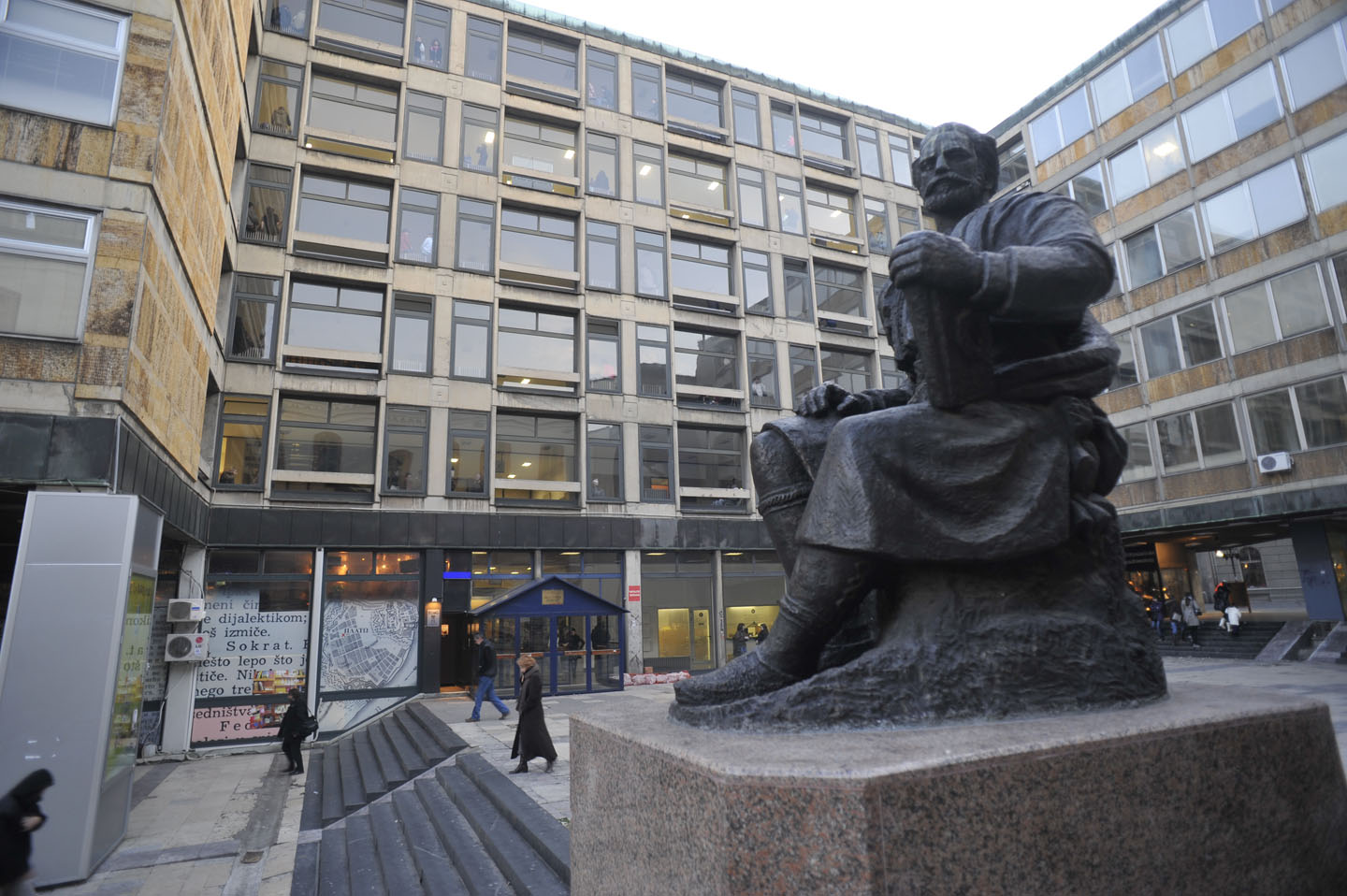
After numerous problems and the transfer of responsibilities, a permit was issued for the reconstruction of the Academic Plateau at the Faculty of Philosophy in Belgrade

The labor inspectorate cannot supervise two applications at Jovan's high school "Jovan Jovanović Zmaj" because the principal Radivoje P. Stojković does not allow them to do so, according to the students' parents.

Greece, as well as numerous other countries, are introducing or at least considering banning social networks for children. However, in Australia it has been shown that such regulations do not necessarily mean that children will stop using them

There is, literally, no difference between the one who claims it is day in the middle of the night, or the one who claims to be a giraffe, from the claims we read on billboards: that Vučić is working to unify Serbs and that Serbia is doing better and better day by day.

The pre-election arrests due to the alleged "overthrow of the state" testify to the regime's panic. The bad news for them is - they can't arrest the whole people who decided to defend themselves from progressive beatings and election theft

The ring that tightens around Ćaciland Student list is getting narrower. Because there are more and more spoiled people who see the false prophet for what he is: a street obscener who is fighting Serbia

The archive of the weekly Vreme includes all our digital editions, since the very beginning of our work. All issues can be downloaded in PDF format, by purchasing the digital edition, or you can read all available texts from the selected issue.
See all




