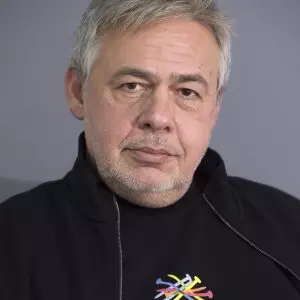
If at all there is to be a trial of Patriarch Porfirio before a Slovenian court, it would almost certainly be a trial in absentia. Because the appearance of the head of the Serbian Orthodox Church in front of a foreign court would, at the very least, be an extraordinary national humiliation
The news that the prosecution is in Slovenia filed an indictment against the patriarch Serbian Orthodox Church (SPC) Porfiria, following the lawsuit of the former Ljubljana parish priest Željko Lubarda due to mobbing at the workplace, initiated the question of whether it is even possible to try Patriarch Porfiria before a secular court in another country, but also reminded of a legal precedent, when a bishop of the SPC was tried and sentenced before a secular court in Serbia for mobbing.
In principle, Patriarch of Porphyry despite his title, he de facto does not have immunity that he could invoke in hearing the trial in Slovenia. According to the Vienna Convention on Diplomatic Relations, diplomatic immunity is reserved for diplomatic officers and members of their families accredited in the host country. Religious leaders, such as the patriarch of the Serbian Orthodox Church, are not automatically covered by that status, because it does not refer to the functions of religious communities, but to official representatives of states.
The issuance of diplomatic passports in Serbia is regulated by the Law on Travel Documents and related regulations Government of Serbia. Although these passports are issued to the highest church dignitaries to facilitate their travels, the passport itself does not guarantee immunity from prosecution abroad unless the holder is registered on an official diplomatic mission.
When it comes to territorial jurisdiction, a basic principle of international law states that a state has full jurisdiction over all people on its territory who do not enjoy immunity. Since the patriarch of the SPC does not have the status of head of state or accredited diplomat, he is subject to the local laws of the state in which he is located, which is also confirmed by the general rules on state immunity that do not extend to religious leaders.
At the same time, the internal church regulations, i.e. the Constitution of the Serbian Orthodox Church, unequivocally define the patriarch as the supreme head, for whose canonical or ecclesiastical offenses the Holy Council of Bishops of the Serbian Orthodox Church is competent. That jurisdiction refers to the order within the Church, but not to criminal-legal responsibility before secular courts, such as the case of the lawsuit against Patriarch Porfirio.
There are several ways to possibly try Patriarch Porphyry before a Slovenian court.
The first implies that he is on the territory of Slovenia for some reason, and then the Slovenian law and order authorities can detain and prosecute him directly.
Another scenario could be a trial in absentia, because the Slovenian Criminal Code under certain conditions allows a person to be tried "in absentia", if that person is not available to state authorities, and is accused of a serious crime.
Of course, one should not rule out the possibility of Patriarch Porphyry voluntarily appearing before the Slovenian court, but that scenario is practically unimaginable, especially since such a move by him among a significant number of citizens would Of Serbia could be interpreted as national treason, and among some believers as a violation of the laws and canons of the Serbian Orthodox Church, since the Orthodox patriarch would be tried there by some Catholics.
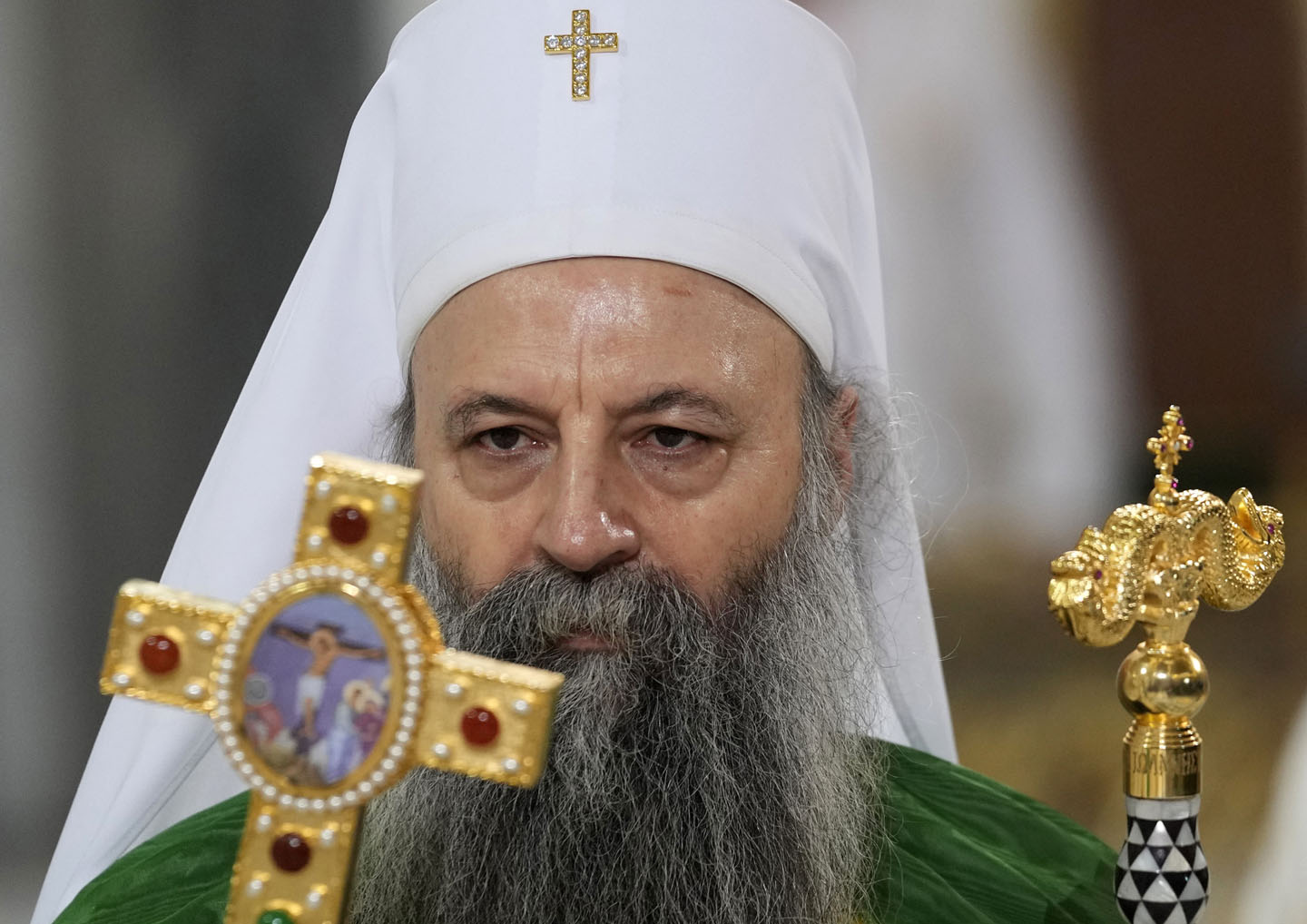
AP Photo/Darko VojinovićPatriarch Porphyry
Finally, the fourth scenario, which is even less imaginable, would be the extradition of Patriarch Porfiri to Slovenia, if Slovenia wanted to try him live at any cost and issue an international warrant. However, the Constitution of Serbia expressly states that a citizen of Serbia cannot be expelled or extradited to another country, except in accordance with international agreements. Although there have been deviations from that principle, for example in the case of the trial before the International Court of Justice in The Hague, it is unthinkable that Porfirje will be extradited to Slovenia for at least two reasons.
First of all, the crime for which he is accused is not nearly as serious as the one for which he was tried in The Hague, and besides, what is even more significant for the establishment in Serbia, such treatment of the patriarch of the Serbian Orthodox Church, whoever he is, would represent an unprecedented national humiliation and cause difficult to understand reactions of many citizens of Serbia. Such humiliation would be further multiplied by the fact that Patriarch Porfiria is trying to be tried by the state which in public in Serbia, because of the events during the disintegration Yugoslavia, and without the trial against Patriarch Porfirio, he does not have a particularly good status anyway.
The case of Bishop Nikanor
The filing of the indictment against Patriarch Porfirio reminded us of a legal and social precedent from 2016.
At the end of January of that year, the higher court in Pancevo passed a verdict in which Bishop Nikanor was convicted of mobbing the former Omolje priest Tomislav Živković.
Živković was one of the 14 priests of the Diocese of Banat who sent a letter to the then Patriarch Irinej and the Holy Synod of Bishops, in which it was stated that Bishop Nicanor "leaves priests without salaries and parishes, calls them thieves and criminals, threatens them and blackmails them".
"More than 28 able-bodied priests ended up on social assistance of 12.000 dinars because of him. There are countless examples of his arrogance, anger, and even physical attacks on priests and deacons," the priests wrote at the time.
Photo: FoNetBishop Nikanor
The court found that Bishop Nikanor abused Živković, sent him threats that included threats of dismissal. It was also established that Bishop Nikanor insulted Živković, saying that he was a "chicken" and "chicken-brained", but also that he took away his parish without justifiable reason.
It was the first verdict for mobbing brought against a dignitary of the Serbian Orthodox Church before a secular court in Serbia, but Bishop Nicanor appealed against it. The Court of Appeal in Belgrade, denying the accusations and trying to challenge the jurisdiction of the secular court over relations within the Church. In March 2016, the High Court in Pancevo annulled that first-instance verdict and returned the trial to the beginning.
However, already on April 5 of the same year, "Večernje Novosti" announced that Živković gave up the court proceedings after the "suggestion" of Patriarch Irinej.
What is happening in the country and the world, what is in the newspapers and how to pass the time?
Every Wednesday at noon In between arrives by email. It's a pretty solid newsletter, so sign up!
PIO Fund has warned pensioners about new fraud attempts to sign declarations about the purchase of certain products, for which the monetary compensation is suspended from their pension
After numerous problems and the transfer of responsibilities, a permit was issued for the reconstruction of the Academic Plateau at the Faculty of Philosophy in Belgrade
The labor inspectorate cannot supervise two applications at Jovan's high school "Jovan Jovanović Zmaj" because the principal Radivoje P. Stojković does not allow them to do so, according to the students' parents.
Greece, as well as numerous other countries, are introducing or at least considering banning social networks for children. However, in Australia it has been shown that such regulations do not necessarily mean that children will stop using them
Although the Shelter is intended for emergency care of homeless people, there are waiting lists for admission. With the arrival of winter, the situation becomes even more difficult. How the living conditions became so bad in the institution, which should provide a safe haven for the most vulnerable - is not known
There is, literally, no difference between the one who claims it is day in the middle of the night, or the one who claims to be a giraffe, from the claims we read on billboards: that Vučić is working to unify Serbs and that Serbia is doing better and better day by day.
The pre-election arrests due to the alleged "overthrow of the state" testify to the regime's panic. The bad news for them is - they can't arrest the whole people who decided to defend themselves from progressive beatings and election theft
The ring that tightens around Ćaciland Student list is getting narrower. Because there are more and more spoiled people who see the false prophet for what he is: a street obscener who is fighting Serbia
The archive of the weekly Vreme includes all our digital editions, since the very beginning of our work. All issues can be downloaded in PDF format, by purchasing the digital edition, or you can read all available texts from the selected issue.